Bariatric Surgery And Medicare In 2026 The Coverage Path From Obesity Care To Operating Room Approval
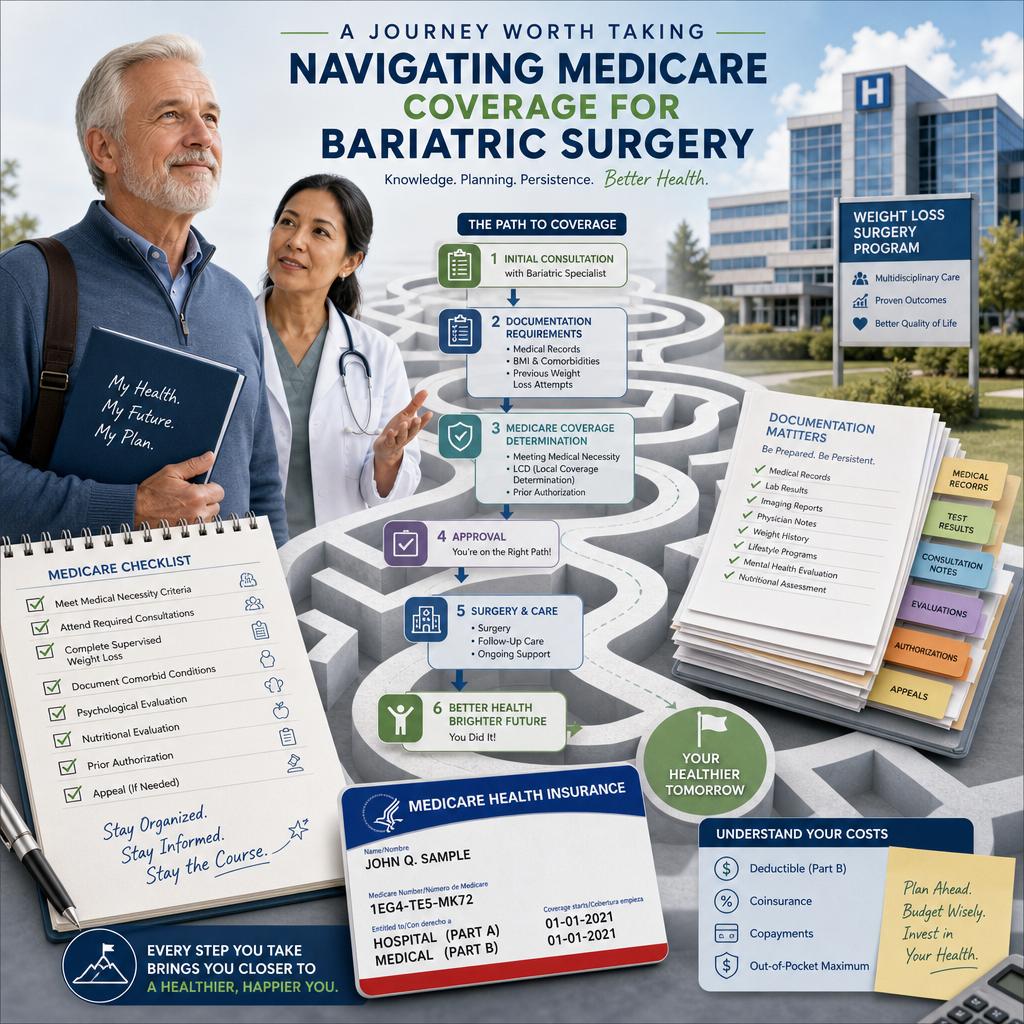
A 69-year-old retiree can do everything “right” and still be surprised by Medicare. She may attend primary care visits, document years of weight-related complications, try medically supervised lifestyle changes, and finally receive a referral for bariatric surgery. Then, just as she thinks the hard part is over, the coverage questions begin.
For 2026, bariatric surgery is one of those Medicare topics that sounds straightforward in a sentence and becomes complicated in real life. Medicare does cover some bariatric surgical procedures, including examples such as gastric bypass surgery and laparoscopic banding surgery, when the beneficiary meets certain conditions related to morbid obesity . That short statement carries a great deal of practical consequence, because “covered” does not mean automatic, immediate, inexpensive, or approved at the facility you prefer.
The Difference Between Weight Counseling And Surgical Coverage
Many people first encounter Medicare obesity benefits through primary care. If your body mass index is 30 or higher, Medicare covers obesity screenings and behavioral counseling focused on diet and exercise, but the counseling must be provided by a primary care doctor or other primary care provider in a primary care setting where your care can be coordinated. If the provider accepts assignment, you pay nothing for that preventive counseling benefit .
Bariatric surgery lives in a different part of the Medicare world. It is not a wellness visit, a general weight loss program, or a lifestyle perk. It is a surgical intervention tied to morbid obesity and medical necessity. That distinction matters because the financial rules change. Preventive counseling may be no cost when the Medicare requirements are met, while surgery can involve hospital, surgeon, anesthesia, diagnostic, and follow-up charges, each processed under the rules of the setting where the care occurs.
Why The Site Of Care Can Change The Bill
A bariatric procedure can pull a beneficiary into several Medicare cost categories at once. If a service is handled through Part B, Medicare generally expects the patient to pay 20% of the Medicare-approved amount after the Part B deductible when the provider accepts assignment, and Original Medicare has no yearly limit on what the patient pays out of pocket unless the person has other coverage such as Medigap, Medicaid, employer, retiree, or union coverage . That is why a person with Original Medicare and no supplement may face a very different risk profile than someone with a strong Medigap policy.
If care occurs in a hospital outpatient department, the bill may not look like the bill from a physician office. Medicare explains that outpatient hospital services generally include 20% of the Medicare-approved amount for the clinician’s services, but the patient may also owe a hospital copayment for each service, and Medicare warns that care in a hospital outpatient setting may cost more than the same care in a doctor’s office . For a bariatric patient, that can affect preoperative testing, imaging, nutrition visits that are not processed as preventive services, and other services clustered around the surgical episode.
Medicare Advantage Adds A Different Layer Of Permission
For beneficiaries in Medicare Advantage, the question is not only whether Medicare recognizes bariatric surgery as a covered category. Medicare Advantage plans must cover medically necessary services that Original Medicare covers, but plans may require prior authorization before they cover certain services or supplies . In a surgical case, that prior authorization requirement is not a minor administrative step. It may determine whether the surgeon, hospital, anesthesiology group, and postoperative support team are all treated as covered in network care.
This is where many affluent, organized retirees still make mistakes. They confirm that the surgeon “takes Medicare,” but they do not verify whether the Medicare Advantage plan has the surgeon, hospital, bariatric program, and related specialists in network. Medicare’s own comparison of coverage options notes that Medicare Advantage beneficiaries may need to use providers in the plan’s network and service area for non-emergency care, and some plans charge more for non-emergency out-of-network care if they cover it at all . Bariatric surgery is exactly the kind of planned, multi-provider episode where one out-of-network link can become expensive.
Before proceeding, a beneficiary should slow the process down enough to answer four questions:
- Has the plan approved the specific bariatric procedure, not just the office consultation?
- Are the surgeon, hospital, anesthesiology group, and key follow-up providers in network?
- Does the plan require documented prior treatment, specialist evaluation, or medical records before approval?
- How will complications, readmission, rehabilitation, nutrition support, and follow-up visits be paid if they occur after surgery?
The Documentation Gap Patients Rarely See Coming
A bariatric surgery denial can feel personal, but many denials are really documentation failures. The physician may believe the patient is an appropriate candidate, while the payer may be looking for evidence that the surgery meets Medicare coverage conditions and the plan’s medical necessity criteria. Those are not always the same conversation.
In practical terms, the medical record should tell a coherent story. It should show the weight-related diagnosis, the clinical consequences of the condition, the conservative treatments attempted, the specialist rationale, and the surgical recommendation. The stronger the file, the less likely the patient is to be trapped in a loop of repeated requests, missing records, and delayed scheduling. For Medicare Advantage members, this becomes even more important because a plan can require approval before the surgery is covered .
What Original Medicare Does Not Solve By Itself
Original Medicare offers broad provider access, which can be valuable when a patient wants to choose a high-volume bariatric surgeon or a hospital with deep experience. Medicare states that, in most cases, Original Medicare beneficiaries can go to any Medicare-enrolled doctor, provider, hospital, or facility that accepts Medicare patients anywhere in the United States . That flexibility can matter when the best surgical program is outside the retiree’s immediate county.
But flexibility is not the same as full financial protection. Original Medicare generally does not have an annual out-of-pocket maximum for Part A and Part B services unless another form of coverage helps absorb the cost . A Medicare Supplement policy may soften that exposure, while a Medicare Advantage plan may provide a yearly limit on covered Medicare services. Medicare notes that Advantage plans have a yearly limit on what members pay for covered Medicare services, although those limits may differ for in-network and out-of-network care . The right answer is not universal. It depends on the surgeon, the county, the hospital, the prescription profile, the expected follow-up needs, and the beneficiary’s tolerance for network management.
The Post Surgery Medicare Plan Decision
The bariatric coverage conversation should not stop at the operating room. After surgery, a patient may need lab monitoring, nutritional counseling, behavioral health support, diabetes medication changes, durable medical equipment in rare cases, or treatment for complications. Medicare covers medically necessary clinical diagnostic laboratory tests ordered by a doctor or provider, and patients generally pay nothing for those tests when they are obtained from a laboratory, pharmacy, doctor, or hospital that accepts assignment . But other services may carry different cost sharing, and a Medicare Advantage member may need to remain within plan rules for referrals, networks, and authorization.
There is also a timing issue. Medicare encourages beneficiaries to review their health and drug coverage each year because plan costs, benefits, provider networks, and service areas can change, and the Annual Notice of Change explains changes effective in January . For someone planning bariatric surgery in 2026, the annual review is not a routine chore. It is a risk-management exercise. A plan that looked attractive for dental allowances or a low premium may be a poor fit if the bariatric center, endocrinologist, cardiologist, or hospital system is not aligned with the plan.
Bariatric surgery can be life-changing, but Medicare coverage for it requires a disciplined strategy. The safest path is to verify eligibility, surgeon participation, facility status, authorization rules, likely cost sharing, and post surgery care before the first major claim is submitted. If you are weighing Medicare Advantage, a Supplement, or Part D implications around a 2026 surgical plan, Schedule your 2026 Medicare consultation with Vista Mutual. The peace of mind comes from knowing that your coverage has been tested against the care you actually expect to need, not just against the brochure language.