Breast Imaging And Medicare In 2026 The Screening Diagnostic And Ultrasound Cost Shift
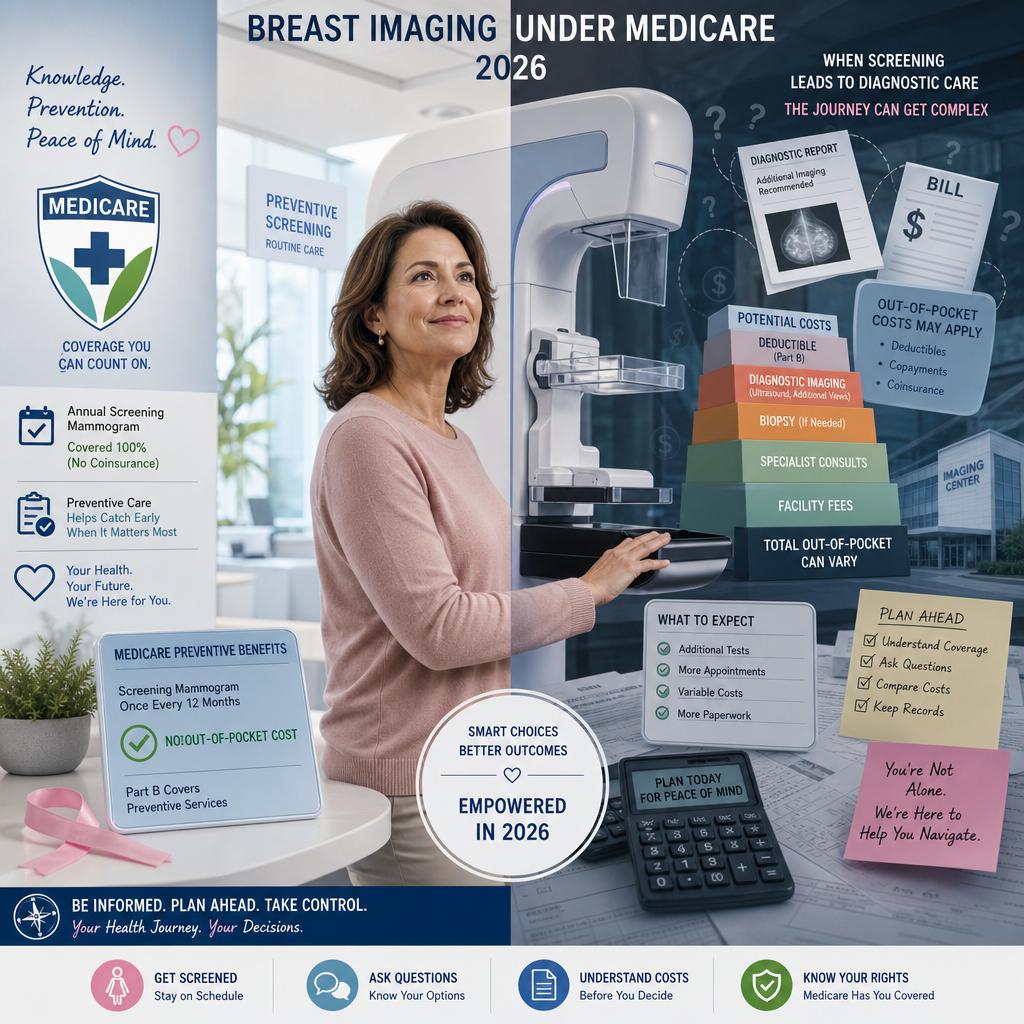
A woman can do everything right in 2026 and still be surprised by the Medicare bill that follows a breast imaging appointment. She schedules her annual screening mammogram, confirms the imaging center takes Medicare, and expects the visit to be routine. Then the radiologist sees an area that needs a closer look. Within days, she is back for diagnostic imaging, and the financial rules have changed.
That shift is not a technicality. It is one of the most important breast health coverage distinctions in Medicare: the difference between preventive screening and diagnostic evaluation. Medicare covers a screening mammogram once every 12 months for women 40 or older, and also covers one baseline mammogram for women ages 35 through 39. When the provider accepts assignment, the screening test costs the beneficiary nothing under Original Medicare . But once the imaging is diagnostic, Medicare applies a different cost structure, and that is where many beneficiaries first discover that the word covered does not always mean free.
The No Cost Screening Rule Is Narrower Than It Sounds
In a clean preventive scenario, Medicare’s breast cancer screening benefit is straightforward. A woman age 40 or older gets a covered screening mammogram once every 12 months, and if the doctor or imaging provider accepts assignment, there is no beneficiary cost for that screening test . This is the part most people remember, because it is the part that sounds simple enough to put on a reminder postcard.
The more sophisticated planning question is whether the appointment is truly being billed as preventive screening. A screening mammogram is generally used when there are no signs or symptoms and the purpose is early detection. If a lump, pain, nipple discharge, prior abnormal image, or physician concern drives the order, the visit may be treated as diagnostic from the beginning. Medicare may still cover it, but the beneficiary’s cost exposure can be different.
Diagnostic Mammograms Follow Medical Necessity Not The Calendar
Medicare Part B covers diagnostic mammograms more frequently than once per year when they are medically necessary. That is a crucial protection for someone whose physician needs additional images after an abnormal screening or new breast symptom. The limitation is financial, not clinical: under Original Medicare, beneficiaries pay 20% of the Medicare-approved amount for diagnostic mammograms, and the Part B deductible applies .
This is where a real 2026 scenario becomes more complicated than a brochure suggests. Imagine a beneficiary whose annual screening is no cost, but whose follow up diagnostic mammogram is scheduled at a hospital outpatient department rather than a freestanding imaging center. Under Medicare’s broader outpatient rules, hospital outpatient care can involve a physician charge and a facility copayment, and patients may pay more in a hospital outpatient setting than in a doctor’s office or other setting for similar care . The clinical recommendation may be exactly right, but the site of service can still influence the bill.
Breast Ultrasound Coverage Depends On The Order
Breast ultrasound is another place where beneficiaries can misunderstand Medicare. It is not treated like an annual stand-alone screening benefit in the same way a routine screening mammogram is. The 2026 Medicare handbook notes that Medicare covers medically necessary breast ultrasounds only when a doctor or provider orders them .
That order matters because it ties the ultrasound to a medical reason. A radiologist may recommend ultrasound after dense tissue, a questionable mammogram finding, or a palpable abnormality. The beneficiary hears, understandably, that the test is needed. But from a Medicare planning perspective, the right question is not only whether the test is clinically appropriate. It is also whether the ordering provider, imaging facility, plan network, and billing classification align with the coverage pathway.
Original Medicare And Medicare Advantage Can Feel Very Different
With Original Medicare, the central issues are whether the service is covered, whether the provider accepts assignment, and whether the beneficiary has supplemental coverage such as Medigap. Medicare explains that, for Part B-covered services, beneficiaries generally pay 20% of the Medicare-approved amount after meeting the deductible, and Original Medicare has no yearly out-of-pocket limit unless the beneficiary has other coverage such as Medigap, Medicaid, employer, retiree, or union coverage . For someone who needs repeated diagnostic imaging, biopsies, oncology consultations, or surgery, that missing medical cap is not theoretical.
Medicare Advantage changes the analysis. These plans must cover medically necessary services that Original Medicare covers, but they may use networks, referrals, prior authorization, and different cost sharing structures. The 2026 Medicare handbook makes clear that Medicare Advantage beneficiaries may need to use doctors and providers in the plan’s network and may need approval before certain services or supplies are covered . A plan may also have a yearly limit on covered Medicare services, which can provide meaningful protection, but the path to using that protection depends on staying inside the plan’s rules.
The Imaging Center Question Beneficiaries Should Ask Before The Appointment
The most useful question is often not, does Medicare cover this? The better question is, how will this exact appointment be billed under my coverage? A screening mammogram, diagnostic mammogram, ultrasound, biopsy guidance study, and physician interpretation can each sit in a different billing lane. A beneficiary who asks only the first question may receive a technically correct answer and still be unprepared for coinsurance, deductible exposure, or a network problem.
A practical pre appointment call should confirm whether the imaging is screening or diagnostic, whether the facility and interpreting radiologist participate with the beneficiary’s coverage, whether a Medicare Advantage plan requires an in-network site or prior authorization for diagnostic imaging, and whether the appointment is being performed in a hospital outpatient department. That is one list, but it represents a larger discipline: before breast imaging, clarify the coverage pathway while there is still time to redirect the appointment if appropriate.
Why This Is A Medicare Planning Issue Not Just A Medical Appointment
Breast imaging is a perfect example of why Medicare plan choice cannot be reduced to premiums and dental allowances. A beneficiary with a strong Medigap policy may value broad access to specialists and predictable Part B cost sharing. A beneficiary in a Medicare Advantage plan may value the annual medical out-of-pocket limit and integrated care management, but must be especially attentive to network and authorization rules. Neither structure is automatically superior. The right choice depends on physicians, medications, facilities, risk tolerance, and the likelihood that preventive care may become diagnostic care.
This is also why annual review matters. Medicare advises beneficiaries to compare coverage for the coming year beginning October 1, with the main Open Enrollment Period running October 15 through December 7 for changes effective January 1, 2026 . A plan that looks excellent for routine care can look very different when imaging, pathology, oncology drugs, and specialist networks enter the picture.
Breast imaging decisions carry enough emotional weight without adding avoidable Medicare confusion. The peace of mind comes from knowing not only that Medicare may cover the service, but how your particular plan will process it, where you should receive it, and what follow up could cost. For a careful 2026 review of Medicare Advantage, Medicare Supplement, and Part D choices around real medical scenarios like this, Consult with the Vista Mutual team.