Diabetes Self Management Training In 2026 Medicare And The Written Order Gap
A person newly managing diabetes in 2026 may assume the hard part is choosing the right insulin, glucose monitor, or pharmacy. In practice, one of the most important decisions may happen before the first class is scheduled, when the physician writes, or fails to write, the order for diabetes self management training.
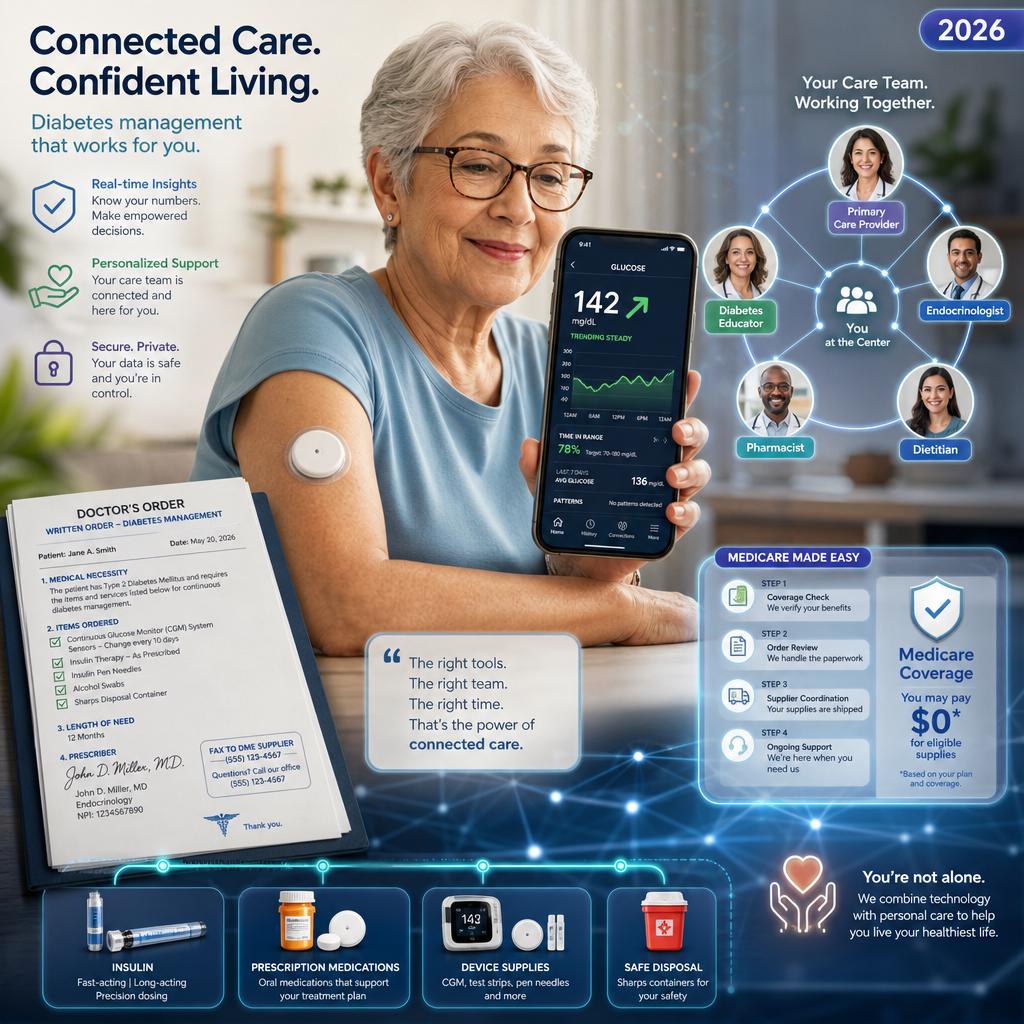
Medicare does cover outpatient diabetes self management training for people diagnosed with diabetes, including education on healthy eating, physical activity, blood glucose monitoring, prescription drug use, and risk reduction. The catch is that Medicare requires a written order from a doctor or other health care provider, and under Original Medicare the patient pays 20 percent of the Medicare approved amount after the Part B deductible applies . That single administrative detail can determine whether a beneficiary receives structured support or is left piecing together advice from pharmacy counters, device tutorials, and rushed office visits.
The Benefit Is Education But The Coverage Is Medical
Diabetes self management training is not a lifestyle seminar in Medicare’s eyes. It is a covered clinical service tied to a diagnosis, an ordering provider, and a recognized training pathway. That distinction matters because beneficiaries often hear the word training and assume it is optional, informal, or included automatically with their diabetes supplies. It is not. The benefit has its own coverage logic, and if the referral is missing or sent to a program that does not fit the beneficiary’s coverage arrangement, the patient can run into avoidable cost sharing or access delays.
Consider a 72 year old beneficiary who starts using a continuous glucose monitor in January 2026. She receives sensors and transmitters, learns that Part B may cover her monitor related supplies, and then realizes that the data on her phone is overwhelming. Medicare’s handbook confirms that glucose monitors and related supplies, including sensors, transmitters, test strips, and lancets for continuous glucose monitor users, may be covered, with 20 percent coinsurance if the supplier accepts assignment and the Part B deductible applies . Yet coverage for the device does not automatically mean the beneficiary has been taught how to interpret trend arrows, respond safely to lows, or coordinate readings with meals and medications.
Why The Written Order Is The Hidden Gatekeeper
The written order is more than paperwork. It is the clinical bridge between diagnosis and education. Without it, a beneficiary may still find advice, but not necessarily the Medicare covered training designed to make day to day diabetes care safer. This is where many families misunderstand the system. They assume the endocrinologist, primary care doctor, pharmacy, and plan are moving in one coordinated lane. Often, they are not.
The more complex the care, the easier it is for the order to get lost. A patient may be discharged after a hospitalization with new insulin instructions, then see a primary care clinician who adjusts medication, then receive supplies from a mail order vendor, then call the Medicare Advantage plan about a preferred educator. Each party may be acting appropriately within its lane, while no one confirms that the diabetes self management training order was created, documented, routed, and matched to the right coverage rules. For Vista Mutual clients, this is exactly the type of small technical issue that can have a large practical effect.
Original Medicare And Medicare Advantage Can Feel Different At The Point Of Care
Under Original Medicare, beneficiaries generally can use any Medicare enrolled doctor or hospital that accepts Medicare patients, and for most Part B services they pay 20 percent of the Medicare approved amount after meeting the deductible. Original Medicare does not have a yearly out of pocket limit unless the beneficiary has supplemental coverage such as Medigap, Medicaid, employer, retiree, or union coverage . That means the question is not only whether diabetes self management training is covered. It is also whether the beneficiary has a Supplement that helps absorb the coinsurance.
Medicare Advantage plans must cover medically necessary services that Original Medicare covers, but the experience may differ through networks, referrals, prior authorization practices, and plan specific cost sharing. The 2026 handbook notes that Medicare Advantage members may need to use network providers for non emergency care and may need prior authorization before certain services or supplies are covered . A diabetes education program that is convenient, respected, and hospital affiliated may still be financially unattractive if it sits outside a plan’s preferred network. Conversely, a lower premium plan may look appealing until the beneficiary realizes that the diabetes educator, endocrinology group, durable medical equipment supplier, and preferred pharmacy do not align neatly.
The Drug And Device Split Can Reshape The Entire Diabetes Plan
Diabetes coverage is especially confusing because Medicare does not treat every diabetes related item the same way. Insulin used with certain pumps may fall under Part B rules, while self injected insulin, certain injection supplies, disposable pumps, and some oral diabetes drugs may be handled through Part D. The 2026 handbook states that a one month supply of each covered insulin product is capped at 35 dollars, with similar caps applying for traditional insulin used in Part B covered insulin pumps .
That insulin cap is meaningful, but it does not make plan selection simple. Part D drug costs in 2026 are capped at 2100 dollars for covered Part D drugs, after which the beneficiary does not pay copayments or coinsurance for covered Part D drugs for the rest of the calendar year . However, the cap applies to covered Part D drugs, not every Part B device, supply, office service, or training encounter. A beneficiary may feel protected because the drug cap is widely discussed, while still facing Part B coinsurance for glucose monitor supplies, diabetes self management training, foot care, or other covered medical services.
The Questions That Should Be Asked Before The First Class
A careful 2026 diabetes coverage review should happen before the beneficiary enrolls in a plan, changes pharmacies, or schedules training. The questions are not complicated, but they are rarely asked in one place:
- Has the doctor or qualified provider written the order for diabetes self management training?
- Is the training provider accepted under Original Medicare or in network under the Medicare Advantage plan?
- Will the beneficiary owe Part B coinsurance, and does a Medigap or other secondary coverage help pay it?
- Are glucose monitor supplies being billed through the right supplier, and does that supplier accept assignment?
- Are insulin, oral diabetes medications, and injection supplies being priced under the correct Part D or Part B pathway?
These questions turn a general Medicare benefit into a usable care plan. They also reveal why a plan that looks inexpensive in a premium comparison may not be the best fit for someone managing diabetes with multiple providers, devices, and prescriptions. The right plan is not simply the one with the lowest monthly cost. It is the one that coordinates the real life pattern of care.
Building A 2026 Diabetes Coverage Strategy With Fewer Surprises
The 2026 Medicare landscape rewards beneficiaries who understand the connection between medical benefits, drug benefits, supplier rules, and provider networks. Diabetes self management training sits at the center of that connection. It is not flashy, but it can change how safely a person uses insulin, interprets glucose data, plans meals, prevents foot complications, and communicates with clinicians.
Professional guidance brings calm to this process because it translates Medicare’s separate parts into one practical coverage strategy. Vista Mutual helps clients compare Medicare Advantage, Supplement, and Part D options through the lens of how care is actually delivered, not just how benefits look on a brochure. If diabetes care, insulin costs, glucose monitoring, or provider access are part of your 2026 decision, Schedule your 2026 Medicare consultation and let the Vista Mutual team help you choose with confidence.