Dual Eligible Special Needs Plans In 2026 The Medicaid Coordination Test Seniors Miss
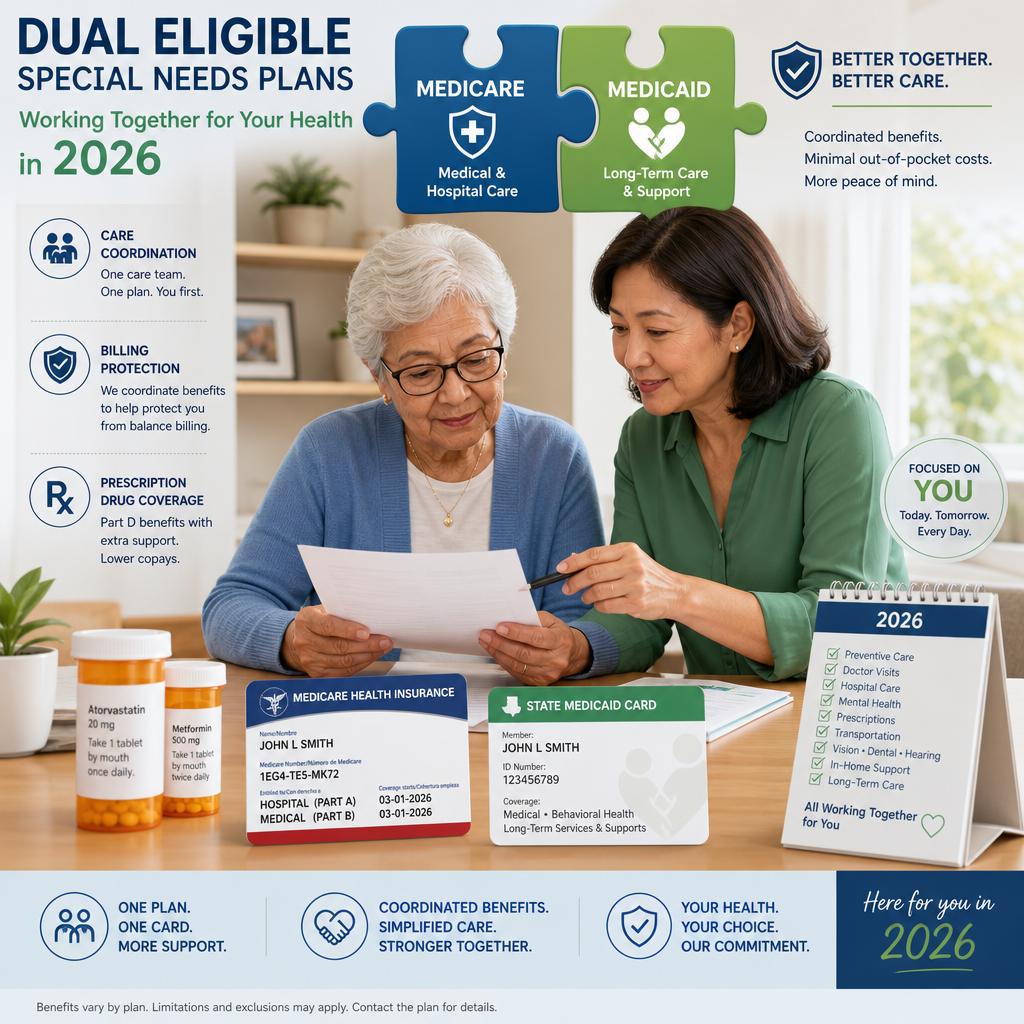
A Medicare plan can look almost perfect when the premium is low, the dental allowance is prominent, and the sales language promises coordination. For someone who has both Medicare and Medicaid, that promise is especially powerful. It suggests that the plan will simplify a life already full of cards, notices, pharmacies, caseworkers, and provider offices.
In 2026, the overlooked issue is not whether Dual Eligible Special Needs Plans, commonly called D SNPs, exist. It is whether the specific D SNP actually matches the beneficiarys Medicaid category, local provider access, drug needs, and state rules. Medicare describes Special Needs Plans as Medicare Advantage plans that tailor benefits, provider choices, care coordination, and formularies to people with certain chronic conditions, certain care needs, or Medicaid coverage, and all SNPs must include Medicare drug coverage under Part D . That sounds simple until a family discovers that Medicaid is not one uniform benefit across the country.
The Promise And The Paperwork Behind A D SNP
Imagine a daughter helping her mother review 2026 coverage. Her mother has Medicare, receives Medicaid assistance, takes six prescriptions, and relies on rides to appointments. A D SNP brochure may seem like the obvious choice because it speaks directly to people who have both Medicare and Medicaid. Medicare confirms that a Dual Eligible SNP is for someone eligible for both programs, and that these plans contract with state Medicaid programs to help coordinate Medicare and Medicaid benefits .
The phrase "coordinate benefits" is where families should slow down. Coordination does not always mean every Medicaid service is delivered by the Medicare plan. Some D SNPs may provide Medicaid services in addition to Medicare services, while others mainly coordinate with the state Medicaid program. That distinction matters if the beneficiary depends on personal care, non emergency transportation, home and community based services, dental benefits, or long term care supports. A plan can be a valid D SNP and still not be the best administrative fit for a particular Medicaid package.
Why Medicaid Status Is The First Coverage Test
The first question is not which plan has the most attractive extras. It is what kind of Medicaid the person actually has. Medicare notes that people with full Medicaid coverage may have most health care costs covered, may receive drug help through Extra Help, and may have access to services Medicare does not cover or covers only partially, including long term care in a nursing home, personal care, transportation to medical services, home and community based services, home delivered meals, and dental, vision, and hearing services .
That is why a professional review begins with the Medicaid evidence, not the television advertisement. A beneficiary who only receives help with a Part B premium may not have the same protections or service access as someone with full Medicaid. A person in a waiver program may have care arrangements that should not be disturbed without confirming how the plan works locally. In practical terms, the D SNP decision is not just a Medicare Advantage decision. It is a Medicare, Medicaid, pharmacy, provider network, and social support decision happening at the same time.
The Billing Protection Trap Families Rarely Understand
One of the strongest protections in the Medicare system is easy to miss because it often appears only after something goes wrong. The Qualified Medicare Beneficiary program, or QMB, covers Part A premiums if owed and Part B premiums, and Medicare providers are not allowed to bill QMB members for Medicare covered deductibles, coinsurance, and copayments . If a QMB beneficiary receives a bill for those charges, the provider or debt collector should be told that the person is in QMB and cannot be charged for those Medicare cost sharing amounts.
This protection can become confusing inside a Medicare Advantage environment because provider offices may not recognize the billing limits correctly. The Medicare handbook advises beneficiaries in a Medicare Advantage plan to contact the plan if charges continue, and it also emphasizes showing both the Medicare card and Medicaid or QMB card when receiving care . In real life, that means the right plan is not only the one with appealing benefits. It is the one whose network, billing systems, and member services can handle dual eligibility without leaving the beneficiary to fight avoidable invoices.
The Drug Coverage Detail That Changes The Plan Math
A D SNP includes Part D, but that does not mean every drug experience is identical. Medicare explains that different plans cover different drugs, and beneficiaries should check whether their plan covers the drugs they use and whether their preferred pharmacies are available . This is especially important in 2026 because prescription drug costs continue to be a central part of Medicare planning.
For 2026, Medicare states that yearly out-of-pocket costs for covered Part D drugs are capped at $2,100, after which beneficiaries pay no copayment or coinsurance for covered Part D drugs for the rest of the calendar year . Many dual eligible beneficiaries will have Extra Help, which changes the cost picture even further. Medicare says that people who qualify for Extra Help in 2026 will generally pay no more than $5.10 for each generic drug and $12.65 for each brand name drug at a participating pharmacy . The insider issue is not only the copay. It is whether the drug is on the formulary, whether prior authorization applies, whether the pharmacy is in network, and whether a transition from another plan disrupts refill timing.
Before accepting a 2026 D SNP recommendation, the file should be checked for four practical items:
- The exact Medicaid category and whether it is full Medicaid, QMB, SLMB, QI, or another state specific arrangement.
- The beneficiarys current doctors, specialists, hospital preferences, pharmacies, and recurring prescriptions.
- Any non Medicare supports, such as transportation, personal care, waiver services, facility care, or home and community based services.
- The plans written Evidence of Coverage, provider directory, formulary, and rules for referrals or prior authorization.
The Monthly Switch Right Is Helpful But Not Harmless
One reason D SNP decisions can feel less final is that some dual eligible beneficiaries have more opportunities to change plans than other Medicare beneficiaries. Medicare says that if you have Medicare and full Medicaid benefits, you may be able to join or switch to an integrated D SNP once per calendar month . That flexibility can be valuable when a plan does not work as expected.
But flexibility is not the same as freedom from disruption. A monthly switch can reset care coordination, change pharmacy routing, create new prior authorization requirements, and confuse provider offices about which card should be billed. For a healthy person with few prescriptions, that may be manageable. For someone receiving oncology care, dialysis, wound care, home health, behavioral health treatment, or facility based services, repeated plan movement can create administrative friction at exactly the wrong time.
Why This Is A Brokerage Level Decision
A strong D SNP review is not a simple premium comparison. It requires reading Medicare Advantage rules alongside Medicaid status, Part D formularies, provider participation, pharmacy access, and the practical realities of the persons care. Medicare itself cautions that Medicaid programs vary by state, may have different names, and use different income and resource requirements . That variation is precisely why a generic recommendation can be unsafe.
At Vista Mutual, the goal is not to push a beneficiary toward the plan with the loudest extras. It is to identify whether Original Medicare with Medicaid coordination, a Medicare Advantage plan, or a particular D SNP offers the most stable path for the person in front of us. For dual eligible beneficiaries, peace of mind comes from knowing that the doctors, prescriptions, billing protections, and support services have been reviewed together rather than in isolation. To review your 2026 options with experienced guidance, Consult with the Vista Mutual team.