Emergency Room Observation Versus Inpatient Medicare Status in 2026
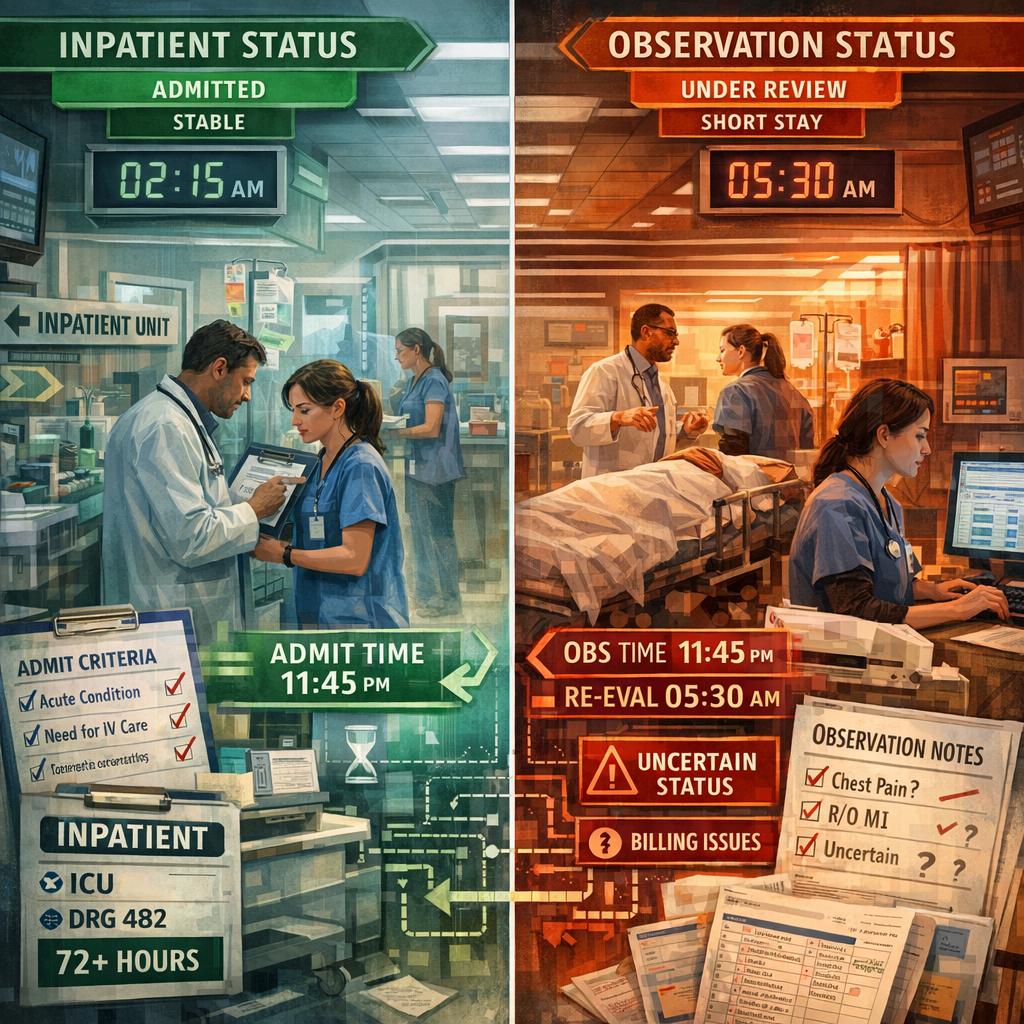
You do not see it coming: a fall, sudden chest pain, shortness of breath—or even simply severe confusion at home leads to a dash to the emergency room. After hours of evaluation, the family assumes Medicare-protected coverage will intervene reliably, paying the hospital and resetting toward optimal rehabilitation. Yet just out of sight, hospitals document patient status in ways that dramatically reroute every subsequent benefit owed. In 2026, more acute care directors and claims managers—motivated by Medicare’s complex new payment rules—will need to flag patients as either formal inpatients or “observation outpatients” despite identical emergency room experiences. The distinction is core not only to initial bills but to subsequent SNF eligibility, prescription charges, repeated Medicare coverage, and appeal rights. Here, the right strategic insight means either clearing hospital fog or accepting unexpected exposure long after the health scare is over.
Why Status Matters More Than Ever Under 2026 Medicare
Once ENVISAGED strictly as a technical difference for care coordination, observation status in 2026 is anything but neutral as hospital finances and CMS audits heat up. Medicare only pays inpatient rates after a stay is correctly initiated with an attending doctor order, recorded as "admittance" beginning that calendar day, and logged within regulatory protocol. Miss a single coder tap—arrive at the ER for 28 hours but see an admission call delayed until midnight, or get flagged for monitoring instead of full digestion of clinical criteria—and the Medicare Part A inpatient benefit never activates.
Classic symptoms requiring hospitalization (at least two midnights of care, intensive medical needs, procedures warranting protected rehab, evidence-based scale checklists) only open the benefits spigot when coupled with a precise and documented order. Observation status is billed as Medicare Part B: high deductible, 20 percent copays on services, separate facility fees for the selected setting, and comprehensive tests. Patients enrolled in Supplemental (Medigap) plans see some help for the B-level copays—but lose critical access behind the “inpatient wall,” including post-discharge skilled nursing facility days, coverage for certain medication regimens, and admission-driven ancillary therapies, among others. For Medicare Advantage enrollees, most plans consolidate all workflows under unified benefit management, but cost sharing, delays, or denials are increasingly linked to ER-code care transition timelines.
Legal battle has made the codes more public, but confusion persists. Government requires hospitals to deliver the MOON (Medicare Outpatient Observation Notice) before recipients spend 24+ hours under watch without inpatient closure. Still, the swirl of stress means many never comprehend bill risk or benefit freeze-ups until after the fact—a liability growing even greater with more nuanced “watchful waiting” protocols in geriatric medicine, lengthy decompensation for chronic issues, or trauma units stretched by staff or pandemic policy rotas.
Observation Trap Outcomes The Human Toll and Strategic Recourse
Mrs. Dalton, 81, lands in the hospital amid severe dehydration. Labeled "observation" for transition monitoring, she occupies the classic medical floor but is not coded consistent; hospital team runs rounds, brings in MRI and hourlong pharmacy reconciliation. Several days go by, and ultimately her medical team belatedly elevates intake to inpatient. Despite spending nearly 60 hours, Medicare would only count the final date served from their inpatient order—all previous ER and room watching triggers dozens of surprise Part B outpatient copays but does not qualify her for full post-acute care or SNF travel. She is merged out of skilled nursing eligibility, facing thousands at non-negotiable private pay unless appealed eventually—a high hurdle unless Guide savvy mapped out the precise audit trail in advance with case management involvement.
Contrast to Tim, discharged as an inpatient right from triage due to surgical-like appendicitis threat, whose rapid claim clears both Part A coverage and matters easy access to all post-discharge benefit codes (rehab, therapy). For that family, strategic plan structuring and sharp brokerage advocacy mean a seamless transition to secondary care covered under every facet of Part A with zero Medicare surprises. Prospectively, takeaway supports the reality that advanced insurance auditing and daily documentation form most of the business end of modern Medicare navigation.
Episode reviews at set 2026 intervals in expanded benefit contracts mean plenty more 'on the margin' blurring, where providers fearing CMS audits stay longer on observation code, unhelpfully preserving the higher risk/burden status quo for hastened appropriateness downgrades. By year’s end, too, auto audits in Medicare send covered status alerts – unless all paperwork is doctor signed within hospital billing policies dated for regulatory time windows.
Protecting Access—Winning with Experience Review and Preventive Planning
Experts insist—for all families—a checklist is essential:
- On arrival at the ER or during room transfer, explicitly ask attending staff whether you have been admitted as an INPATIENT and request written admission order date & time, clarifying with both hospitalist AND floor case manager if any plan change/observation is under discussion. Insist every order be documented and timestamps/conversations preserved for appeal. Partner with your Medicare advocate or broker, since status will tie not just to hospital bills but SNF, therapy, and pharmacy authorizations beyond this event cycle.
Retirees prolonging home recovery, dual-residents traversing state networks, and caregivers documenting down-quarter acute events especially rely on advisor consolidation, pre-discharge mapping, and phone snapshots of relevant hospital/provider codes. Top brokers rehearse every observation/inpatient split drama yearly due to claim count spikes—a smart recap during plan revision with Vista Mutual clarifies real records, fixes coding before services wrap, and ensures edit alignment for legal pursuers who may contest Category B denials as family gatherboard logs accrue.
Urgency in 2026: Insist, gently but repeatedly, that nothing happens in code ambiguity. Tie every segment of care to proper clinical necessity, aligning all case and network mappings across plan, hospital, and agent—the only path ensuring your event does not spiral into lasting financial drain
Peace of mind arrives when the system is led from the very first shift change or paperwork pivot. Advocates like Vista Mutual illuminate the shadows of hospital status—and bring clarity and confidence, no matter how sudden your ER story begins. For skillful handling, real bill minimization, and a proactive mapping of every care phase’s insurance implications, schedule your 2026 Medicare consultation and prevent today’s emergent chaos from becoming tomorrow’s chronic confusion.