HIV Screening After Sixty Five In 2026 Medicare And The Privacy Coverage Gap Seniors Miss
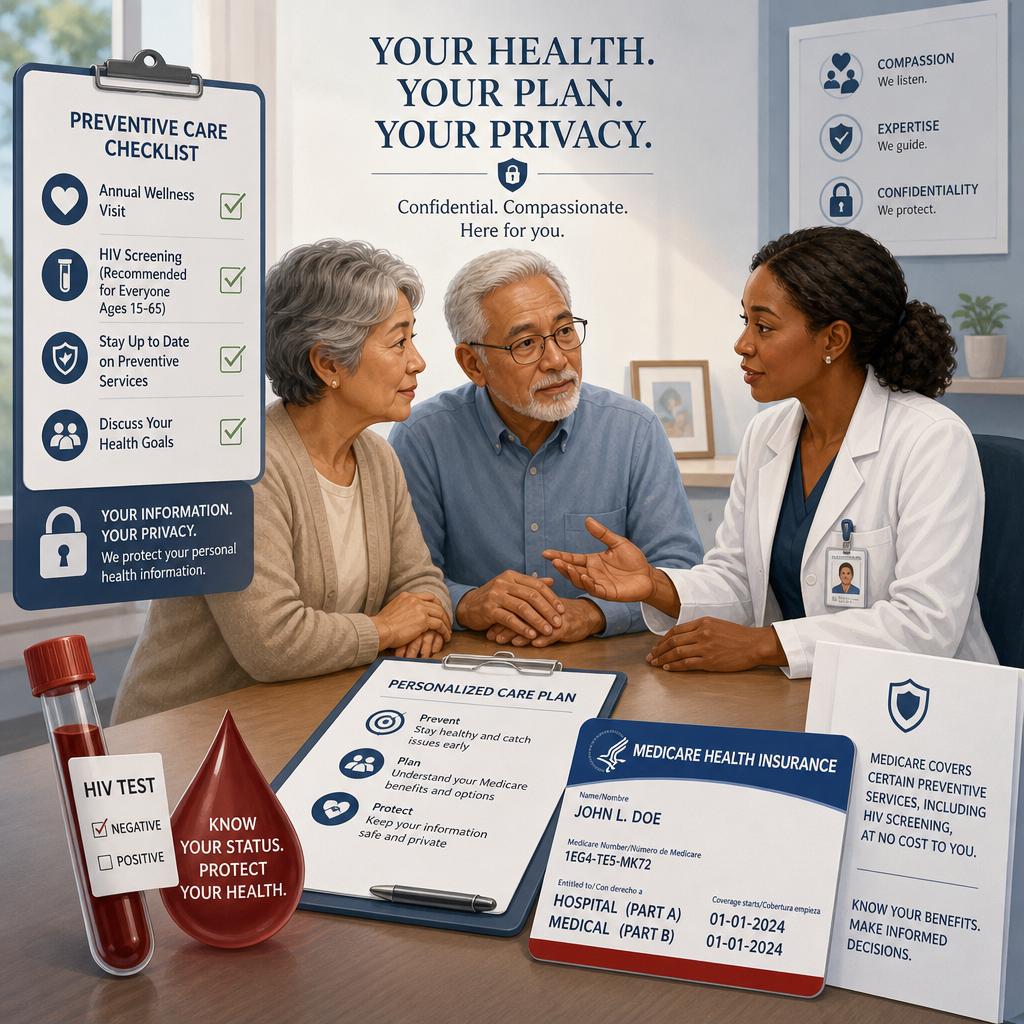
A retired couple can spend weeks comparing dental allowances, gym memberships, and prescription tiers, then miss one of the most clinically important preventive benefits in Medicare: HIV screening. In 2026, this is not simply a public health issue. It is a Medicare planning issue, because the pathway from a private conversation with a clinician to a covered screening, prevention medication, specialist referral, or drug plan decision can change depending on age, risk status, plan type, pharmacy enrollment, and whether the service is billed as prevention or treatment.
For many beneficiaries, the awkward part is not the blood test. It is asking whether Medicare will pay, whether the visit will be private, and whether the claim will trigger an unexpected bill. That hesitation matters. Medicare does cover HIV screening once per year for people ages 15 through 65, and it also covers screening for people younger than 15 or older than 65 when they are at increased risk. Medicare also covers the test up to three times during pregnancy, and you pay nothing for the HIV screening test when the doctor or other health care provider accepts assignment .
The Over Sixty Five Rule Is Not A Denial Rule
The most common mistake seniors make is assuming that Medicare stops caring about HIV risk after age 65. The actual rule is more nuanced. After 65, the screening is not a broad annual benefit for everyone by age alone, but it can still be covered when the beneficiary is at increased risk. That distinction is easy to miss in a rushed primary care visit, especially if the patient believes sexual health questions are no longer relevant once Medicare begins.
This is where plan literacy and clinical documentation meet. A beneficiary over 65 may need the clinician to document why the screening is appropriate, and the patient may need to know which provider setting and billing path protects the no cost preventive treatment of the test. Medicare’s general Part B rule is that most preventive services cost nothing when furnished by a provider who accepts assignment, but deductible or coinsurance can appear when preventive and non-preventive services happen in the same visit . A short conversation about risk can be the difference between a clean preventive claim and a confusing office visit charge.
Assignment Is The Quiet Privacy And Billing Safeguard
Patients often hear the phrase “covered by Medicare” and think it means “free everywhere.” It does not. The HIV screening benefit is cost-free only when the doctor or other health care provider accepts assignment . Assignment means the provider agrees to be paid directly by Medicare, accepts the Medicare-approved amount as payment in full, and does not bill more than the deductible and coinsurance when those apply .
That detail matters for sensitive care. A patient may choose a clinic because it feels discreet, but if the billing relationship is unclear, the claim may not behave the way the patient expects. Original Medicare generally lets beneficiaries use any Medicare-enrolled provider who accepts Medicare patients, while Medicare Advantage members may need to use network providers and follow plan rules for non-emergency care . In a real 2026 scenario, the best provider may not be the closest provider. It may be the provider whose network status, assignment status, and billing department can handle a preventive screening correctly.
When HIV Prevention Moves From A Test To A Part B Benefit
The 2026 Medicare story becomes more complicated when screening leads to prevention. Medicare now covers pre-exposure prophylaxis, often called PrEP, for people who do not have HIV but whose doctor determines they are at increased risk. This Part B preventive benefit can include PrEP medication, counseling services, up to eight HIV screenings per year, and a one-time hepatitis B screening. If the PrEP medication is obtained from a Part B-enrolled pharmacy, the beneficiary pays nothing out of pocket for the medication, and the related preventive HIV and hepatitis B screenings are also no cost when the provider accepts assignment .
The word “pharmacy” is the trap. Many beneficiaries assume all pharmacy drugs are Part D. PrEP for prevention may be handled under Part B if the pharmacy is properly enrolled, while HIV medication for treatment is covered through Medicare drug coverage under Part D, not as the preventive PrEP benefit . That split can affect which card is presented, which pharmacy is used, how the claim is routed, and whether the patient is told incorrectly that the medication is not covered.
The Part D Planning Issue If A Diagnosis Changes Everything
If a screening identifies HIV, the Medicare decision shifts from a preventive service conversation to a long term drug coverage conversation. Medicare drug plans must cover a wide range of prescription drugs, including most drugs in protected classes such as drugs to treat HIV/AIDS, but each plan has its own formulary, tiers, pharmacy contracts, and utilization rules . In other words, protected class status is not the same as identical cost sharing in every plan.
The 2026 Part D out-of-pocket cap is an important protection. Yearly out-of-pocket costs for drugs covered by a Part D plan are capped at $2,100 in 2026, after which the beneficiary pays no copayment or coinsurance for covered Part D drugs for the rest of the calendar year . But that cap does not excuse a poor plan match. A plan can still differ in pharmacy access, prior authorization, drug tiering, and whether the patient’s preferred infectious disease specialist is aligned with the broader Medicare Advantage network.
A Practical 2026 Checklist Before You Ask For The Test
For a private, medically appropriate HIV screening conversation in 2026, the best preparation is not dramatic. It is precise. Before the appointment, beneficiaries should confirm:
- Whether the provider accepts Medicare assignment or is in the Medicare Advantage network.
- Whether the screening is being billed as preventive HIV screening, not bundled into a broader diagnostic visit without explanation.
- Whether the patient is over 65 and needs increased risk documented for coverage.
- Whether any PrEP medication would be filled through a Part B-enrolled pharmacy.
- Whether current Part D coverage would handle HIV treatment drugs affordably if prevention became treatment.
That is the kind of checklist a brochure rarely personalizes. A widow dating again after years of caregiving, a newly remarried retiree, or a beneficiary whose spouse was diagnosed late may all have different coverage considerations. Medicare’s rules can support responsible screening, but the system does not always volunteer the right question at the right time.
Why This Is A Brokerage Conversation Not Just A Lab Order
HIV screening after 65 is a small example of a larger Medicare truth: the benefit may be simple, while the coverage pathway is not. Original Medicare, Medicare Advantage, Part B prevention, Part D treatment, pharmacy enrollment, assignment, and privacy expectations can all intersect around one sensitive test. A beneficiary should not have to learn those distinctions from a denied claim, a pharmacy counter delay, or a bill that arrives weeks later.
Vista Mutual Insurance Services helps clients evaluate the whole Medicare structure around their real lives, not just the premium on a plan comparison screen. If you want confidence that your 2026 Medicare Advantage, Supplement, and Part D choices are aligned with your doctors, pharmacies, medications, and preventive care needs, Schedule your 2026 Medicare consultation. The peace of mind comes from knowing which questions to ask before Medicare makes the answer expensive.