Indian Health Service And Medicare Part D Coordination In 2026
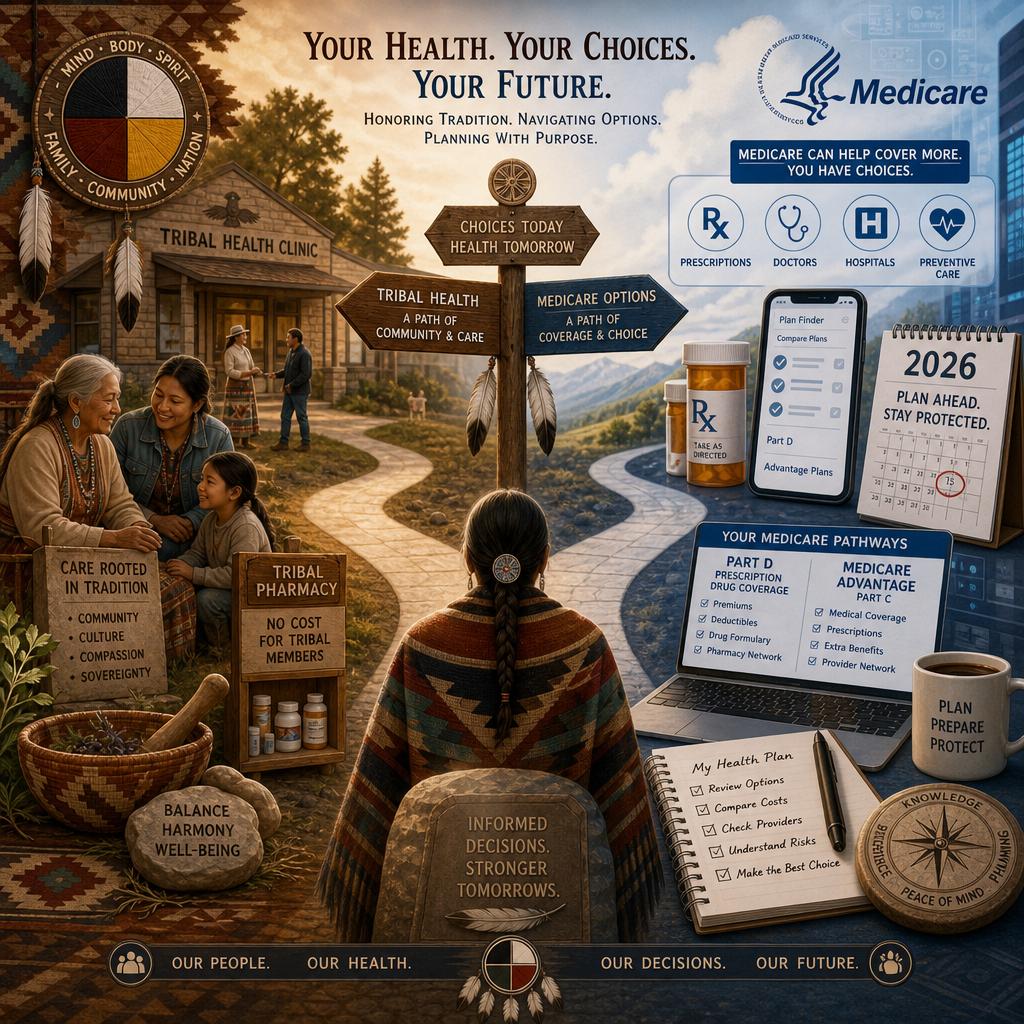
A Medicare decision can look simple when the pharmacy counter is familiar. A beneficiary who receives care through an Indian Health Service, tribal, or urban Indian health program may reasonably ask why a Medicare drug plan matters at all if many prescriptions continue to be available at no cost through the Indian health system. In 2026, that question deserves a careful answer, because the value of Medicare coverage is not measured only by what happens on an ordinary refill day.
The real test often comes during a hospitalization, a specialist referral, a snowbird season, a new diagnosis, or a drug change that pushes someone outside the usual clinic workflow. Medicare recognizes the Indian Health Service as the primary health care provider for the American Indian and Alaska Native Medicare population, and it also notes that many Indian health facilities participate in Medicare drug coverage. The important planning detail is that beneficiaries who receive prescriptions through an Indian health facility may continue getting them at no cost, while joining a Medicare drug plan or a Medicare Advantage plan with drug coverage may help the Indian health facility because the plan pays the facility for covered prescriptions .
Why The 2026 Part D Decision Is Not Just About Your Own Copay
A retiree named Daniel might take three long-standing medications through his tribal clinic and see no reason to review Part D. From his perspective, the system is working. Yet the clinic’s ability to bill a Medicare drug plan can matter behind the scenes, and Daniel’s own risk changes if a cardiologist later prescribes a medication that is easier to access through a retail or specialty pharmacy outside the Indian health facility.
That is where 2026 planning becomes more sophisticated than a brochure comparison. The beneficiary is not only choosing a premium and a drug list. They are choosing a claims pathway. A Part D plan may affect which outside pharmacies are preferred, whether a drug needs prior authorization, how a specialty medication is handled, and whether a future prescription counts toward Medicare’s annual drug cost protections. In 2026, Medicare Part D has a $2,100 yearly out-of-pocket cap for drugs covered by the plan, after which the beneficiary pays no copayment or coinsurance for covered Part D drugs for the rest of the calendar year .
The Coverage Gap That Appears When Care Leaves The Indian Health Facility
The overlooked risk is not the routine prescription that has been filled the same way for years. It is the medication ordered after an emergency room visit in another county, the post-surgical antibiotic from a hospital discharge pharmacy, the cancer supportive drug routed through a specialty vendor, or the new brand-name heart medication that the local clinic cannot dispense immediately. At that moment, a person who ignored Part D details may discover that the plan’s pharmacy network, formulary tiering, or approval rules now matter very much.
This is also where Medicare Advantage can create both opportunities and complications. Most Medicare Advantage plans include Part D drug coverage, but these plans operate through contracts, networks, and plan-specific rules. Medicare explains that costs in a Medicare Advantage plan can depend on whether services come from network providers, and that non-emergency or non-urgent care from providers outside the plan’s network may not be covered or may cost more . For a beneficiary who relies on an Indian health facility but also travels, sees outside specialists, or receives hospital-based care, the plan’s network design should be reviewed with more care than a simple monthly premium comparison.
The 2026 Drug Cap Helps But It Does Not Solve Plan Fit
The $2,100 Part D cap is one of the most meaningful consumer protections in Medicare drug coverage for 2026, but it should not be misunderstood as a universal guarantee that every drug will be easy to obtain. The cap applies to covered Part D drugs. If a drug is not on the formulary, requires an exception, is subject to step therapy, or must be filled through a particular network pharmacy arrangement, the beneficiary may still face administrative friction before the cap becomes useful.
For someone using the Indian health system, this distinction is especially important because daily experience can create a sense that prescription access is separate from Medicare plan design. Sometimes it is. Sometimes it is not. A careful review asks how the plan treats each medication, whether the Indian health facility can bill the plan, what happens if the beneficiary fills elsewhere, and whether a Medicare Advantage plan’s medical network supports the same specialists and hospitals the beneficiary is likely to use.
The Medicare Prescription Payment Plan Adds Cash Flow Strategy
The Medicare Prescription Payment Plan is another 2026 consideration, especially for beneficiaries who might fill expensive covered drugs outside their usual Indian health facility. Medicare describes this program as a voluntary way to spread out-of-pocket costs for covered drugs across the calendar year, while emphasizing that it does not save money or lower the drug’s actual cost . That is a subtle but important distinction.
For a beneficiary with predictable no-cost access through an Indian health pharmacy, the payment plan may be unnecessary. For someone whose care is changing, or who may use outside pharmacies for specialty medications, the payment plan could help stabilize monthly cash flow. The right answer depends on how drugs are actually obtained, whether the person qualifies for other help, and whether they are likely to hit the 2026 Part D cap early or only gradually.
Extra Help And Medicare Savings Programs Can Change The Entire Analysis
Some beneficiaries should not begin with plan premiums at all. They should begin with eligibility for help paying Medicare costs. Medicare Savings Programs can help people with limited income and resources pay certain Medicare costs, and the Qualified Medicare Beneficiary program provides especially strong protection because Medicare providers are not allowed to bill QMB beneficiaries for Medicare-covered deductibles, coinsurance, and copayments .
Extra Help can also change the drug coverage decision. Medicare explains that Extra Help assists with Medicare drug costs such as premiums, deductibles, and coinsurance, and people who qualify for certain Medicaid or Medicare Savings Program assistance may qualify automatically . In practice, this means a plan that looks merely acceptable for one beneficiary may be excellent for another because subsidies, pharmacy access, and formulary treatment interact differently.
What A High Quality 2026 Review Should Actually Examine
A serious review for an American Indian or Alaska Native Medicare beneficiary should start with real life, not advertising. Where are prescriptions filled today? Which outside hospitals are most likely in an emergency? Does the beneficiary split time between locations? Are specialists already involved? Are any medications biologics, injectables, inhalers, anticoagulants, diabetes drugs, or cancer-related therapies that may require special handling?
Only after those facts are known should plan comparison begin. The right Medicare Advantage plan may coordinate beautifully for one person and restrict access for another. Original Medicare with a Medigap policy and a separate Part D plan may preserve broader provider access, but it still requires drug plan analysis. A low premium Part D plan may be perfectly suitable for someone with stable low-cost generics, while the same plan could be a poor fit for a beneficiary whose next prescription is likely to be a specialty medication.
The quiet lesson of 2026 is that Medicare decisions for people connected to the Indian health system should respect both sovereignty of care relationships and the technical realities of federal insurance. The fact that a beneficiary can continue receiving many prescriptions at no cost through an Indian health facility is powerful. It does not eliminate the need to choose wisely when Medicare drug coverage, Medicare Advantage networks, outside pharmacies, and high-cost medications enter the picture.
Vista Mutual Insurance Services helps beneficiaries and families translate those moving parts into a practical coverage strategy. We review the medications, pharmacies, provider relationships, travel patterns, subsidy eligibility, and plan documents before a decision is made, so the plan supports the care system instead of disrupting it. For peace of mind before 2026 coverage begins, Consult with the Vista Mutual team.