Inpatient Rehabilitation Facility Decisions In 2026 Medicare Why The Recovery Setting Matters
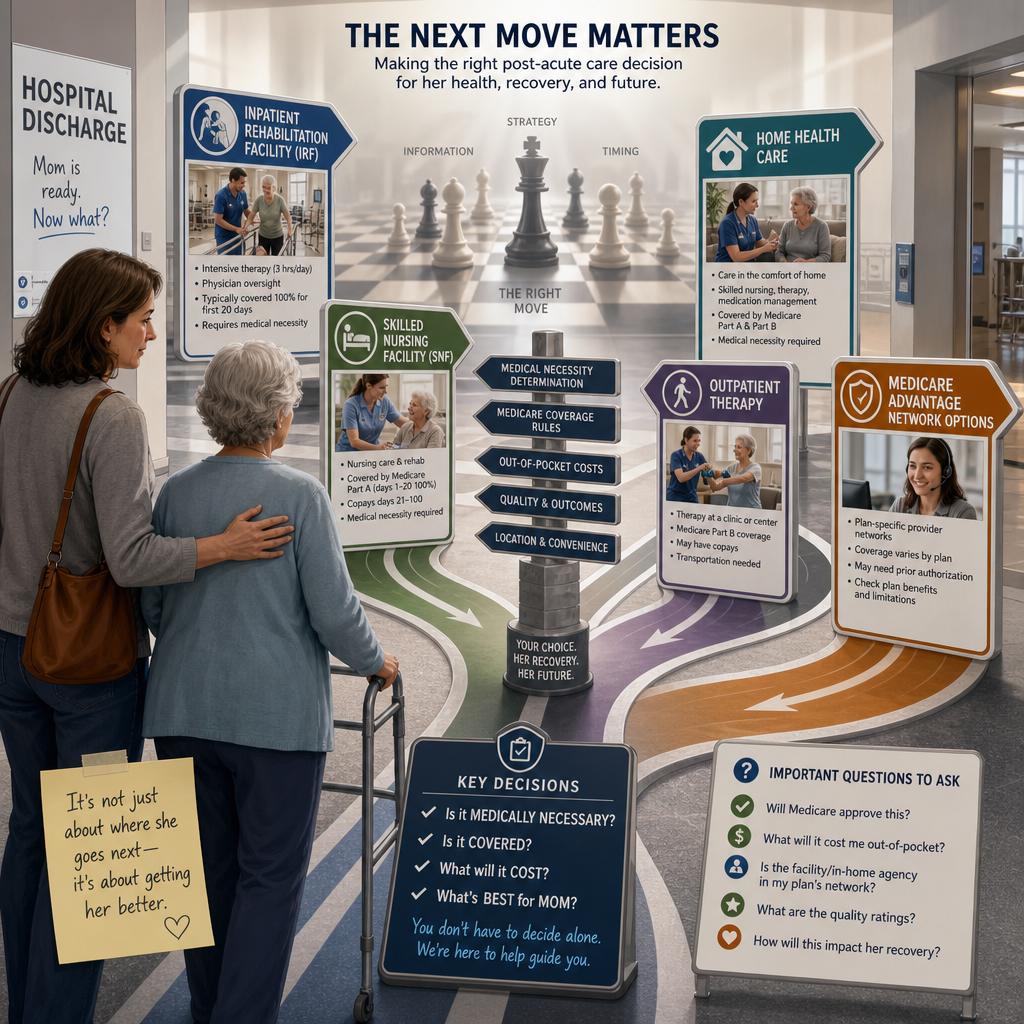
A serious hospitalization rarely ends at discharge. For many Medicare beneficiaries, the most consequential coverage decision happens in the quiet hours after surgery, a fall, pneumonia, a joint replacement, or a neurological event, when a family is told that the patient is “not ready to go home” but must choose the next level of care. In 2026, that choice may sound clinical, but it is also deeply financial: inpatient rehabilitation facility, skilled nursing facility, home health, outpatient therapy, or a Medicare Advantage approved network option.
This is where Medicare becomes less like a brochure and more like a chessboard. Two patients can leave the same hospital after similar illnesses and face very different recovery pathways depending on whether they have Original Medicare, a Medicare Supplement, a Medicare Advantage plan, a drug plan, or a retiree plan wrapped around their benefits. Medicare recognizes inpatient rehabilitation facilities as part of inpatient hospital care, and defines an inpatient rehabilitation facility as a hospital or part of a hospital that provides an intensive rehabilitation program to inpatients . That definition matters because it separates intensive hospital level rehabilitation from the lower intensity skilled nursing facility model that many families assume is interchangeable.
The Recovery Setting Is Not Just A Bed
Imagine a 72 year old beneficiary named Ellen who has been hospitalized after a complicated hip fracture. By day four, she is medically stable but cannot safely climb stairs, dress herself, or transfer without assistance. Her surgeon says she needs rehabilitation. Her daughter hears “rehab” and assumes Medicare will pay for whatever facility has an opening. In reality, the word rehab can refer to several different benefits with different entry rules, clinical expectations, and cost exposure.
An inpatient rehabilitation facility is generally intended for patients who can participate in a more intensive, coordinated rehabilitation program and who still need hospital level oversight. A skilled nursing facility, by contrast, is a nursing facility with staff and equipment to provide skilled nursing care and, often, skilled rehabilitative services . The difference is not a matter of prestige. It is a matter of medical necessity, documentation, daily skilled need, plan approval, and whether the patient’s functional goals match the setting.
Skilled Nursing Facility Rules Can Surprise Families
Under Medicare’s skilled nursing facility benefit, coverage is not triggered simply because a person is weak or unsafe at home. Medicare says skilled nursing facility care is covered for a limited time after a 3 day minimum medically necessary inpatient hospital stay, not counting the day the patient leaves the hospital, for an illness or injury related to that stay . The physician must also certify that the patient needs daily skilled care, such as physical therapy or intravenous medications, that as a practical matter can only be provided as a skilled nursing facility inpatient .
That 3 day inpatient rule is one of the most misunderstood post hospital issues in Medicare. Observation time, even if it includes an overnight stay, is not the same as being formally admitted as an inpatient. Medicare explains that a person is an inpatient only when the hospital formally admits them with a doctor’s order, while observation or emergency services without formal admission are outpatient status even if the patient spends the night in the hospital . Certain Accountable Care Organization arrangements may waive the skilled nursing facility 3 day rule, and Medicare Advantage plans may also waive it, but those exceptions require verification rather than assumption .
Original Medicare And Medicare Advantage Create Different Friction Points
Original Medicare generally gives broader provider access because beneficiaries can use any doctor or hospital that takes Medicare anywhere in the United States, while Medicare Advantage beneficiaries may need to use providers in the plan network and service area for non emergency care . In the post hospital setting, that distinction can become urgent. A family may prefer a particular inpatient rehabilitation facility because it is close to home or connected to a specialist, only to learn that the facility is not in the Medicare Advantage network or that authorization has not been granted.
Medicare Advantage plans must cover medically necessary services that Original Medicare covers, but they may require prior authorization before certain services or supplies are covered . This does not mean the plan is doing something improper. It does mean the discharge plan must be managed with precision. The family should know whether the requested rehabilitation setting is in network, whether authorization has been submitted, whether the approval is for inpatient rehabilitation or skilled nursing care, and what happens if the plan approves a lower intensity setting than the treating team recommends.
The Cost Question Is More Complicated Than The Daily Rate
Families often ask, “What will Medicare pay?” The better question is, “Which part of Medicare is paying, under what status, through which plan, and for how long?” For Original Medicare, inpatient hospital and skilled nursing facility use is measured in benefit periods. A benefit period begins when a person is admitted as an inpatient in a hospital or skilled nursing facility and ends after 60 days in a row without inpatient hospital care or skilled care in a skilled nursing facility . That structure can matter if a beneficiary has multiple hospitalizations close together or a relapse after returning home.
With Medicare Advantage, the analysis shifts. These plans have a yearly limit on out of pocket costs for covered Medicare services, but the amount a person pays can depend on premiums, deductibles, copayments, coinsurance, provider network status, service frequency, and whether the plan offers or restricts extra benefits . Original Medicare, on the other hand, generally has no yearly out of pocket limit unless the beneficiary has supplemental coverage such as Medigap, Medicaid, employer, retiree, or union coverage . For a medically complex recovery, the presence or absence of that supplemental layer can change the entire risk profile.
Medication Planning Follows The Patient Out The Door
Post acute care also intersects with drug coverage in ways families often miss. Drugs given during an inpatient stay may be treated differently from prescriptions needed after discharge. In 2026, Part D has a major protection: yearly out of pocket costs for covered Part D drugs are capped at $2,100, after which the beneficiary pays no copayment or coinsurance for covered Part D drugs for the rest of the calendar year . That cap is meaningful, but it does not make formularies irrelevant.
A beneficiary leaving an inpatient rehabilitation facility or skilled nursing facility may receive new prescriptions for anticoagulants, pain control, inhalers, antibiotics, diabetes supplies, or specialty medications. The plan’s formulary, tier placement, pharmacy contract, and prior authorization rules can still determine whether the transition is smooth or chaotic. Medicare notes that actual Part D costs depend on whether prescriptions are on the formulary, which tier they are in, which benefit phase applies, which pharmacy is used, and whether the person receives Extra Help . A recovery plan that ignores the drug plan is not complete.
The Discharge Conversation Should Be Treated Like A Coverage Review
The most valuable time to ask questions is before the discharge order becomes the family’s emergency. If the patient is in Original Medicare, confirm inpatient status, the recommended level of rehabilitation, whether the receiving facility accepts Medicare, and whether any Medicare Supplement or other secondary coverage applies. If the patient is in Medicare Advantage, ask the plan or discharge team to confirm network status, authorization, approved dates, expected copays, appeal rights, and what clinical information was submitted.
This is not just administrative tidiness. Medicare beneficiaries have rights when they believe covered services are ending too soon, including fast appeal rights for certain hospital, skilled nursing facility, home health, comprehensive outpatient rehabilitation facility, and hospice situations . In Original Medicare, providers may also issue an Advance Beneficiary Notice of Non coverage if they believe Medicare will not pay for certain items or services, and signing that notice can shift financial responsibility to the patient if Medicare denies payment . In a pressured discharge setting, those papers deserve careful review.
The lesson for 2026 is straightforward: recovery care is not one benefit with one set of rules. It is a sequence of coverage decisions, medical necessity judgments, network checks, drug plan reviews, and sometimes appeals. A good Medicare strategy does not wait until the hospital social worker is standing in the doorway with three facility names.
Vista Mutual helps clients compare Medicare Advantage, Medicare Supplement, and Part D options through the lens of real medical events, not just monthly premiums. If you want confidence that your 2026 coverage can support the kind of recovery you would actually choose, Schedule your 2026 Medicare consultation with the Vista Mutual team.