Medicare Connected Apps And Claims Data Sharing In 2026
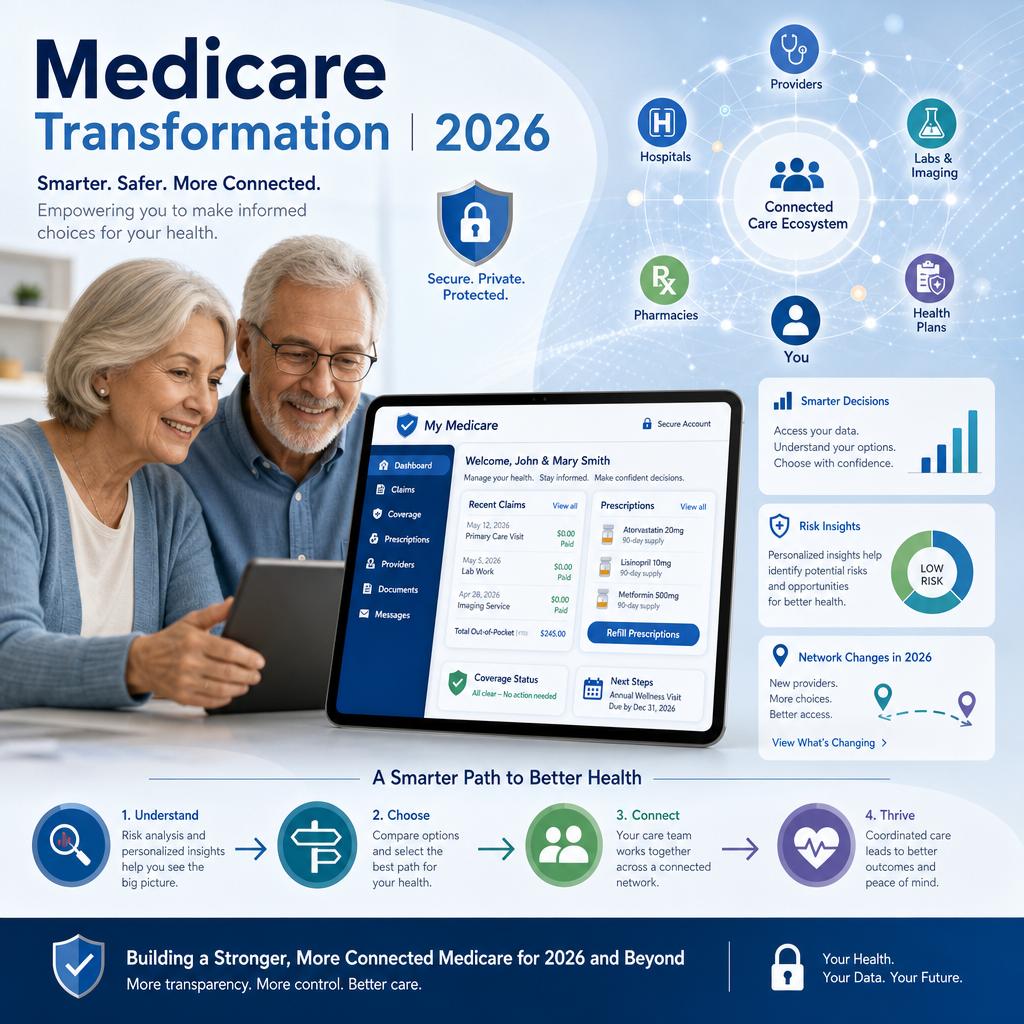
Medicare is becoming more digital in 2026, but that does not mean it is becoming simpler. A beneficiary can now see more claims activity, compare more plan details, receive more notices electronically, and allow certain care teams to coordinate around shared information. Yet the practical question remains the same: does all that information actually protect you from a costly coverage mistake?
Consider a retired couple preparing for 2026. One spouse takes several brand-name prescriptions, the other sees two specialists across county lines, and both are being encouraged to create secure Medicare.gov accounts. The official Medicare handbook highlights that a secure Medicare.gov account can help beneficiaries manage prescriptions, receive Medicare Summary Notices electronically, switch to the electronic handbook, and sign up for Medicare news updates . That sounds convenient, but convenience is not the same as interpretation. The value comes from knowing what the information means before a plan change becomes binding.
Why Medicare Data Access Matters More In 2026
The quiet shift in 2026 is that Medicare information is no longer confined to envelopes, call centers, and annual paper booklets. Medicare specifically points beneficiaries toward connected apps that can save Medicare claims information, which creates a new layer of access for people who want to organize their care history, review utilization, or share information with a caregiver . For families managing multiple doctors, recurring therapies, or high-cost prescriptions, this can be a major improvement over trying to reconstruct a year of care from memory.
But data access can also create false confidence. A claims history may show what was paid in the past, but it does not guarantee that the same provider will remain in a Medicare Advantage network, that a drug will stay on the same formulary tier, or that a prior authorization rule will remain unchanged. Medicare reminds beneficiaries that plan costs and coverage can change each year, and Part D costs in particular depend on the prescriptions taken, formulary placement, drug tier, benefit phase, pharmacy choice, and whether the person receives Extra Help . A connected app can organize evidence. It cannot replace plan analysis.
The Medicare Summary Notice Is Becoming A Planning Tool
For Original Medicare beneficiaries, the Medicare Summary Notice has traditionally been treated as a fraud-check document or a record of what Medicare paid. In 2026, it should also be treated as a planning instrument. Medicare urges beneficiaries to review Medicare Summary Notices, receipts, and statements for errors or services they did not receive, particularly as part of fraud and medical identity theft prevention . That same review can reveal patterns that matter during plan selection, such as frequent specialist visits, recurring diagnostic services, repeated durable medical equipment claims, or therapies that could create substantial out-of-pocket exposure under a different coverage model.
This is where a sophisticated Medicare review becomes different from a basic premium comparison. A beneficiary might see a Medicare Advantage plan with a low premium and assume it is the obvious move. Yet Original Medicare generally allows use of any Medicare-enrolled doctor or hospital that accepts Medicare patients anywhere in the United States, while Medicare Advantage plans may require network providers for non-emergency care and may use referrals or prior authorization . The MSN tells a story about how a person actually uses care. A broker who understands that story can test whether a proposed plan fits the person, rather than forcing the person to fit the plan.
Connected Apps Do Not Explain Network Risk
The most misunderstood part of digital Medicare planning is that claims data looks backward while plan rules operate forward. A connected app may help a beneficiary gather evidence of past claims, but it will not necessarily warn that a cardiology group is leaving a plan network, that an outpatient facility is treated differently by a new plan, or that a specialist referral process will slow access to care. Medicare explains that Medicare Advantage provider networks can change during the year, and while plans must still provide access to qualified doctors and specialists, the beneficiary may need to choose a new provider if a current one leaves .
That distinction is especially important for beneficiaries who have complex conditions but stable routines. The digital record may make the routine look safe: same physician, same pharmacy, same drug list, same lab schedule. The plan contract may tell a different story. A change in service area, preferred pharmacy arrangement, tiering, authorization criteria, or supplemental benefit structure can alter the economics of care. In 2026, Medicare data tools should be used as a diagnostic starting point, not as a final recommendation.
Data Sharing With Care Teams Has Benefits And Boundaries
Medicare also continues to support better care coordination through Accountable Care Organizations, known as ACOs. An ACO is a group of doctors, hospitals, and other providers that accepts Original Medicare and works together to coordinate care. Medicare notes that this coordination may help reduce repeated tests, avoid unnecessary appointments, and prevent medication problems when one provider does not know what another has prescribed . For a beneficiary with several chronic conditions, better coordination can feel less like technology and more like relief.
At the same time, beneficiaries should understand how information sharing works. Medicare allows a provider’s ACO to ask for certain care information so the people involved in treatment can access health information when needed. If a beneficiary does not want Medicare to share health information with an ACO for care coordination, Medicare says the person can call 1-800-MEDICARE and make that preference known, although Medicare may still share general information to measure provider quality . This is not a reason to avoid coordinated care. It is a reason to know when data is being used for treatment support and when a separate coverage decision still needs independent review.
Electronic Prescribing Can Reveal Part D Problems Early
Electronic prescribing is another practical source of insight for 2026. Medicare describes electronic prescribing as a way for a prescriber to send prescriptions directly to the pharmacy, with potential benefits for safety, time, and cost . When paired with a careful Part D review, the medication list generated through actual prescribing patterns can help identify drugs that require prior authorization, step therapy, quantity limits, or a preferred pharmacy strategy before January arrives.
This matters even more because the 2026 Part D environment includes a $2,100 yearly out-of-pocket cap for covered Part D drugs, after which beneficiaries pay no copayment or coinsurance for covered Part D drugs for the rest of the calendar year . The cap is meaningful, but it does not make every plan interchangeable. A drug still has to be covered by the plan, and the route to coverage can differ sharply. A beneficiary may reach the cap more predictably in one plan, face more administrative friction in another, or discover that a pharmacy arrangement changes the monthly experience of paying for medications.
Turning Digital Clarity Into A Better 2026 Decision
The best use of Medicare’s digital tools is not to replace human judgment. It is to improve it. By October 1, 2025, beneficiaries can begin comparing 2026 options, and the annual Open Enrollment Period runs from October 15 to December 7, 2025, with January 1, 2026 as the start date for new coverage or changed plan benefits . For Medicare Advantage enrollees, January 1 through March 31, 2026 offers a separate window to switch Medicare Advantage plans or return to Original Medicare with a separate drug plan, but it does not allow every type of change . Timing, therefore, is part of the strategy.
A well-prepared 2026 Medicare review should bring together the digital account, current prescriptions, pharmacy preferences, provider relationships, recent claims, plan notices, and the beneficiary’s tolerance for referrals, authorization, and network limits. That is not a brochure exercise. It is a risk analysis. The peace of mind comes from knowing that the plan was chosen because it fits the evidence, not because it looked attractive on one screen. If you want experienced help translating your Medicare data into a confident 2026 coverage decision, Schedule your 2026 Medicare consultation with the Vista Mutual team.