Medicare E Visits In 2026 And The Patient Portal Billing Surprise
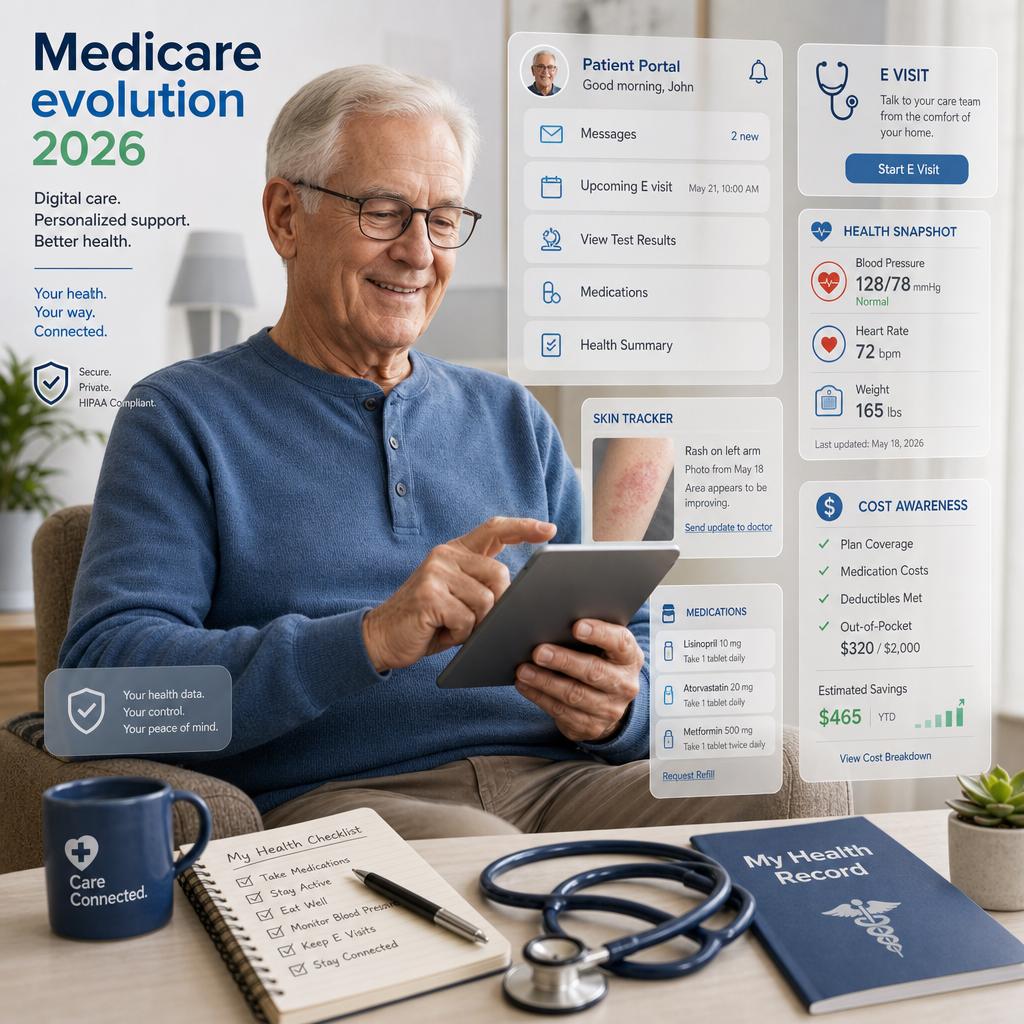
A Medicare beneficiary sends a quick message through a patient portal on a Monday morning: a rash is spreading, a blood pressure reading looks strange, or a medication side effect is becoming hard to ignore. The message feels casual because it happens on a phone, often between errands, without a waiting room or a paper gown. Yet in 2026, that kind of digital exchange can become a billable Medicare service when it meets the rules for an E visit.
This is one of the quiet Medicare details that surprises families. The question is not simply whether Medicare has entered the digital age. It has. The harder question is whether a beneficiary understands when a portal exchange is administrative, when it is clinical, and when it may create Part B cost sharing under Original Medicare or different plan based costs under Medicare Advantage.
The Portal Message That Is Not Just A Message
Medicare describes E visits as online patient portal communications that allow you to talk with your provider without going to the office. They are distinct from virtual check ins and telehealth, which matters because each service can be billed and managed differently. Medicare says E visits must be requested by the patient, and the covered providers can include doctors, nurse practitioners, clinical nurse specialists, physician assistants, physical therapists, occupational therapists, speech language pathologists, and, when the service is for mental health care, licensed clinical social workers, clinical psychologists, marriage and family therapists, and mental health counselors .
That language is more important than it looks. If you send a portal message asking for a prescription refill, that may be handled as an administrative request. If you describe new symptoms, upload photos, ask for a treatment recommendation, and your clinician evaluates the issue and responds with medical judgment, the exchange may begin to look like a covered E visit. The convenience is real, but so is the possibility of cost sharing.
Why The 2026 Cost Question Depends On Your Medicare Path
Under Original Medicare, the key cost rule is familiar but often overlooked: after the Part B deductible applies, you generally pay 20 percent of the Medicare approved amount for the provider service. Medicare applies that same basic structure to E visits, stating that beneficiaries pay 20 percent of the Medicare approved amount for the doctor or other provider services and that the Part B deductible applies .
The Medicare Advantage version can feel different. Medicare Advantage plans must cover medically necessary services that Original Medicare covers, but they may use networks, different copayments, and sometimes prior authorization rules for certain drugs, services, or supplies. Medicare also notes that Advantage plans have a yearly limit on what members pay for covered Medicare services, while Original Medicare has no yearly out of pocket limit unless the beneficiary has other protection such as Medigap, Medicaid, employer, retiree, or union coverage . That means a portal based clinical exchange can sit inside a much larger planning question: is your digital care being delivered by an in network provider, under the right benefit category, and at a cost you expected?
The Mental Health Angle Families Should Watch Closely
E visits become especially meaningful in mental health care, where access can be difficult and timely communication matters. Medicare covers outpatient mental health services for conditions such as depression and anxiety, including counseling and psychotherapy in individual, group, family, and crisis settings, and coverage can include care delivered in outpatient settings such as a provider office, hospital outpatient department, or by telehealth .
The provider list matters here as well. In 2026, many beneficiaries are interacting with mental health counselors, marriage and family therapists, clinical social workers, psychologists, nurse practitioners, and physicians across a mix of in person and digital channels. Medicare states that outpatient mental health care generally carries 20 percent of the Medicare approved amount after the Part B deductible applies . For a person using recurring therapy, medication management, and portal follow ups during a difficult season, those seemingly small distinctions can affect both access and the monthly budget.
When A Simple Digital Exchange Connects To Drug Costs
An E visit can also be the front door to a prescription decision. A patient may report that a medication is causing dizziness, ask whether a dose should change, or request an alternative because the pharmacy price is too high. The clinical advice may be billed under Part B if it qualifies as an E visit, while the medication itself may be governed by Part D or by an integrated Medicare Advantage drug benefit.
For 2026, Medicare drug planning has a major number attached to it: yearly out of pocket drug costs for drugs covered by a Part D plan are capped at $2,100. Once a beneficiary reaches that limit, Medicare says there is no copayment or coinsurance for covered Part D drugs for the rest of the calendar year . That cap is powerful, but it does not make every drug affordable at the pharmacy counter in January, and it does not remove the need to confirm formulary status, drug tier, pharmacy pricing, and whether the medication is covered under Part B or Part D.
The Insider Planning Questions Before You Click Send
The safest Medicare strategy is not to avoid the patient portal. It is to use it with awareness. Before relying on portal care in 2026, a beneficiary should understand whether the treating clinician accepts Medicare assignment under Original Medicare, whether the provider is in network under a Medicare Advantage plan, whether a digital exchange may be billed as an E visit, and whether the follow up prescription will land under Part B, Part D, or a plan specific rule.
If there is one practical checklist worth keeping, it is this:
- Ask the provider office how it distinguishes free administrative portal messages from billable E visits, confirm whether your clinician participates with your Medicare coverage, review your plan documents for virtual and digital care cost sharing, and keep records of portal exchanges that lead to diagnoses, prescriptions, or treatment changes.
The reason this matters is that Medicare is no longer just a card in a wallet. It is a set of rules that follows you into the pharmacy, the portal, the therapy session, the urgent question after dinner, and the chronic condition that needs monitoring between appointments.
Professional Guidance Turns Digital Convenience Into Confidence
The rise of E visits is good news for many Medicare beneficiaries. It can reduce delays, help clinicians respond before a condition worsens, and make routine follow up less burdensome. But convenience should not be confused with simplicity. In 2026, the same portal message can touch Part B cost sharing, Medicare Advantage network rules, outpatient mental health coverage, and Part D drug planning.
Vista Mutual Insurance Services helps clients look beyond the surface of premiums and extra benefits to understand how coverage behaves in real life. If you want a Medicare plan that supports the way you actually receive care, including digital communication, prescriptions, specialists, and follow up needs, Schedule your 2026 Medicare consultation. The right guidance can turn a confusing set of rules into a calmer, more predictable health care year.