Medicare PrEP Coverage In 2026 And The Overlooked Part B Pharmacy Decision
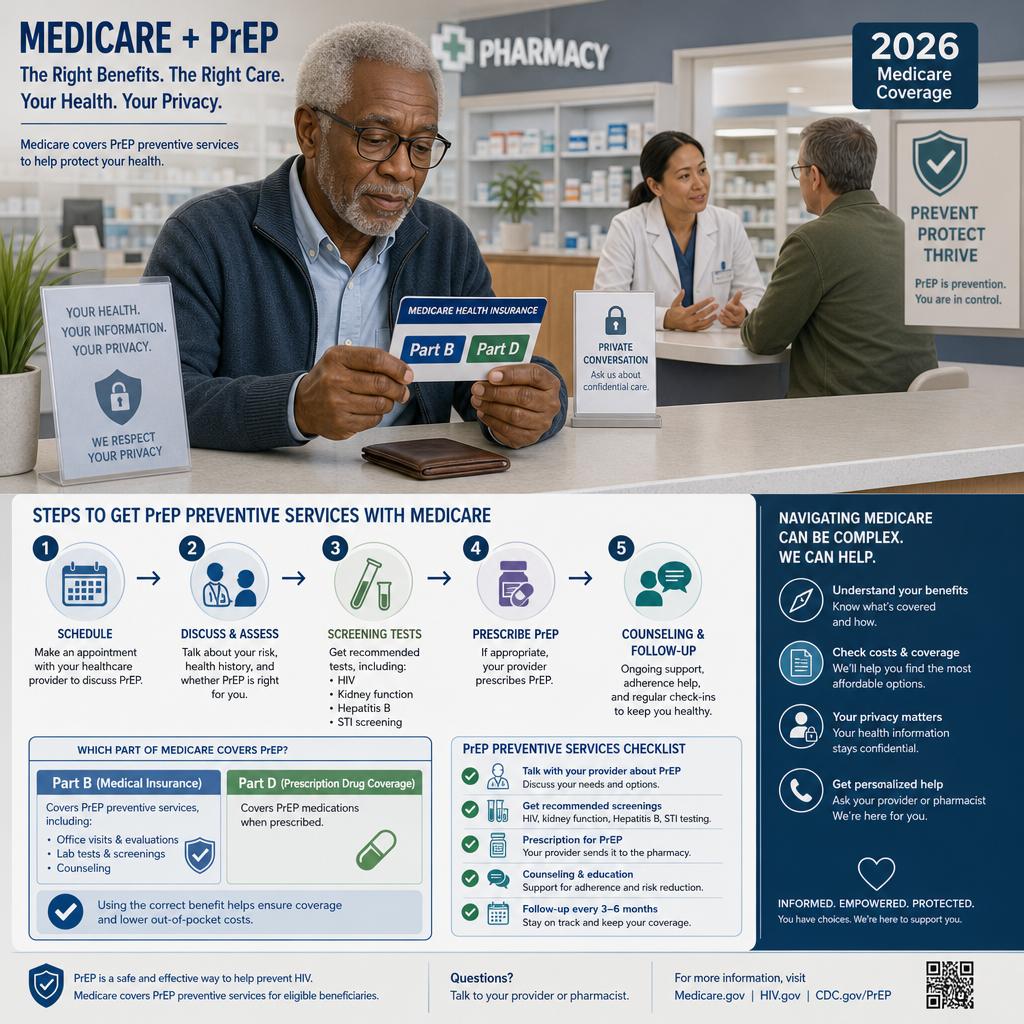
A Medicare decision can feel simple until the wrong card is handed to the wrong counter. In 2026, that is especially true for HIV pre exposure prophylaxis, commonly called PrEP. Many beneficiaries hear that Medicare covers PrEP preventive services and assume the matter is settled. The more precise truth is better, but more delicate. Medicare can cover PrEP medication, counseling, HIV screenings, and a one time hepatitis B screening for people who do not have HIV but are determined by their doctor to be at increased risk. If the PrEP medication is obtained from a Part B enrolled pharmacy, the beneficiary pays nothing out of pocket for the medication, and if the provider accepts assignment, the related preventive screenings can also be covered with no out of pocket cost .
For a retiree who has never had to think about whether a pharmacy is enrolled in Part B, that sentence contains the entire trap. Medicare does not operate as one single benefit. It is a series of benefit channels, each with its own billing customs, provider rules, appeal routes, and cost sharing logic. A beneficiary may be fully entitled to coverage and still face confusion if the prescriber, pharmacy, plan, and diagnosis code are not aligned.
Why PrEP Is A 2026 Medicare Planning Issue Not Just A Public Health Topic
PrEP is often discussed in public health language, but for Medicare beneficiaries it is also a coverage design issue. A widowed 69 year old entering a new relationship, a beneficiary with a partner whose HIV status is not fully known, or an older adult who simply wants a private, clinically sound prevention conversation should not have to navigate stigma and billing uncertainty at the same time. Medicare’s 2026 handbook recognizes PrEP for HIV prevention as a covered preventive service when the medical criteria are met, including medication, counseling, up to 8 HIV screenings per year, and a one time hepatitis B screening .
That is a meaningful benefit, but it is not self executing. The coverage path depends on the reason the drug is being used. If the beneficiary does not have HIV and the medication is being used for prevention, Medicare describes the benefit under PrEP preventive services. If the beneficiary has HIV and takes medication for treatment rather than prevention, the handbook makes clear that treatment medication is covered through Medicare drug coverage, Part D . That distinction may sound clinical, but it can determine whether a person is billed under Part B preventive rules or routed through a drug plan formulary.
The Part B Pharmacy Detail Most People Miss
The most important phrase in the 2026 guidance is not simply “Medicare covers PrEP.” It is “if you get PrEP medication from a Part B enrolled pharmacy.” That enrollment status matters because Medicare Part B and Part D pharmacies are not interchangeable in every situation. A pharmacy may be familiar, convenient, and in network for a drug plan, yet that does not automatically mean it is the right billing location for a Part B preventive medication.
This is where many beneficiaries become frustrated. They may arrive with a prescription, present their Medicare Advantage or Part D card, and receive a price that does not match what they expected. The issue may not be the legitimacy of the prescription. It may be the benefit lane. If the medication is billed as a Part D prescription when it should have been processed through the Part B preventive structure, the beneficiary can encounter formulary questions, prior authorization friction, or a point of sale charge that requires correction. Medicare’s own explanation separates PrEP prevention from HIV treatment and connects no cost PrEP medication to a Part B enrolled pharmacy, which is why the billing path should be verified before the first fill .
Medicare Advantage Can Add A Second Layer Of Administration
Beneficiaries enrolled in Medicare Advantage should be especially careful because they receive their Part A and Part B benefits through a private Medicare approved plan. Medicare Advantage plans must cover medically necessary services that Original Medicare covers, and many include drug coverage, but the plan may use networks and may require approval before certain services or supplies are covered . That does not erase the preventive nature of PrEP coverage, but it can change the practical steps needed to access it cleanly.
In real life, the difference may appear in small administrative moments. The plan may direct the beneficiary to a particular pharmacy process. The provider’s office may need to document increased risk for HIV. A pharmacy may need to bill the correct benefit. A member services representative may speak in general drug plan terms without recognizing that PrEP for prevention is being handled under a specific preventive coverage rule. None of these details means the beneficiary is doing anything wrong. They mean the Medicare system is fragmented, and privacy sensitive preventive care deserves more preparation than a rushed pharmacy counter conversation.
How Part D Still Matters In The Background
Part D still matters in 2026, even when PrEP itself is being discussed as a Part B preventive service. Many beneficiaries take other prescriptions, and their drug plan remains central to the annual cost picture. Medicare drug coverage has a major 2026 protection: yearly out of pocket costs for covered Part D drugs are capped at $2,100, after which the beneficiary pays no copayment or coinsurance for covered Part D drugs for the rest of the calendar year . That cap can be powerful for people taking expensive medications, but it should not be confused with the special preventive treatment of PrEP medication when obtained through the correct Part B enrolled pharmacy.
The distinction is important because beneficiaries often evaluate coverage by asking a single question: “Is my medication covered?” A stronger 2026 question is, “Which part of Medicare is supposed to cover this medication, and what must happen for the claim to process correctly?” Medicare Part D plans use formularies, tiers, pharmacy arrangements, deductible structures, and cost sharing rules, and the handbook notes that actual drug costs vary based on the prescriptions, formulary status, tier, benefit phase, and pharmacy used . PrEP for prevention may sit outside the beneficiary’s ordinary Part D experience, which is precisely why it can be misunderstood.
A Practical Conversation To Have Before The Prescription Is Filled
The most protective approach is not to wait until a claim rejects. Before the first prescription is sent, the beneficiary should ask the clinician whether the medical record clearly supports PrEP for HIV prevention, whether the related screenings and counseling are being ordered under the preventive benefit, and whether the medication should be directed to a pharmacy that can bill Medicare Part B for PrEP. If the person is enrolled in Medicare Advantage, the plan should be asked how it administers PrEP preventive medication, which pharmacy process is required, and whether any internal documentation is needed before the first fill.
One concise checklist can prevent several weeks of confusion:
- Confirm that the prescription is for HIV prevention, not HIV treatment, because Medicare treats those coverage paths differently.
- Verify that the pharmacy can process PrEP medication through the appropriate Part B enrolled pharmacy channel.
- If enrolled in Medicare Advantage, ask the plan for its written or recorded explanation of how PrEP preventive services are accessed.
That is the only list worth keeping because the rest is judgment. A broker who understands Medicare does not merely compare premiums. They look for places where the system can misclassify a claim, where a beneficiary may be protected on paper but exposed in practice, and where a private plan’s administrative rules may complicate an otherwise generous federal benefit.
Privacy And Dignity Are Part Of Good Medicare Planning
PrEP conversations require discretion. Older adults are often ignored in sexual health discussions, and that silence can produce both clinical risk and coverage mistakes. A Medicare plan review should create space for private, nonjudgmental questions about prescriptions, relationships, travel, preventive screenings, and provider access. The right advisor does not need unnecessary personal detail, but they do need enough information to identify whether a plan’s pharmacy structure and provider network are likely to support the care a beneficiary actually uses.
This is also where Medicare’s broader architecture matters. Original Medicare usually allows access to any Medicare enrolled doctor or hospital that accepts Medicare patients anywhere in the United States, while Medicare Advantage may require use of network providers for non emergency care and may have different out of pocket structures . For a beneficiary seeking ongoing preventive counseling, periodic screenings, and coordinated pharmacy billing, that access difference can be more important than a dental allowance or a low monthly premium.
In 2026, PrEP coverage is a reminder that Medicare can be both generous and exacting. The benefit may be available with no out of pocket cost when the conditions are met, but the beneficiary still has to move through the correct doorway. That is why expert guidance is not a luxury for people with complex prescriptions, sensitive preventive needs, or Medicare Advantage plan questions. It is a way to preserve privacy, prevent avoidable bills, and make sure the coverage promised on paper is the coverage experienced in real life.
If you want a careful review of how your 2026 Medicare coverage handles preventive medications, Part D prescriptions, provider access, and pharmacy rules, Consult with the Vista Mutual team. The peace of mind comes from knowing that someone has looked beyond the brochure and into the details that actually affect your care.