Medicare Prescription Payment Plan Strategy For 2026
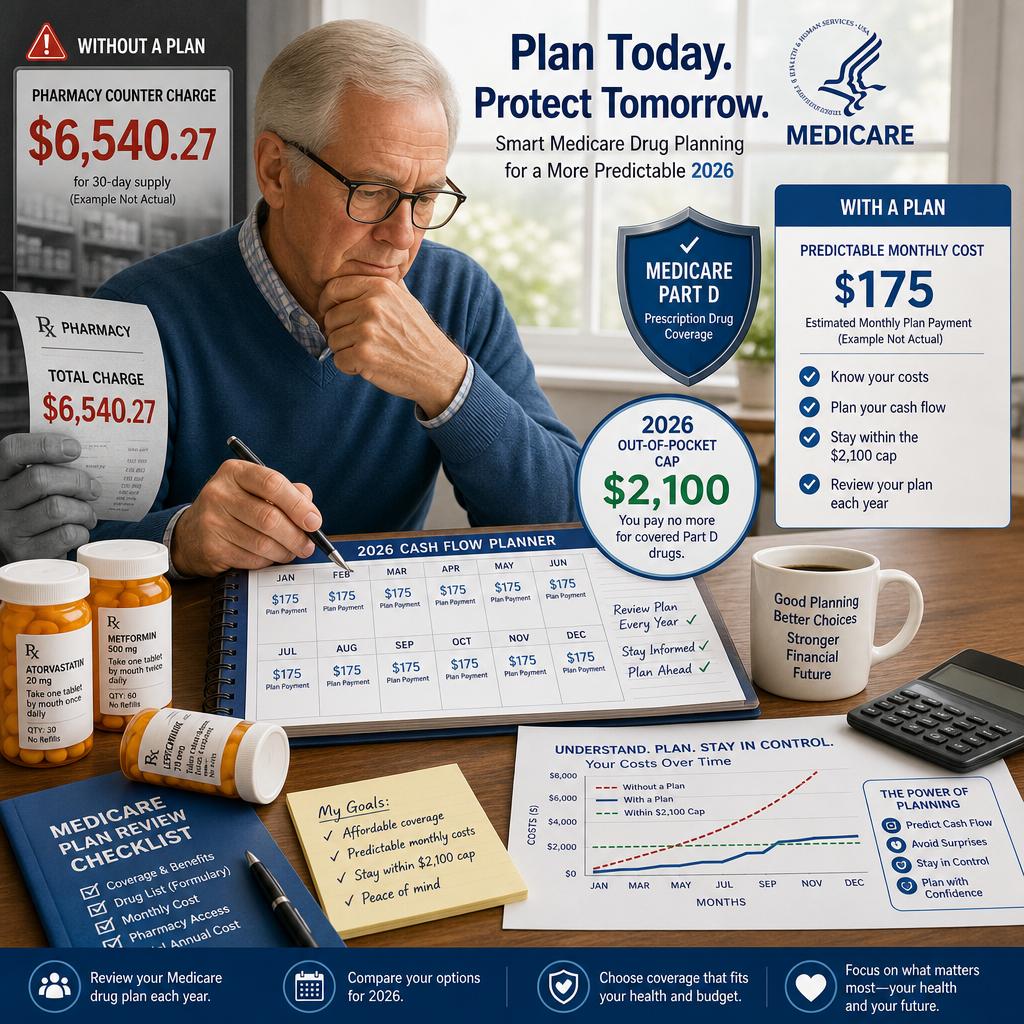
For many Medicare beneficiaries, the most stressful prescription bill is not the total annual cost. It is the timing. A retiree who can handle a predictable monthly expense may still be shaken by a January pharmacy counter charge for a specialty drug, a brand-name inhaler, or a new biologic therapy. In 2026, that timing problem deserves more attention because the Medicare Prescription Payment Plan is no longer a new concept. It is becoming part of the annual drug plan decision for people who want steadier cash flow without confusing that steadiness for savings.
The key distinction is simple but often misunderstood. Medicare drug coverage has a major protection in 2026 because yearly out-of-pocket costs for covered Part D drugs are capped at $2,100, and after reaching that cap beneficiaries do not pay copayments or coinsurance for covered Part D drugs for the rest of the calendar year . The Medicare Prescription Payment Plan works differently. It can spread what you owe across the calendar year, but Medicare is explicit that it does not save you money or lower your drug costs .
Why The Payment Plan Is A Cash Flow Tool Not A Discount
Imagine a beneficiary named Elaine who takes a costly medication filled early in the year. Without the payment program, her out-of-pocket responsibility may arrive quickly, even though her annual Part D exposure is capped. With the payment program, she may avoid paying the pharmacy counter amount all at once because she receives a bill from her health or drug plan instead. That sounds like relief, and for the right household it can be. But it is not a price negotiation, a coupon, or an extra benefit layered on top of the Part D cap.
This is where many people make a planning mistake. They hear monthly payment and assume affordability has improved. In reality, affordability depends on the plan premium, formulary placement, deductible structure, pharmacy network, and whether the medication is covered at all. Medicare notes that actual drug costs vary based on prescriptions, whether those prescriptions are on the plan formulary, the tier assigned to the drug, the benefit phase, the pharmacy used, and whether the beneficiary receives Extra Help . The payment program changes the rhythm of the bill. It does not fix a poorly matched Part D plan.
The 2026 Part D Cap Changes The Question But Not The Homework
The $2,100 Part D out-of-pocket cap is a meaningful 2026 protection, especially for people who use high-cost covered prescriptions. It can turn an open-ended drug cost fear into a known annual ceiling. But that ceiling only applies to drugs covered by the plan, and plan design still matters. A beneficiary can still face disruption if a drug is not on the formulary, if prior authorization is required, if a pharmacy is out of network, or if a plan’s preferred pharmacy pricing makes one pharmacy materially less expensive than another.
The Medicare Prescription Payment Plan should therefore be evaluated after the drug plan itself is evaluated. A strong review begins with the medication list, doses, refill patterns, and preferred pharmacies. From there, the question becomes whether smoothing the remaining cost across the year improves the household budget. Medicare explains that all plans offer this payment option, participation is voluntary, there is no cost to participate, and beneficiaries who use it continue paying any plan premium while receiving a separate bill from the plan for covered prescription drug costs instead of paying those amounts at the pharmacy .
The Hidden Risk Of Automatic Comfort
One underappreciated 2026 issue is automatic renewal. If a beneficiary participates in the Medicare Prescription Payment Plan and stays in the same Part D plan, participation is automatically renewed for 2026 . That may be convenient, but convenience can also dull the annual review reflex. A plan that worked last year can become less attractive if a drug changes tiers, a pharmacy contract changes, a premium rises, or a medication is replaced by a different therapy.
Automatic renewal is especially risky for people who treat Medicare decisions as paperwork rather than financial planning. A beneficiary may remain in a plan because the payment schedule feels manageable, while missing a competing plan with better drug coverage or a more favorable pharmacy arrangement. Conversely, another person may avoid the payment program because they dislike monthly bills, even though spreading costs would protect their cash reserve during the first quarter. Neither decision is universally right. The right answer depends on the person’s medications, cash flow, plan options, and tolerance for billing complexity.
When The Payment Plan May Make Sense
The program may be worth considering for beneficiaries who expect significant covered Part D costs early in the year, have stable monthly income, and prefer predictable bills over large pharmacy charges. It may also help someone who has a known expensive medication and wants to preserve liquidity for rent, utilities, groceries, or medical appointments. However, it may be less helpful for a person with very low drug costs, someone who qualifies for Extra Help, or someone who may struggle to track and pay an additional monthly bill from the plan.
This is also where a broker’s review becomes more valuable than a generic brochure. The payment plan cannot be judged in isolation. Medicare Advantage plans often include Part D, while standalone Part D plans pair with Original Medicare and possibly Medigap. Medicare’s own materials emphasize that beneficiaries have two main ways to receive coverage, Original Medicare with optional Part D and supplemental coverage, or Medicare Advantage, which usually bundles Part A, Part B, and Part D and may require networks or approvals for certain services and drugs . The prescription payment strategy must fit the larger coverage strategy.
A Smarter Way To Review 2026 Drug Coverage
A high-quality 2026 review should not begin with the monthly premium alone. It should begin with the full medication profile, then test each plan against formulary status, restrictions, pharmacy pricing, projected annual cost, and cash flow timing. The Medicare Prescription Payment Plan becomes the final layer of analysis: if the chosen plan is already a good fit, does monthly billing make the year easier to manage?
That is the difference between enrolling and planning. Enrolling means picking a plan that appears acceptable. Planning means understanding how that plan behaves when the first expensive refill is processed, when a doctor changes a prescription, or when a pharmacy is no longer the cheapest option. For retirees living on fixed income, those details are not minor. They are the difference between confidence and surprise.
The 2026 Medicare Prescription Payment Plan can be a useful tool, but only when it is placed in the right context. It smooths costs. It does not reduce them. It can protect cash flow. It cannot rescue a mismatched formulary. If you want a careful review of your drug coverage, Medicare Advantage options, Supplement strategy, and Part D cost exposure, Schedule your 2026 Medicare consultation with Vista Mutual. Professional guidance brings peace of mind because the details are examined before they become expensive.