Medication Therapy Management In 2026 Medicare The Free Review Hidden Inside Part D
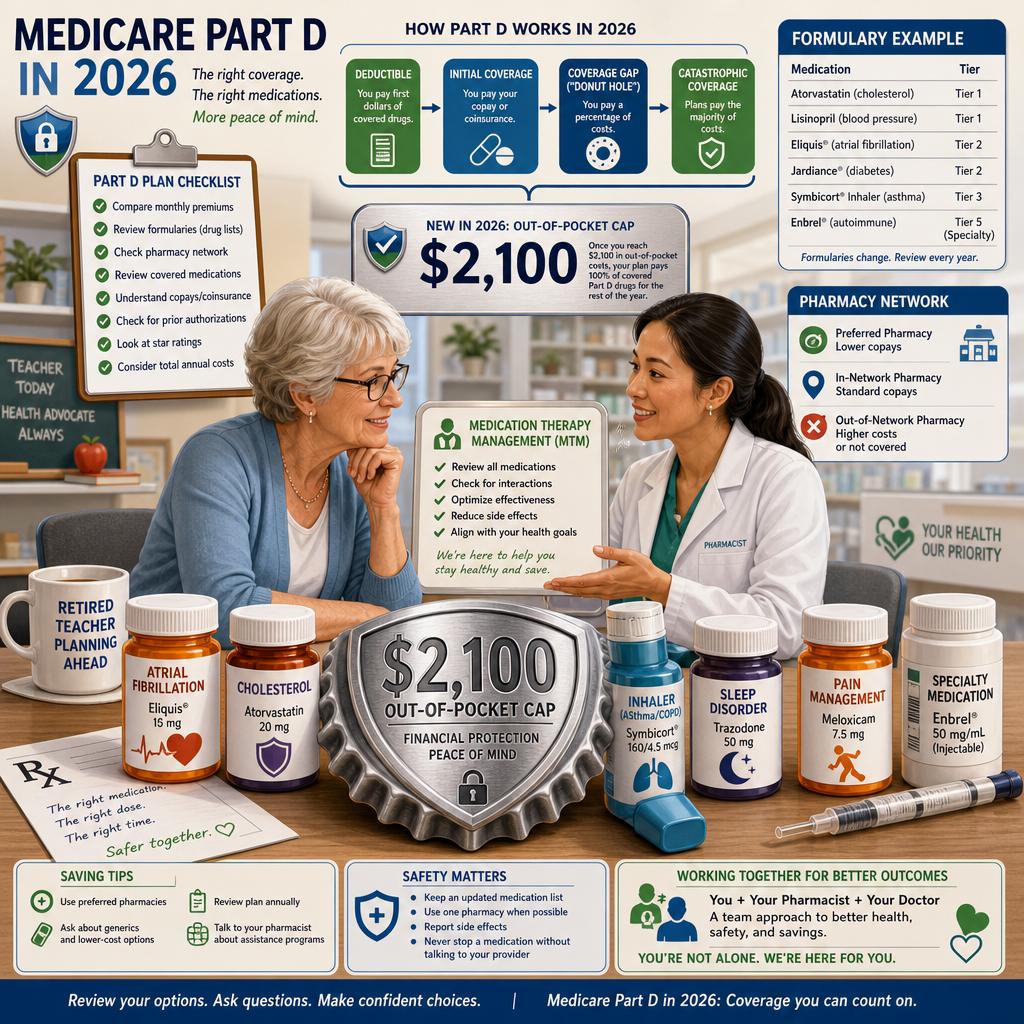
Most Medicare conversations in 2026 will begin with the number everyone has heard: $2,100. That is the new annual out of pocket cap for covered Part D drugs, and once a beneficiary reaches it, they do not pay copayments or coinsurance for covered Part D medications for the rest of the calendar year . It is a major protection, but it is not a complete medication strategy.
Consider a retired teacher who takes eight prescriptions: one for atrial fibrillation, two for blood pressure, a cholesterol medication, an inhaler, a sleep medication, an occasional pain medicine, and a new specialty drug prescribed after a hospital visit. She is relieved to hear about the Part D cap, but her real risk is not only what she pays after January. It is whether every drug is covered by her plan, whether her pharmacy is preferred, whether prior authorization will interrupt treatment, and whether one medication is quietly working against another.
The 2026 Part D Cap Does Not Eliminate Medication Complexity
The $2,100 cap applies to covered Part D drugs, which means the details of a plan still matter. Medicare explains that actual drug costs vary based on whether prescriptions are on the plan formulary, what tier they occupy, which benefit phase applies, which pharmacy is used, and whether the person receives Extra Help . In plain English, two beneficiaries taking the same drug can experience very different January costs, refill rules, and pharmacy counter outcomes.
That is why 2026 planning should not stop at premium shopping. A low premium plan can still be a poor fit if a daily medication requires step therapy, if a preferred pharmacy is inconvenient, or if a drug moves to a higher tier. Medicare drug plans can change formularies, and plans may apply coverage rules such as prior authorization, quantity limits, and step therapy to certain drugs . Those rules can be clinically reasonable, administratively frustrating, or both.
The Free Review Many Beneficiaries Never Use
Medication Therapy Management, often shortened to MTM, is a Part D service designed for exactly this kind of complexity. Medicare says plans with drug coverage must offer MTM services to members who meet certain requirements or who are in a Drug Management Program. If a beneficiary qualifies, these services are available at no cost and usually include a discussion with a pharmacist or health care provider to review medications and help the person take them safely .
The phrase no cost can make MTM sound minor, but for the right household it can be one of the most valuable conversations of the year. A pharmacist may notice duplicate therapies from different specialists, an interaction between a sleep drug and a pain medication, a refill pattern that suggests missed doses, or a less expensive generic or biosimilar option that should be discussed with the prescriber. Medicare specifically notes that pharmacists can help identify less expensive options, while the doctor should confirm whether a generic or biosimilar is clinically appropriate .
Why MTM Matters More In A Year Of Negotiated Drug Prices
Another 2026 change adds a new layer to the discussion. Medicare states that prices for the initial group of negotiated drugs will take effect on January 1, 2026, and beneficiaries should contact their plans for details on how negotiated prices affect them . That does not mean every expensive medication suddenly becomes simple to manage. A negotiated price can affect cost exposure, but the beneficiary still has to navigate formulary placement, pharmacy networks, plan rules, and refill logistics.
This is where a careful MTM review can turn policy into practical protection. If a beneficiary is taking one of the affected medications, the question is not merely whether the national policy changed. The better question is how that specific medication behaves inside that specific plan for that specific patient. A sophisticated review looks at whether the drug is covered, whether the plan requires prior authorization, whether the pharmacy is preferred, whether mail order is sensible, and whether a different plan would reduce friction without creating risk elsewhere.
The Safety Side Of Part D Planning
Medication cost gets most of the attention because it is visible at the counter. Medication safety is often less visible until something goes wrong. Medicare drug plans perform opioid safety checks at the pharmacy, including checks for unsafe dosages, first prescription supply limits, and concurrent use with drugs such as benzodiazepines. Plans also operate Drug Management Programs to help monitor potentially unsafe use of opioids and benzodiazepines, with appeal rights if restrictions are imposed .
That oversight can be lifesaving, but it can also surprise a beneficiary who sees several physicians. A cardiologist may not know what the orthopedist prescribed after a fall. A primary care doctor may not know that a sleep medication was restarted. A caregiver may assume the pharmacy system catches everything. MTM creates a dedicated moment to reconcile the whole picture, not just the prescription being filled that day.
What To Bring To A 2026 Medication Review
The most productive MTM conversation begins before the phone call or pharmacy appointment. Beneficiaries should treat it less like a refill question and more like a financial and clinical audit of their medication life. The goal is to make the pharmacist or clinician see the same reality the patient lives with at home.
Bring the following to the review:
- Every prescription bottle, including medications from specialists, hospitals, urgent care visits, and mail order pharmacies.
- Over the counter products, vitamins, supplements, eye drops, inhalers, creams, patches, and as needed medications.
- The preferred pharmacy information, mail order history, and any recent Explanation of Benefits notices from the drug plan.
- A list of side effects, skipped doses, unaffordable refills, and drugs the patient stopped taking without telling the prescriber.
That last item is often the most revealing. A plan analysis can show that a drug is covered, but only the patient can explain that they are splitting tablets, delaying refills, or avoiding a medication because the last pharmacy visit was too costly. In 2026, the cap may reduce some financial pressure, but it will not automatically fix adherence, confusion, or drug duplication.
Original Medicare Advantage And The Plan Design Difference
MTM is tied to Medicare drug coverage, so the path depends on how the beneficiary receives Part D. Some people have Original Medicare with a stand alone Part D plan. Others have a Medicare Advantage plan that includes drug coverage. Medicare notes that most Medicare Advantage plans include Part D, while people with Original Medicare can join a separate drug plan .
This distinction matters because plan design affects the entire medication experience. A Medicare Advantage plan may integrate medical and drug coverage, but it may also have network and authorization rules that influence where care is received. Original Medicare paired with Part D may offer broader provider access for medical care, but the drug plan still has its own formulary, pharmacy network, and coverage rules. The right answer depends on the prescriptions, physicians, pharmacy preferences, travel patterns, and tolerance for administrative steps.
The Broker Value Hidden Behind The Pharmacy Counter
A basic brochure can tell you the 2026 Part D cap. It cannot tell you whether your combination of prescriptions, physicians, pharmacies, and refill habits points toward one plan structure over another. It also cannot see the pattern that emerges when a beneficiary has one expensive brand drug, one medication that may need prior authorization, and a preferred pharmacy that is not actually preferred by the plan being considered.
That is why MTM should be part of a broader annual review, not a substitute for one. The pharmacist can help identify medication safety issues and possible alternatives. The prescriber decides what is medically appropriate. A Medicare broker can help compare how different Part D and Medicare Advantage options handle the same medication profile. When those roles are coordinated, the beneficiary is less likely to be caught between a clinical recommendation and a plan rule.
For 2026, the smartest Medicare planning will combine policy awareness with personal evidence: the medication list, the pharmacies used, the plan documents, the doctors involved, and the real cost history at the counter. The $2,100 cap is important, but peace of mind comes from knowing how the rest of the system behaves before January decisions become next year’s problems. Schedule your 2026 Medicare consultation with Vista Mutual to review your plan options with the care and precision this decision deserves.