Observation Bed Billing Pitfalls and Medicare Smart Appeals in 2026
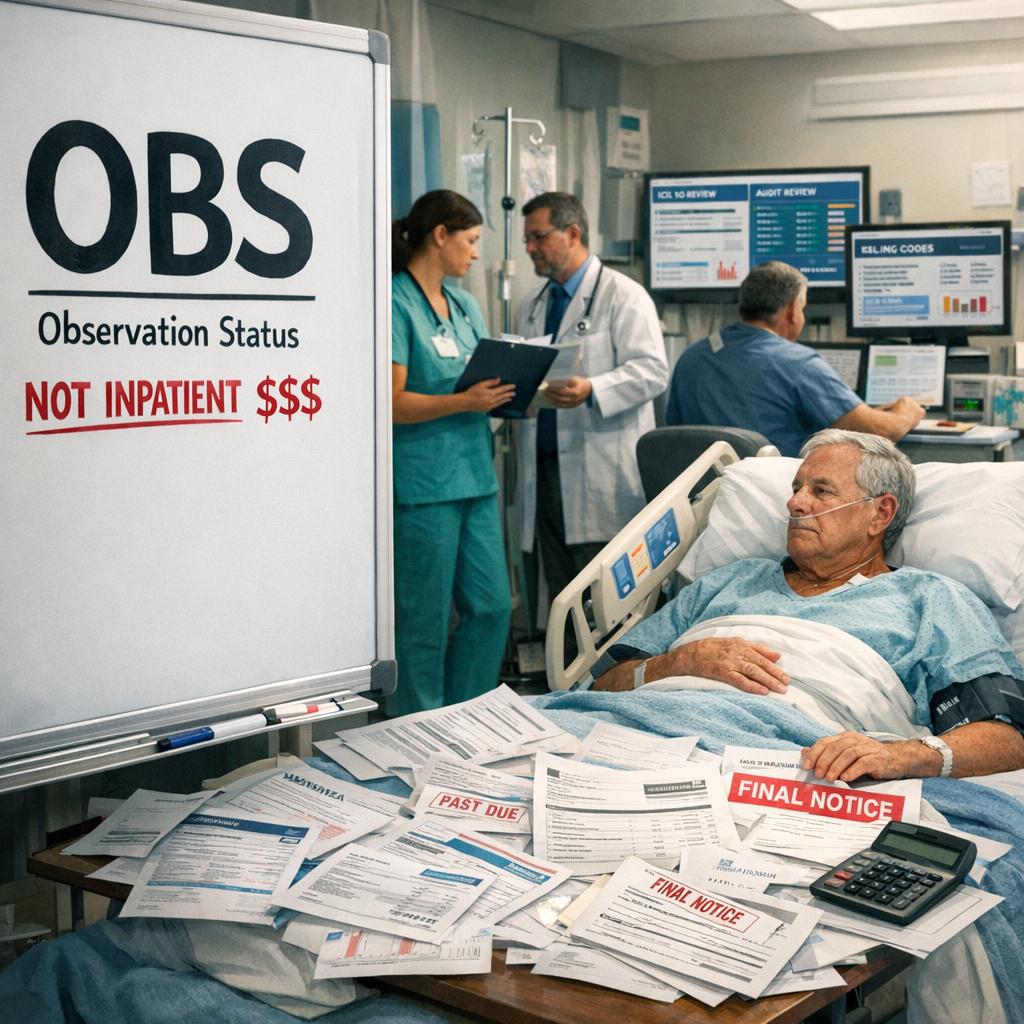
What feels like a bland detail on the hospital whiteboard—admitting 'OBS' or observation status rather than inpatient—remains one of the most financially misunderstood Medicare dangers for 2026. As regulations and audits intensify, even short stays create costly ripples: affecting skilled nursing eligibility, recalibrating billing under Part B, and delaying approvals on everything from advanced therapy to future hospital bundled claims. Most retirees discover these losses only after bills land. This year's elevated claim complexity makes proactive status management and appeals essential for protecting fiscal health and maximizing eligible Medicare relief.
How 2026 Observation Status is Defined and Billed
Hospitals using the term 'observation bed' refer to Medicare patients under clinical evaluation who may—but have not yet—been deemed sick enough for formal admission as an inpatient. For 2026, CMS's regulations sharpen delineation once again: Part B covers outpatient and observation costs, so any stay—even one exceeding three days lying in a hospital bed—does not activate Part A's expansive covered benefits unless formal admission/doctor order crosses regulatory lines.
This fiscal wall means one critical outcome for patient families: bills that typically trigger deductible and 20% coinsurance as Part B outpatient services (2026’s Part B deductible of $270 applies first). Lab tests, imaging, physician panel consults—even all therapies once tagged on the observation code—are run up per standard outpatient mandate.
A major concern: accounts that prolong observation beyond standard time frames (CMS guidance sets two midnights as the ideal cutoff before progressing toward formal admit or clearly dismissing unsafe cases) map onto costliest billing errors for retirees, sometimes doubling out of pocket burden and annihilating plan assumptions for 'hospital' rewards like zeroed SNF transition.
Medicare Advantage plans must mirror the new rules in 2026. Although some MA contracts introduce modified co pays, out of network labors, or simplified flat per stay billing, audit compliance hardens—the out of plan award shrinking for long delayed admissions or shapeless overnight backups and making it urgent to sync family, case manager, and pro-agent teams on claim navigation at arrival.
Real World Pitfalls—When Observation Stalls Push Medical Bills Higher
Imagine Patricia, who experiences fainting and acute confusion at an urgent care unit, lands in the ER, then sits through 3.5 nights under 'observation': cost piles on major labs, imaging, consult after consult. Her summary benefit note posts the word 'OBS.' Unfortunately, despite near-indistinguishable experience from admitted peers across the hall, she fails to tally eligible 'inpatient' time: SNF therapy for protracted recovery is fully denied as not lawful, Part B coinsurance for compounded claims arrive in a Q2 stack unaided by Medigap backup (if standard Part B coordination falters or errors are logged).
Even more commonly, skilled coverage is lost for those pin-balled from cardiac to neuro to short-stay GI observes—families prepping discharge into formal center care are sidelined and forced cash outlays due solely to hours of in-bed paperwork drift.
A further hidden sting awaits at the appeals line: few patients, or their proxies, gather enough paper evidence—precise medical directives, note CPOE admissions, and concurrent provider statements—before hospital release, so efforts at post-fact billing correction meet slow moving or incomplete corridors at either OMS or plan customer service. Calculating which doctor signed which mode and diagnostic event, or capturing direct admission-challenge language at decision moments, stymies millions but answers exist.
Advanced Playbook—How to Pursue Appeals or Reduce Out of Pocket Loss
For every clinical client or advisor aiming to cut down Medigap/advance deductible upcharge caused by wrong stay status, use the following cornerstone checklist:
- Always request 'Medicare Outpatient Observation Notice' (MOON form) once the hospital labels admission as 'observation.' Refuse discharge until actual written doctor order for inpatient status, with CRN time stamping and quick notation into EMR records, or—if already skilled—demand immediate hospitalist and case manager consultation to query justification of observation notation over admit. Maintain family ready advocacy, and ask billing or appeals coordinator for a running audit copy of hospital stay/submitting diagnosis codes/signed note sheet as day-night cycles close. If claim lands as observer-stay, launch a status review/appeal via structured agent partnership before cycle close to challenge all gardened CPT directories in real time and collect EMR thread for matching summary notes.
Incidentally, judges and appeals boards in 2026 now favor strong debrief and early contest submission that tracks one-to-one night time chart, provider note (especially hospitalist/specialty co fever triggers), and embedded documentation extracted from daily chart logins pulled soon after discharge. Prior Supreme-level regulations reauthorize mid cycle CMS/dept-facilitated reviews if extenuating care needs escalate or plans mislog status at transition moment, a glaring artifact frequently caught only by adventuresome brokerage partners late post claim landing.
Prevent sudden surprise costs with assurance rather than ad hoc comfort: clients assigning specific roles to family, delegated Medigap, and open-clearance agent capacity leap rapid document gathering/appeal launches, unlocking bedside recert or case-by-case admission tweaks to swiftly rollback observer cost sprays.
Above all, know the playbook by advance—never scramble after pile up. Offer eyes pinpointing record threads, keep written status, and rely on heavyweight insurance professionals trained for 2026 audit tension.
With increased regulatory vigor in the hospital billing maze, future peace will depend on evidence, timeliness, and allies with a keen institutional ceiling-breaking reputation. Schedule your 2026 Medicare consultation to turn an observation penalty into a manageable safety step, securing dollars and comfort in a challenge meant for deep expertise.