Outpatient Prescription Infusions and Home Drug Therapy Advances in 2026 Medicare
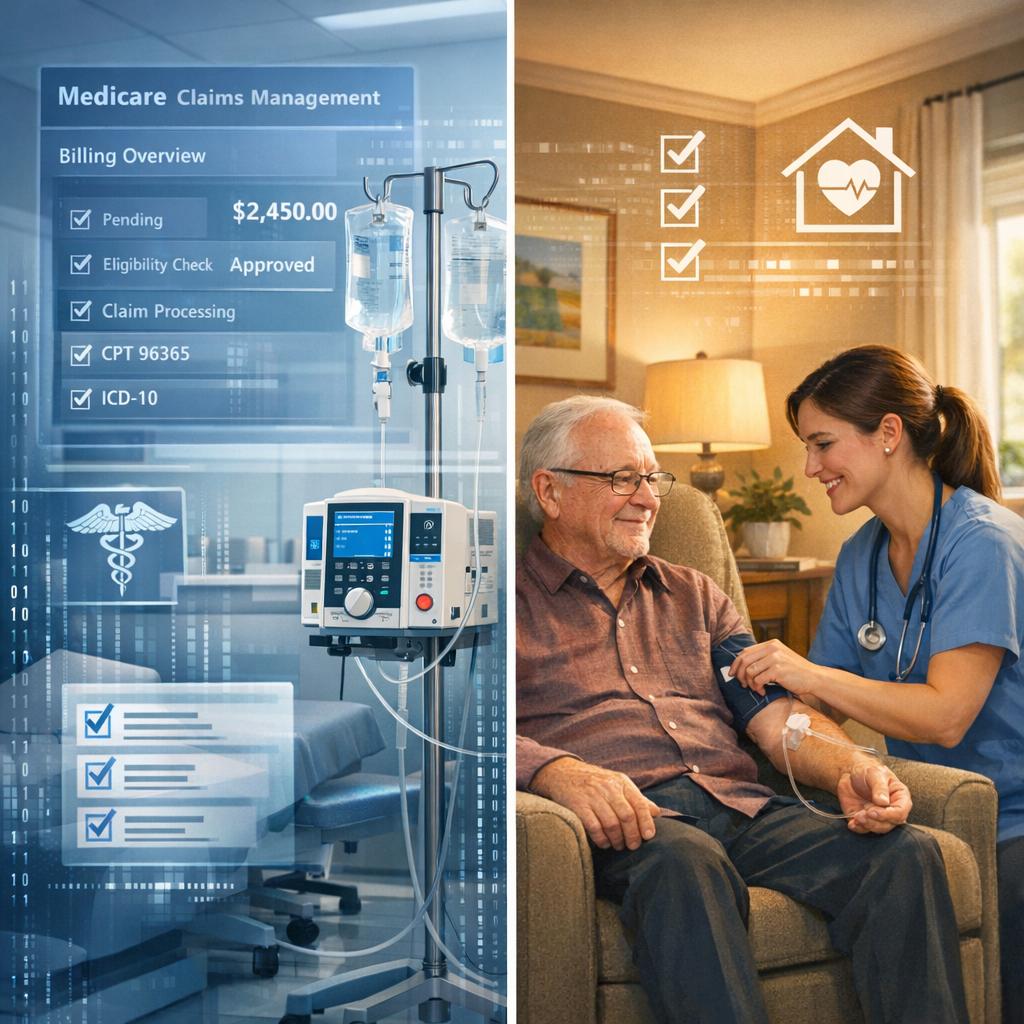
Change in how and where powerful prescription medications are infused is reshaping the entire Medicare experience—especially for older adults living with rheumatoid arthritis, immune disorders, cancer, or complex chronic infections. The movement toward directory-based specialty clinics or, increasingly, at-home nurse supported infusion represents safety and cost advantages for many enrollees. But for 2026, federal rule shifts and competitive plan innovation bring new pitfalls for the unwary: coverage, cost sharing, and treatment access often hinge on advanced detail, hidden in layers of billing and pre-authorization policy.
As more therapies break records for price—and more lives depend on ongoing infusions with wide safety margins—the stakes rise. Shrewd navigation is now mission critical. Professional guidance and claims management separates affordable access from dangerous delays or unexpected denials.
Outpatient Versus Home Infusion in 2026 Medicare What Actually Changes
Most high impact drugs that require sterile compounding (monoclonal antibodies, select antibiotics and antivirals, hemophilia or autoimmune agents, some injected cancer therapies, parenteral nutrition, certain osteoporosis meds) were long considered medical procedures only performed under the Part B umbrella in a doctor’s office, hospital infusion suite, or formalized outpatient department.
But by 2026, emerging options now routinely ask: can infusion or even ‘slow push’ injectable be supervised in the home, with hospital grade nurse or pharmacy chain techs overseeing preparation and IV start at bedside? Medicare both welcomes the option under strict evidence and also mandates new levels of rigor for when, how, and at what reimbursement these innovations are delivered. Office and facility components (the “bag, staff, overhead”) are split from drug ingredient (which might still cross even between traditional pharmacy or DME supply), a core potential hazard for missed coverage in those under nouvelle mixes of care.
Under the CMS Home Infusion Benefit Expansion, qualifying Part B drugs may be administered by credentialed home infusion providers once these conditions are met: physician direct order and care plan, home setting must show appropriateness per infection and supervision assessment, and all pharmacy/administration vendors furnishing not just the medicine but proven real time link to the patient’s care team. Each distinct encounter (every visit or at home midpoint check) bills to Medicare as a line-item under drug administration CPT / G-codes for the nurse and clinical input, and National Drug Code or HCPCS for the medicine itself—facility fees are omitted, but delivery and support/day claims mount.
Crucially: not all costly “special drugs” have transitioned to home-based coverage, especially those with high allergic risk, acute-onset targets like chemotherapy, or drugs needing frequent titration/respond-repeat within a defined clinic. Further, certain traditional drug benefits parked in Part D (like oral oncolytics) are not billable for at home parenteral use unless under well credentialed Home Infusion umbrella with prescriber home order and double-signed pharmacy submission to Medicare. Billing convergence emerges—but with extra paperwork can come delay, or the confusion families feel Managing competing insurance when a patient two-switches from office to home therapy within a taxable/calendar/QMB year.
Pitfalls in Practice—Where Bills and Delays Show Up Most Often
Examples prove eye opening. Dorothy, on regular IVIg for a rare autoimmune disease, spent years scheduling monthly hospital or outpatient suite infusions. After plan support in 2026 encourages a home start with local nurse, her out of pocket costs drop as travel and facility copays vanish—but midway through, a coverage interruption threatens to derail therapy: paperwork straddles office supply and an out-of-network home company, who bills separately for the nurse but not for the medication (sticking Dorothy temporarily for several thousand dollars until intervention came).
Conversely, Larry, with advanced prostate cancer requiring infused Part D hormone therapy, smoothly rides out therapy at home after deep autumn plan review flips him to a nationwide Advantage with integrated home infusion packs—all drug/nurse/home admin workflows contract with the same provider, and his agent catalogs each step ensuring billing compliance before the therapy ever arrives. Year’s end brings him only a summary statement with zero surprises. Behind both scenarios: meticulous agency oversight between claims/course, constant connection between pharmacy provider and primary prescriber, well maintained agent managed approval records, and attentive plan selection that understood both the clinical and billing obstacles before switching.
Navigating 2026 Office to Home and Infusion Planning—Checklist of Undisputed Value
Clients and their advocates should elevate a singular strategic principle above all others:
- Before entering use of any high cost infused/license-only specialty therapy, coordinate at least two weeks ahead with a seasoned broker and your clinical team to document drug category, source (Part B or D), prescriber/provider NPI, preferred home vendor for equipment/nurse supply, coverage alignment and delivery record; request formal summary from the insurer confirming eligibility and watch every claim to first statement for errors or mismatch.
This advocacy uncovers missing links—helping prevent two-provider confusion, ensuring copay and benefit accumulator maximums are traced if home and office therapies are merged, guaranteeing dispensers use up to date Medicare I.D. codes for each component on the correct coverage string, otherwise known to bottleneck payer release. Scrupulous brokers review plan network and home supply alternatives every October’s open enrollment, verifying that new networks continue post January 1 and that all pre authorization legs are logged in time to enable therapy start.
Given how much cancer, immunology and advanced metabolic therapy swerves suddenly from clinic/hospital to home-based scheduling in the new plan year—especially during regime changes or when progression demands a pivot toward ease or safety—flexible but sharply handled benefit arrangement becomes the very portal to optimal long term therapy.
Let no year’s end pass with mixed or denied home-based infusion for claim, hardware, or travel obstacles. Track every benefit and device. To anchor your hope and strategy together—schedule your 2026 Medicare consultation—so every inpatient retreat or at home care milestone is planned, optimized, and not left in the domain of costly errors.