Prosthetics Orthotics And Ostomy Supplies In 2026 Medicare Planning
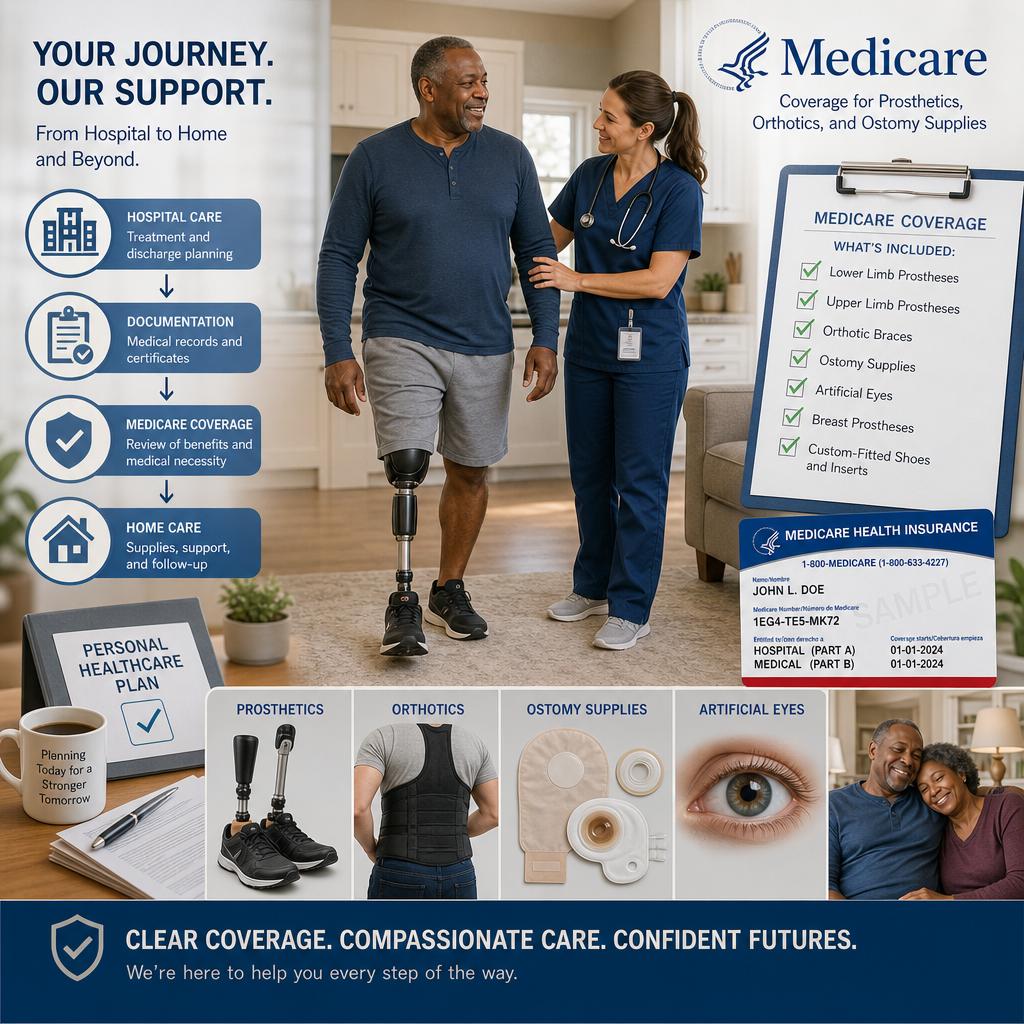
A major surgery can change a Medicare decision overnight. One week, a beneficiary may be comparing dental allowances or pharmacy copays. The next, after an amputation, spinal injury, mastectomy, or bowel surgery, the question becomes far more urgent: will Medicare cover the device or supply that allows life to continue at home with dignity?
That is where prosthetics, orthotics, and ostomy supplies deserve more attention in 2026 Medicare planning. These benefits are not flashy, and they rarely appear at the top of a plan brochure. Yet for the person who needs an artificial limb, a back brace, a neck brace, an artificial eye, a breast prosthesis after mastectomy, or ostomy supplies, coverage details can determine whether recovery feels organized or financially chaotic. Medicare states that it may cover prosthetic and orthotic items when a Medicare-enrolled doctor or other provider orders them, and the beneficiary generally pays 20% of the Medicare-approved amount after the Part B deductible applies .
The Hidden Difference Between Covered And Obtainable
The first mistake families make is assuming that “covered by Medicare” means “easy to obtain.” In reality, coverage is only the first gate. The item must be medically necessary, the order must come from the right type of Medicare-enrolled provider, and the supplier must also be enrolled in Medicare for the claim to be payable. That supplier requirement matters because a beneficiary can have a valid prescription and still create a billing problem by using a vendor that is not properly positioned to bill Medicare for the item .
Consider a 2026 scenario involving a man discharged after emergency colon surgery with a new ostomy. His surgeon provides discharge instructions, the hospital gives him a small starter kit, and a home health nurse teaches him how to change the pouching system. The family then orders supplies from the most visible online vendor, assuming all medical supply companies work the same way. Weeks later, they discover that Medicare coverage depends not only on medical necessity, but also on whether the supplier is enrolled and whether billing is handled correctly.
Why Assignment Can Decide The Real Cost
For Original Medicare beneficiaries, the word “assignment” is not administrative trivia. It is one of the most important cost-control concepts in Part B. Medicare warns beneficiaries to ask durable medical equipment suppliers whether they participate in Medicare or will accept assignment before receiving equipment, because participating suppliers must accept Medicare’s approved amount and may charge only the deductible and coinsurance tied to that approved amount .
Although prosthetic and orthotic billing is not identical to every durable medical equipment situation, the practical lesson is the same: supplier status can change the beneficiary’s cash exposure. With many Part B covered items, the standard patient share is 20% of the Medicare-approved amount after the Part B deductible applies, but that assumes the claim is handled under Medicare rules with an appropriate supplier. If a supplier does not accept assignment in a relevant situation, a beneficiary may face higher upfront costs, delayed reimbursement, or a billing dispute that is especially stressful during recovery.
Medicare Advantage Adds A Different Layer Of Complexity
Medicare Advantage can cover the same medically necessary Medicare-covered services that Original Medicare covers, but the way a member accesses those benefits may be very different. The official Medicare comparison explains that Medicare Advantage plans may require beneficiaries to use network providers and may require prior authorization before certain services or supplies are covered . For prosthetics and orthotics, that means the best plan is not always the one with the lowest premium or the most attractive extra benefits.
A beneficiary recovering from limb loss may need a prosthetist with specialized experience, repeated fittings, adjustments, gait training coordination, and replacement components over time. If that professional is outside a Medicare Advantage network, the plan design may limit access or raise costs unless the plan has out-of-network benefits. The official handbook notes that costs in Medicare Advantage depend on factors such as provider network status, plan copayments or coinsurance, deductibles, and whether the plan requires prior authorization or an organization determination for a service, drug, or supply . In plain language, the device may be medically necessary, but the path to getting it paid can still run through plan rules.
The Part B And Part D Divide After Surgery
Recovery often involves more than the device itself. A person adjusting to a prosthetic limb may need therapy, wound care supplies, pain management, infection treatment, or medications. An ostomy patient may need skin barrier products, follow-up physician care, and prescriptions for related complications. This is where Medicare’s internal boundaries become important. Part B may cover certain prosthetic and orthotic items and some outpatient drugs administered in clinical settings, while most outpatient prescriptions are handled through Part D or a Medicare Advantage plan with drug coverage.
For 2026, the drug side has one major protection that beneficiaries should understand but not overestimate. Medicare drug coverage has a $2,100 yearly out-of-pocket cap for covered Part D drugs in 2026, after which no copayment or coinsurance is owed for covered Part D drugs for the rest of the calendar year . That cap can be meaningful for someone with expensive post-surgical medications, but it does not convert non-covered supplies into covered supplies, does not override a formulary exclusion, and does not solve a Part B supplier problem. The benefit is powerful, but only inside the Part D lane.
Documentation Is The Quiet Backbone Of Approval
The most successful prosthetic, orthotic, and ostomy claims usually have a paper trail that matches the medical reality. The provider’s order should support why the item is needed, how it relates to the diagnosis, and why the type or quantity requested is reasonable. When the item is more specialized, customized, or replaced sooner than expected, the documentation becomes even more important because the plan or Medicare contractor may need evidence that the request is not merely convenient, but medically necessary.
This is also where a well-intentioned discharge can become fragmented. Hospitals focus on immediate safety, surgeons focus on the operative outcome, rehabilitation teams focus on function, and suppliers focus on the claim. The beneficiary is left trying to connect all four. A professional Medicare review cannot write the medical documentation, but it can help the family ask the right questions before selecting a plan, changing plans, or choosing a supplier.
How To Evaluate 2026 Coverage Before You Need It
The best time to evaluate these benefits is before a crisis. A person with diabetes, vascular disease, cancer history, severe spinal disease, inflammatory bowel disease, or a planned orthopedic surgery should treat prosthetic, orthotic, and ostomy coverage as a serious plan-selection issue, not a footnote. Original Medicare may offer broad access to Medicare-enrolled providers nationwide, while Medicare Advantage may offer coordinated benefits and an annual out-of-pocket limit for covered Part A and Part B services, but with plan-specific networks, cost sharing, and authorization rules .
That tradeoff is not ideological. It is personal. A snowbird with a long-standing prosthetist in another state may value provider flexibility differently than someone whose local Medicare Advantage plan has a strong rehabilitation network. A cancer survivor using specific post-mastectomy suppliers may need to confirm supplier participation before focusing on dental or vision extras. A beneficiary with recurring ostomy supply needs should understand whether a plan’s supplier relationships, prior authorization rules, and customer service history make daily life easier or harder.
Medicare is full of benefits that sound simple until they are needed urgently. Prosthetics, orthotics, and ostomy supplies are a perfect example. The official rules can tell you the coverage category, the 20% Part B coinsurance structure, and the importance of Medicare-enrolled suppliers, but they cannot tell you which 2026 plan best fits your doctors, suppliers, prescriptions, recovery risks, and budget.
Vista Mutual Insurance Services helps clients move beyond brochure-level comparisons and examine how Medicare Advantage, Medicare Supplement, and Part D choices behave in real medical situations. If you want confidence that your 2026 Medicare coverage is built around the care you may actually need, Schedule your 2026 Medicare consultation with the Vista Mutual team.