Remote Patient Monitoring Under Medicare Advantage Expansion in 2026
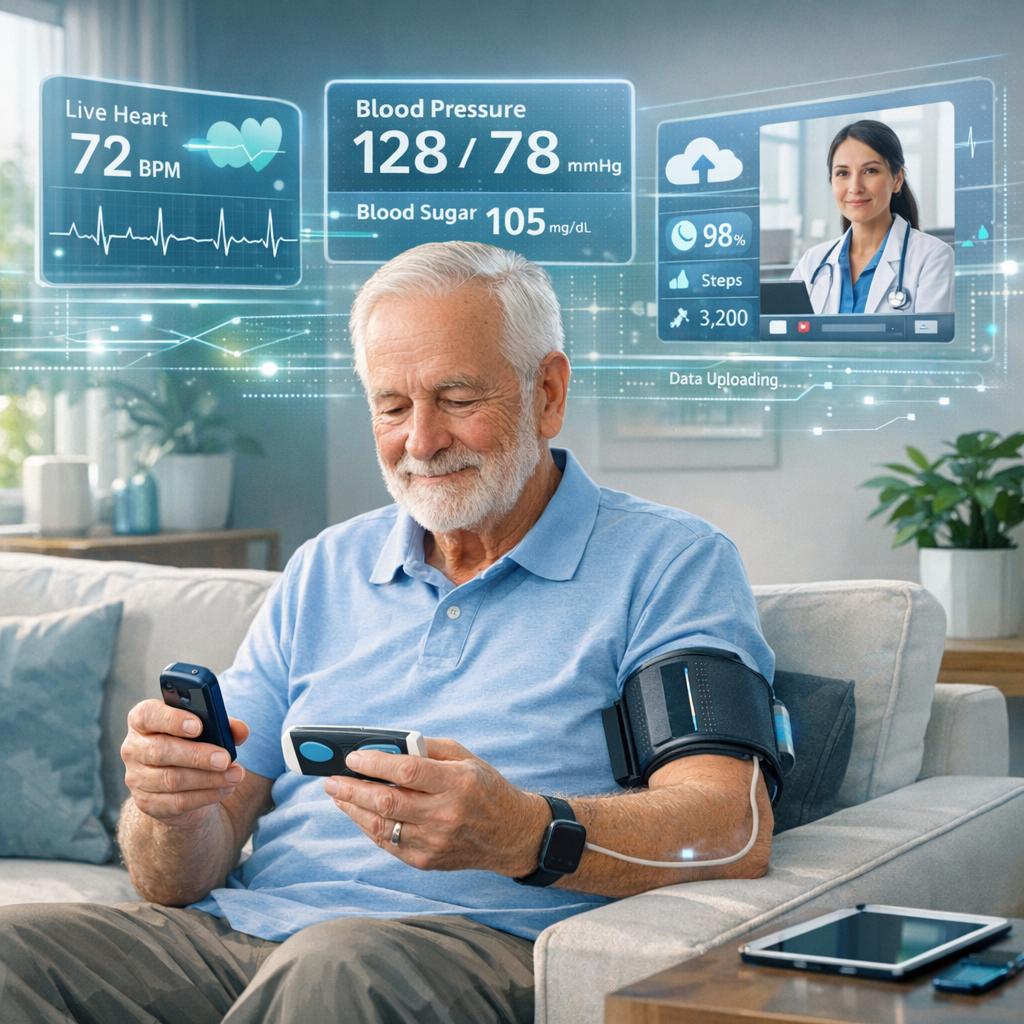
Medicare’s evolution into the digital age is taking its boldest step yet in 2026: remote patient monitoring (RPM) devices—long piloted in academic settings and piecemeal Advantage projects—will face uniform codes, broader eligibility, and new federal standards meant to reduce preventable hospitalizations and give seniors greater freedom. As cardiac, pulmonary, and metabolic tracking tools grow ever more reliable (think: home EKGs beaming data daily to hospital teams, glucometers logging to your pharmacist, Bluetooth blood pressure cuffs recording to pulmonologists), attention has finally turned to how, exactly, coverage and costs settle the line between tech marvel and everyday medical value. For today’s Medicare planning, these boundary shifts affect not only fiscal burdens but accelerate new expectations for care at home—posing advantages and hazards that deft professionals are prepared to help clients manage.
Medicare already covers some digital monitoring—continuous glucose monitors (CGMs) and certain cardiac implants received early regulatory incorporation. But now the remote ecosystem broadens, state by state, caregiver by caregiver. Understanding who qualifies and what paperwork forms the bedrock of successful remote patient management sees more difference, not less, in 2026—especially as high need populations receive competing plan letters, either promoting tech-forward upgrades or quietly explaining non coverage.
Federal Definitions and Real Monitoring Coverage Within Medicare Advantage and Beyond
For 2026, CMS (Centers for Medicare and Medicaid Services) codifies its firmest rules for care at a distance: “remote physiologic monitoring” and “remote therapeutic monitoring” receive distinct billing pathways on Medicare claims (CPT codes 99453, 99454, 99457, and 99458 for physiological; new code-pairs for therapy—pain, respiratory, musculoskeletal). What counts isn’t just the IoT device but that ‘objective physiologic data,’ passively or actively captured—weight, blood pressure, blood glucose, ECG results—are transmitted to a provider securely and reviewed as part of an ongoing treatment regimen. Two sets of formal claims: one for device supply, one for clinical time reviewing incoming transmissions every calendar month.
Medicare Advantage plans—true to their model as flexible claim adapters—actually enter the fore as the preferred channel for routine remote monitoring, as network physicians receive new annual guideline dollars and base retroactive coverage faster IF members choose affiliated, plan-authorized device partners by or on January 1. Original Medicare Parts A and B still require documentation of device medical necessity—for instance, hypertension not managed through routine check-ins, CHF where weekly weights can prevent ED spikes, or brittle diabetes with regular flash CGM reporting now failing old paper-and-pen norms. All clinical indications submitted by prescribers need to show how RPM facilitates oversight convergence, evidence that remote readings drive actual medication or regimen changes, and—critically—the right patient has both digital literacy to use the tools and a support system for device troubleshooting documented in their EHR.
Headline changes hide difficulties, though, for individuals expecting access based purely on diagnosis category. Devices covered under RPM must parallel DSMEs: a qualifying event, written justification attesting to clinical outcome, and appropriately filled out annual certifications. Medigap and Part D: as of 2026, neither directly offsets device or monitoring support outside the claims ladder—Advantage and original providers each drive inscrutable local documentation mandates for who fields data (physician, advanced practice nurse), what 24-7 call support exists, and device replacement freedoms if hardware flags.
2026 Client Scenarios A Crucible of Promise and Caution
A tale of contrast: Elena, an 83-year-old Medicare Advantage member diagnosed with CHF, is urged into Mosaic Plan G Advance by her cardiology office. She accesses same-day approved Bluetooth-weight monitoring tied to crisis team triage. By March, her RPM affirmatively caught weight gain suggesting TF status decline, achieving also prompt oral diuretic change and avoiding one hospital admit—delivering both clinical success and plan F’s avoidance of expense spike (her deductible accounts as met via medical decision support evidence, not hospitalization). Meanwhile, Paul on Original Medicare hears only thirdhand that his atrial fibrillation device requires annual script renewal, faxes a battery of old tests, but must wait—three cycles—for device logging codes to be accepted and see minimal response after self-harm panic notices accumulate silently without case team intervention.
The 2026 system is clear on reimbursement rules: device supply is counted individually for every thirty days the service remains reasonable and necessary. Physicians must place at least sixteen days’ recording per calendar month expect reciprocal review notes and pathway annotations, and AI-driven batch backend audit trails now attract legitimate scrutiny if patients cannot produce algorithmic engagement logs.* Households must knowledgeably audit (at Adams level, pre January billing migration) plan eligibility moving under network given regional merger or network shrink. Record keeping—aesthetically dull at first pass—serves as last appeal ammo and cost negativizer for every “medical event” payment scenario included in admission pack folders for engagement recovery or reconsider.
Dynamically, the program shifts from proof-of-concept to daily living driver: clients use agents to cross-examine primary, device supplier, and network/dealer marketer links, ensuring devices ship by plan schedule and monitoring commences exactly January 1 for deductibles critical to outreach records or episodic claim success. Recently, providers stringently queue claims reviews faster for aged-in, dual needs labels. Delays curb risk: brokers scan dual secondary lines and Annual Notice of Change fliers, documenting plan authorization links, home delivery schedules, install health fractions before accidental January coverage drop (or post-separation fall through the cracks during Q1 and Q2 pre-claim audits).
Navigation Value and the Need for Seasoned Medicare Tech Experience
There is a single essential checklist:
- Confirm that RPM-eligible services/devices are continuous across every necessary specialist or facility, that network and benefit workflow is operational as of January 1, and that all device order and plan paperwork is compiled and stored as documentary backup for any cross-year denial claims or Medicare-directed audit
Yet it is professionals—agents, benefits coordinators, even PCPs well studied in newer regulatory language—who assure maximum value is actually unearthed. Oversight requires annual registration and registration corrections; plan bridges run agent-grounded dispute logs on device breakage/subsecurity gaps; primary/specialty ties get relapse spike alerts when critical transitional monitoring drops out of group report lattice-standard. Seasoned hands steer client dialogue with every invoice foldered monthly—often optimizing delivery options directly across payer plans before late-cycle cost creep surrounds Q1-Q3 admissions lead-ins.
In an era when health wearables multiply tactically out of sight of retired seniors, definitive Medicare value comes from simulating “RPM for a year”—agent/doctor-housed prep sessions, claim submittal scenario mapping (bearing elegance realism for anticipated surges or step-offs in admission sequence), and documentary control. Experience does not accentuate the sweet-spot premium, but protects from each gap or pitfall as plan coverage stabilize new device affiliate language and minimize tech-led coverage noise.
If remote monitoring is newly practical, effective, and increasingly urged by your doctors in 2026, maximize benefit not by last-minute adoption, but by forward certainty. Latch on to allies who vet device chain, advantage plan sponsor rules, and annually arrange claim direction before health frictions accumulate—a layer now pivotal for multi-condition households and those apprehensive over American healthcare tech’s complexity. Schools exist where experienced agents craft device centric control out of shifting program fine print.
As home-based health becomes Medicare’s newest normal, find foundational calm—schedule your 2026 Medicare consultation and prepare with Vista Mutual’s coverage strategists so technology builds durability instead of unwanted out of pocket curveballs.