Surgical Dressing Coverage In 2026 Medicare The Wound Supply Paper Trail Families Miss
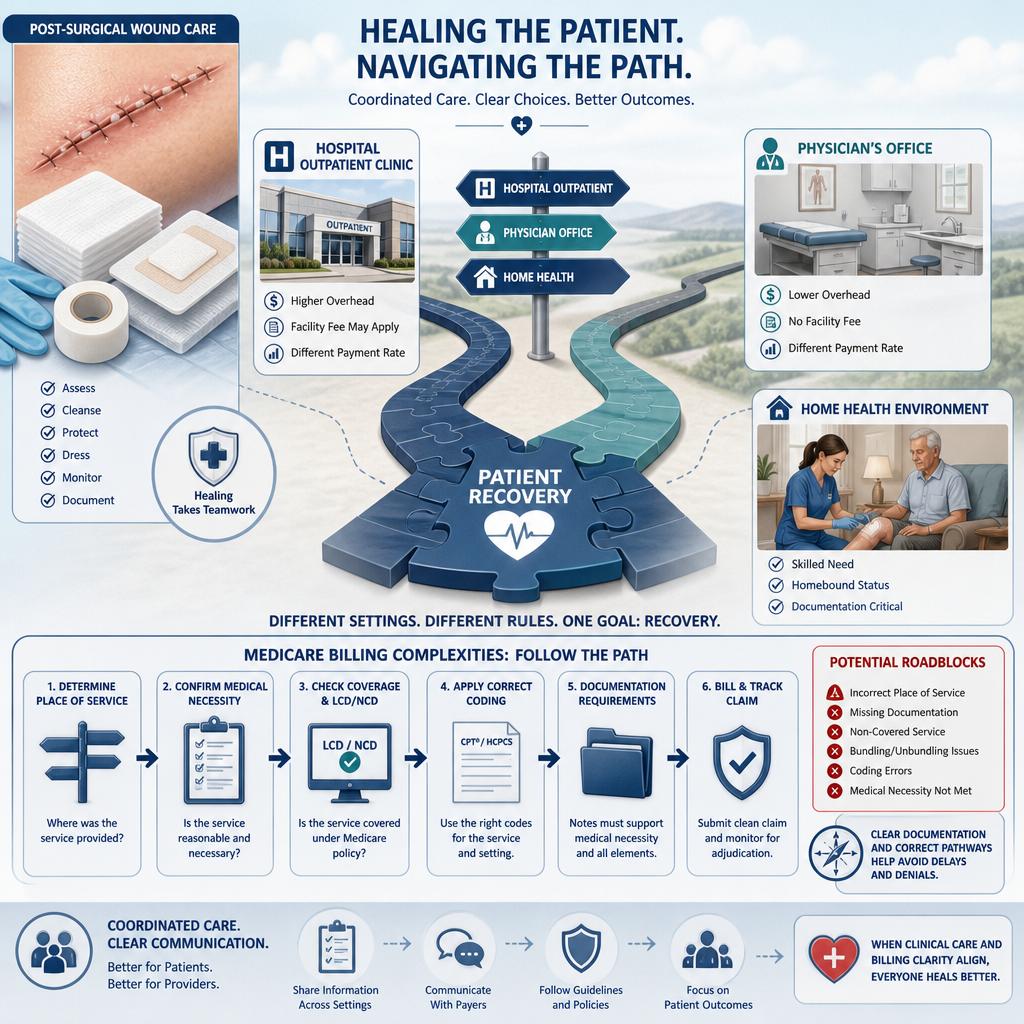
A healing incision can become one of the most underestimated Medicare problems in a family’s recovery plan. The hospital discharge nurse may send a patient home with a small bag of supplies, a few instructions, and reassurance that the wound looks good. Then, a week later, the patient needs more dressings, the home health agency is involved, the surgeon wants a follow up, and a pharmacy or medical supplier says the order is not quite right. What felt like routine aftercare has become a coverage puzzle.
For 2026, the key lesson is not that Medicare ignores wound care. It is that Medicare pays according to the setting, the medical reason for the service, the provider or supplier involved, and whether the paperwork supports a covered need. Medicare says it covers medically necessary treatment of a surgical or surgically treated wound, but the cost pathway can change depending on whether that care happens in a physician office, hospital outpatient department, home health episode, or Medicare Advantage network environment .
Why A Dressing Change Is Not Just A Dressing Change
Families often use the words wound care, supplies, dressings, and home nursing as if they are interchangeable. Medicare does not. A dressing applied in a surgeon’s office after a procedure may be billed as part of outpatient wound treatment. A dressing change performed by a home health nurse may sit inside a certified home health episode. A separate supply request may require proof that the item is medically necessary for a surgical or surgically treated wound, not merely convenient for comfort, cleanliness, or caregiver preference.
That distinction matters because Medicare’s cost sharing follows the benefit category. For surgical dressing services, Medicare states that you pay 20 percent of the Medicare approved amount for doctor or other health care provider services, and you pay a set copayment when these services are received in a hospital outpatient setting. The Part B deductible applies . A beneficiary who assumes “Medicare covers wound care” may still be surprised when the bill comes from a hospital outpatient department instead of a physician practice.
The Setting Can Change The Bill Before The Dressing Ever Touches The Skin
Consider a 2026 patient discharged after abdominal surgery. On paper, the wound dressing is the same gauze, tape, and clinical supervision. In practice, the Medicare result may be different if the patient returns to a hospital based wound clinic rather than the surgeon’s independent office. Medicare notes that outpatient medical and surgical services generally include approved procedures, supplies such as casts and stitches, and outpatient surgeries. In that hospital outpatient setting, a beneficiary may owe a copayment for each service, while doctor services are generally subject to 20 percent of the Medicare approved amount and the Part B deductible .
This is where families can lose control of costs without anyone doing anything wrong. The physician may believe the wound clinic is clinically appropriate. The hospital may bill correctly. The patient may still pay more than expected because hospital outpatient billing is structurally different from an office visit. Original Medicare also has no yearly out of pocket limit unless the beneficiary has supplemental protection such as Medigap, Medicaid, employer, retiree, or union coverage . That absence of a medical spending ceiling is one reason wound complications deserve plan level attention before a crisis develops.
Home Health Helps But It Has Its Own Boundary Lines
When a wound requires skilled oversight at home, Medicare can be generous, but it is not open ended household support. Medicare covers home health services when a doctor or other qualified provider orders the care, a Medicare certified home health agency provides it, and the patient needs part time or intermittent skilled nursing care, therapy, or certain continuing services. The patient must also meet the homebound standard, which generally means leaving home is difficult, medically discouraged, or a major effort .
That can be a relief for someone who cannot safely travel after surgery. Medicare states that covered home health services cost nothing to the beneficiary, though Medicare covered durable medical equipment used at home is subject to 20 percent of the Medicare approved amount and the Part B deductible . The practical problem is that many families hear “home health is covered” and assume every supply, every visit, and every caregiver task is included. Medicare is paying for medically necessary skilled care under defined conditions, not for unlimited custodial support or general household help.
Medicare Advantage Adds A Second Layer Of Decision Making
A Medicare Advantage enrollee faces another issue: the plan must cover medically necessary services that Original Medicare covers, but the plan may use networks, prior authorization, and different cost sharing. Medicare’s 2026 handbook explains that Medicare Advantage plans bundle Part A, Part B, and usually Part D, and that members may need to use network doctors and get approval for certain services or drugs . That means wound care is not just a Medicare benefit question. It can become a plan administration question.
The most important move is to ask for clarity before supplies are ordered or a wound clinic schedule is set. Medicare Advantage members or their providers can request an organization determination to find out in advance whether a service, drug, or supply is covered and how much the member will owe. Medicare specifically describes this as a way to get a spoken or written plan decision, and notes that it may function as prior authorization for the plan to cover the item or service . For a patient with a slow healing incision, that advance decision can prevent weeks of treatment from becoming a retroactive dispute.
The Drug Side Of A Wound Complication Is A Separate 2026 Calculation
Wound recovery sometimes brings prescription costs into the picture, especially if an infection develops or a clinician prescribes pain medication, topical medications, or other covered outpatient drugs. Those costs do not necessarily flow through the same Medicare benefit as the dressing service. They may run through Part D, either in a stand alone prescription drug plan or inside a Medicare Advantage plan with drug coverage.
For 2026, the major protection on the prescription side is the Part D out of pocket cap. Medicare states that yearly out of pocket costs for covered Part D drugs are capped at $2,100 in 2026, and once that cap is reached, the beneficiary pays no copayment or coinsurance for covered Part D drugs for the rest of the calendar year . That cap is meaningful, but it does not erase formulary rules, pharmacy network differences, or the separate cost sharing that may apply to wound services under Part B or a Medicare Advantage medical benefit.
The Questions To Ask Before Wound Care Becomes A Billing Problem
The safest 2026 strategy is to treat post surgical wound care as a coordinated benefit review, not an afterthought. Before leaving the hospital or surgery center, the patient should know who is responsible for ordering dressings, whether a home health agency has been certified and accepted the case, whether follow up will occur in a physician office or hospital outpatient department, whether a Medicare Advantage plan requires authorization, and whether any related prescriptions are covered under the patient’s Part D formulary. That is the one checklist worth making because each answer points to a different cost pathway.
Vista Mutual sees this issue often because wound care sits at the intersection of clinical recovery and insurance design. A low premium Medicare Advantage plan may look attractive until the preferred wound clinic is outside the network. Original Medicare may offer broad provider access, but without supplemental coverage, the absence of an annual medical out of pocket limit can matter. A Medigap policy may reduce exposure for Part B cost sharing, but it will not manage Part D formulary issues. No brochure comparison captures all of that in a single line.
The peace of mind comes from having someone translate the coverage architecture before the bill arrives. If you are preparing for surgery, managing a chronic wound, or comparing 2026 Medicare Advantage, Supplement, and Part D options, professional guidance can help you see the hidden connections among providers, supplies, pharmacies, and cost sharing. Schedule your 2026 Medicare consultation with the Vista Mutual team and make your recovery plan as carefully built as your medical plan.