The 2026 Medicare Auto Ship Prescription Refill Risk
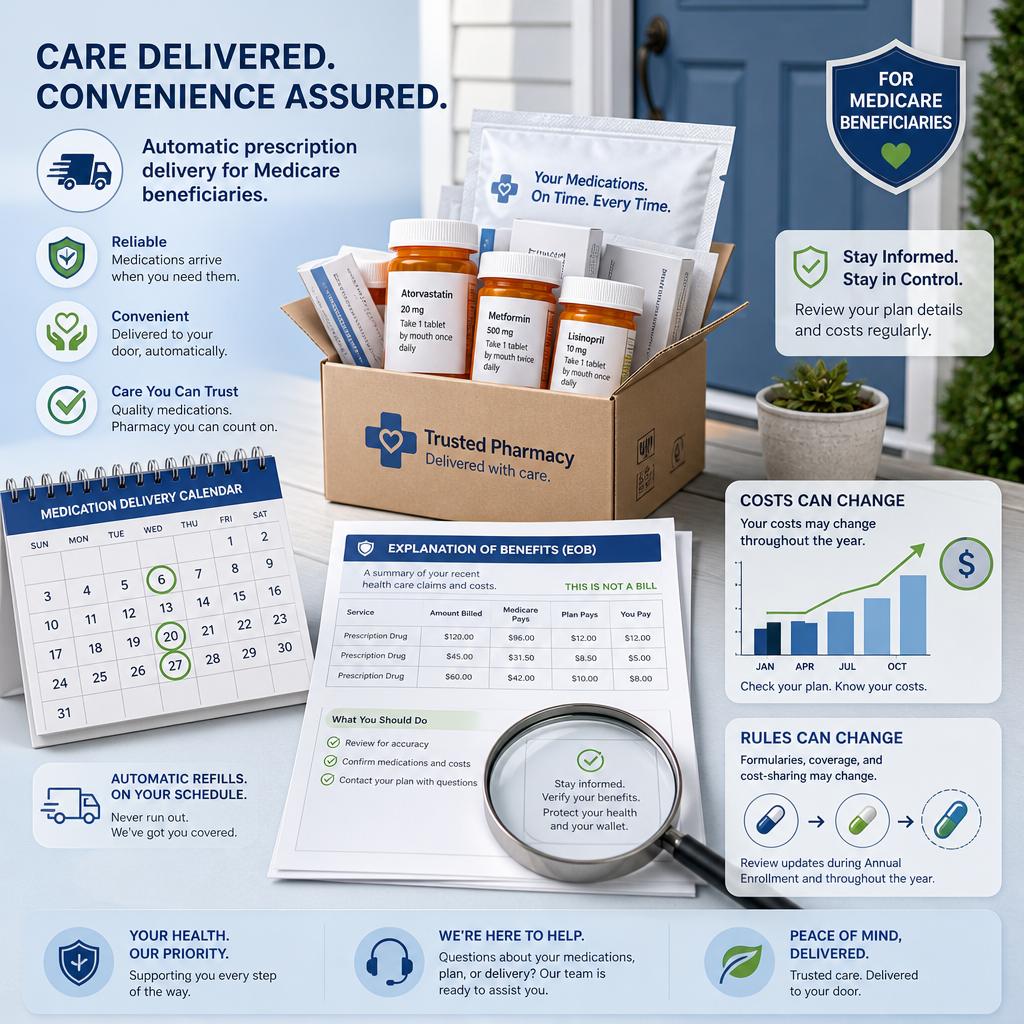
Automatic prescription delivery sounds like one of the rare simple conveniences in Medicare. A beneficiary takes the same medications every month, the bottles arrive before the old supply runs out, and a spouse or adult child no longer has to coordinate refills across three pharmacies. For someone managing diabetes, blood pressure, anticoagulation, or chronic pain, that reliability can feel like safety.
In 2026, however, that convenience deserves a more disciplined review. Medicare drug plans may offer a voluntary auto ship program that allows some beneficiaries to receive prescription drugs automatically before they run out, but the handbook is careful about the wording, plans may offer it, it is voluntary, and beneficiaries are told to contact the plan for details . That means auto ship is not a universal Medicare right, nor is it a guarantee that every medication will arrive at the lowest cost or without a coverage rule.
Why Auto Ship Is A Plan Design Decision In 2026
The mistake many retirees make is assuming that the pharmacy channel is separate from the Medicare plan decision. It is not. Part D costs can vary based on whether a drug is on the plan formulary, what tier the drug occupies, what benefit phase applies, and which pharmacy is used, including whether that pharmacy has preferred, standard, out of network, or mail order pricing . In practical terms, the same prescription may be financially sensible through mail order in one plan and surprisingly expensive through mail order in another.
Consider a 2026 beneficiary who takes six maintenance medications and enrolls in automatic delivery in January. By April, the process feels effortless. By July, one drug has moved tiers, another now requires prior authorization, and a third is less expensive at a preferred retail pharmacy than through the delivery option. The bottles may still arrive on time, but the plan mechanics behind those bottles may have changed. Medicare confirms that plans can change their formularies and that beneficiaries should contact the plan or use Plan Compare to verify whether a drug is covered .
The 2100 Cap Does Not Remove The Need To Watch Each Fill
The 2026 Part D out of pocket cap is an important protection. If you have Medicare drug coverage, your yearly out of pocket costs for covered Part D drugs are capped at $2,100 in 2026, and after reaching that limit you do not pay copayments or coinsurance for covered Part D drugs for the rest of the calendar year . That is a major improvement for people taking expensive brand name drugs, specialty medications, or multiple chronic prescriptions.
But the cap does not mean every pharmacy choice is harmless. It applies to covered Part D drugs, not to every cash purchase, excluded drug, uncovered fill, or medication obtained outside the plan rules. It also does not make a poor pharmacy arrangement wise for the months before the cap is reached. A beneficiary who overpays in January and February may eventually hit the cap, but that does not mean the plan was optimized. It only means the household absorbed unnecessary pressure earlier in the year.
The Quiet Problem With Quantity Limits And Prior Authorization
Auto ship works best when a drug is stable, approved, and predictable. Medicare Part D plans, however, may apply coverage rules to certain drugs, including prior authorization, quantity limits, and step therapy . A quantity limit can affect how much medication can be dispensed at one time. Prior authorization can interrupt a refill if the plan needs medical documentation. Step therapy can require a lower cost alternative before the prescribed medication is covered.
This is where the auto ship experience can become emotionally frustrating. The beneficiary does not always experience the issue as a policy rule. They experience it as a missing package, a refill delay, or a pharmacy message saying the prescriber must respond. For a retiree who has carefully arranged travel, caregiving, or winter relocation around mail delivery, a coverage rule can become more than an inconvenience. It can become a continuity of care problem.
Insulin Shows Why One Drug Category Can Change The Whole Analysis
Insulin is a good example of why 2026 drug planning cannot be reduced to one broad assumption about mail order. Part D covers insulin used with disposable or nontraditional insulin pumps, along with certain injection supplies such as syringes, gauze, and alcohol swabs. Medicare also states that plans cannot charge more than $35 for a one month supply of each Part D covered insulin and that the deductible does not apply to insulin .
That $35 monthly insulin protection is valuable, but it does not automatically answer every pharmacy question. A person using insulin may also take test related supplies, cardiovascular medications, kidney medications, or injectable drugs that follow different rules. Some items may fall under Part B rather than Part D depending on how they are used. Others may be covered by Part D but subject to formulary or pharmacy network differences. The household sees one medicine cabinet, but Medicare sees separate benefit categories.
The Medicare Prescription Payment Plan Adds Another Layer
In 2026, some beneficiaries using auto ship will also participate in the Medicare Prescription Payment Plan. This option lets people spread out of pocket costs for covered Part D drugs across the calendar year, but Medicare is explicit that it helps manage expenses and does not save money or lower drug costs . That distinction matters when prescriptions are being shipped automatically and the bill arrives from the plan instead of being paid at the pharmacy counter.
A beneficiary may feel shielded from the cost of each refill because they are no longer paying at pickup. Yet the obligation has not disappeared. It has been reorganized into monthly billing. If an auto shipped drug is more expensive than expected, if a tier changed, or if a pharmacy channel is not preferred, the payment plan may soften the timing but not correct the underlying plan mismatch.
The One Document Auto Ship Users Should Read Every Month
Medicare says that each month you fill a prescription, your plan sends an Explanation of Benefits notice, and beneficiaries should review it for mistakes and contact the plan with questions . For auto ship users, that document is not administrative clutter. It is the monthly audit trail that shows whether convenience is still aligned with coverage.
A careful EOB review should answer one central question: did the plan process the medication the way you expected? If the answer is unclear, the beneficiary or caregiver should not wait until annual enrollment. A sudden cost change, a noncovered drug, a new restriction, or an unexpected pharmacy classification can signal that the plan needs attention before the next refill cycle repeats the same problem.
How Vista Mutual Reviews Auto Ship Before It Becomes A Crisis
At Vista Mutual, we look at automatic prescription delivery as part of the entire Medicare architecture. That means reviewing the beneficiary’s medication list, preferred pharmacies, mail order options, insulin rules, coverage restrictions, expected annual spending, and whether the $2,100 Part D cap changes the timing of costs. It also means asking whether Medicare Advantage drug coverage or a stand alone Part D plan is better suited to the person’s physicians, pharmacies, and prescription patterns.
The goal is not to make Medicare feel more complicated than it is. The goal is to prevent a convenient system from quietly becoming an expensive one. Automatic delivery can be a strong tool for the right beneficiary in the right plan, but in 2026 it should be verified with the same care as networks, premiums, formularies, and out of pocket exposure. If you want that level of review before your next plan year begins, Consult with the Vista Mutual team and let a professional Medicare advisor help you turn convenience into confidence.