The 2026 Medicare Diabetes Screening Gap That Can Change Your Entire Plan Choice
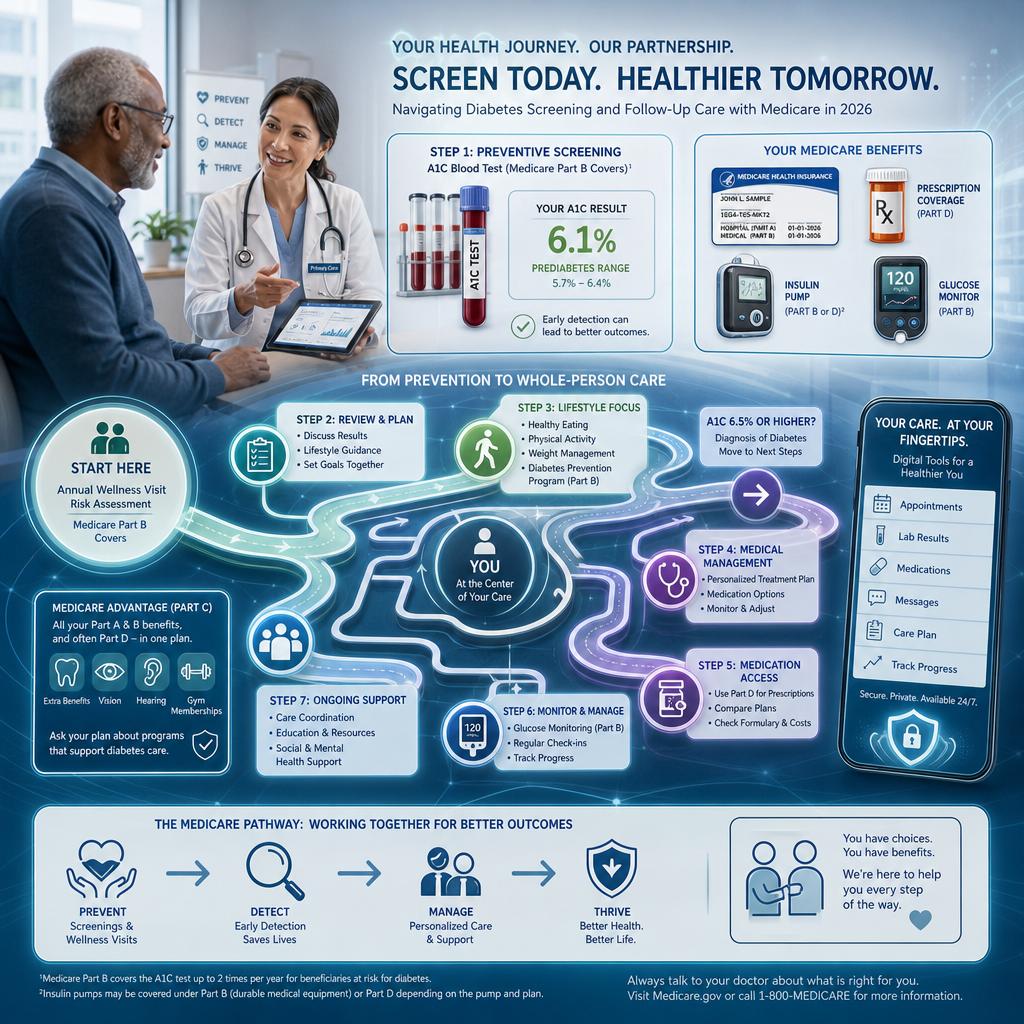
A Medicare beneficiary walks into a primary care visit in early 2026 feeling well, but with a family history of diabetes and a few rising lab numbers from last year. The physician orders an A1C test, the result comes back in the prediabetes range, and the patient leaves relieved that Medicare treated the screening as preventive. Then the follow up appointments begin, and the coverage picture changes.
That moment is where many retirees misunderstand Medicare. The diabetes screening itself may be simple, but the path after the result can run through Part B, Part D, Medicare Advantage network rules, durable medical equipment suppliers, pharmacy tiers, insulin caps, and sometimes nutrition or training benefits. Medicare covers up to 2 blood glucose laboratory screening tests each year when a doctor determines that a person is at risk for diabetes, and those screenings may include fasting or non-fasting glucose tests, A1C tests, or other Medicare approved glucose tests. You pay nothing for the test when the provider accepts assignment .
The No Cost Test Depends On More Than The Lab Slip
The phrase no cost can be dangerously calming. Medicare preventive benefits usually depend on the service meeting the preventive criteria, the provider accepting assignment, and the claim being submitted in a way that matches the purpose of the visit. A diabetes screening ordered because you are at risk is different from repeated diagnostic monitoring after diabetes has already been diagnosed. Both may be medically appropriate, but they do not live in the same billing neighborhood.
That distinction matters because Medicare Part B generally applies cost sharing to medically necessary doctor services and many non-preventive services. The official 2026 handbook explains that most covered preventive services cost nothing if the provider accepts assignment, but it also warns that deductibles, coinsurance, or both may apply for some preventive services, and those costs can also appear when a preventive service is performed in the same visit as a non-preventive service . In plain terms, a patient may schedule a preventive screening and still see a bill if the appointment also addresses symptoms, medication changes, neuropathy complaints, kidney concerns, or another active medical issue.
Prediabetes Is A Planning Signal Not A Billing Finish Line
The most valuable use of a diabetes screening is not simply finding out whether the number is normal. It is using the result to anticipate which Medicare benefits may matter next. A patient with an A1C that suggests prediabetes may need lifestyle counseling, repeat labs, weight management discussions, or a closer look at heart and kidney risk. A patient newly diagnosed with diabetes may need education, supplies, prescriptions, foot protection, eye care, and nutrition support.
This is why a plan that looks inexpensive during a healthy year can become expensive after one lab result. If diabetes is diagnosed, Medicare may cover diabetes self-management training, but the beneficiary must have a written order from a doctor or other qualified provider. Medicare says the training can include healthy eating, activity, blood glucose monitoring, medication use, and reducing risks, but the Part B deductible and 20 percent coinsurance apply . That is a very different cost experience than the original no cost screening.
The Supply Chain Becomes Part Of Your Coverage
Once diabetes management requires equipment, the question becomes where the item is covered and who supplies it. Medicare covers insulin pumps, glucose monitors, and related supplies under certain circumstances, including tubing, syringes, insulin for pump use, continuous glucose monitor sensors, transmitters, test strips, and lancets. It also covers one pair of extra depth or custom molded shoes per year with inserts and modifications for people with specific diabetes related foot problems. For these Part B items, the beneficiary generally pays 20 percent of the Medicare approved amount if the supplier accepts assignment, and the Part B deductible applies .
Here is the practical issue: the supplier relationship can be just as important as the medical prescription. In Original Medicare, a beneficiary wants a Medicare enrolled supplier that accepts assignment. In Medicare Advantage, the plan may require network suppliers, prior authorization, or specific brands. The person who compared plans only by premium may discover that the preferred continuous glucose monitor supplier, endocrinologist, or diabetes education program is outside the plan's most favorable path.
Drug Coverage Is A Separate Diabetes Conversation
Diabetes also crosses the boundary between medical coverage and pharmacy coverage. The 2026 handbook notes that Medicare drug coverage may cover insulin you inject yourself, certain injection supplies, disposable pumps, and some oral diabetes drugs, while insulin used in a traditional Part B covered pump follows a similar cap structure. For 2026, the cost of a one month supply of each covered insulin product is capped at $35, with similar caps applying for traditional insulin used in Part B covered insulin pumps .
That $35 figure is important, but it is not the whole analysis. A Part D plan still has a formulary, tiers, preferred pharmacies, utilization rules, and annual changes. The official handbook also confirms that Part D out of pocket costs for covered drugs are capped at $2,100 in 2026, after which the beneficiary pays no copayment or coinsurance for covered Part D drugs for the rest of the year . A person taking only one generic medication today may not think about this cap, but a future diabetes diagnosis can make the Part D structure central to the household budget.
Medicare Advantage Adds Another Layer To The Screening Result
For many beneficiaries, the diabetes screening result becomes a test of the Medicare Advantage plan itself. Medicare Advantage plans must cover medically necessary services that Original Medicare covers, but the experience can differ because the plan may use networks, referrals, prior authorization, and different cost sharing. Medicare's 2026 comparison explains that Original Medicare generally allows use of any Medicare enrolled provider that accepts Medicare patients, while Medicare Advantage plans may require network providers for non-emergency care and may require prior authorization for some services or supplies .
This is not an argument against Medicare Advantage. It is an argument against choosing it casually. A strong Medicare Advantage plan can coordinate diabetes care well, especially when the primary care physician, endocrinologist, lab, eye specialist, podiatrist, pharmacy, and equipment supplier all work within the same system. A poor fit can turn the same diagnosis into a series of referral delays, supplier substitutions, and pharmacy surprises.
The Vista Mutual Way To Read A Diabetes Risk Profile
At Vista Mutual, we look at a diabetes screening not as a single lab test, but as an early warning light for Medicare planning. We want to know whether your doctor accepts assignment, whether your preferred lab is covered, how your plan treats diagnostic follow up, which pharmacies price your medications best, whether your insulin and oral medications are on formulary, and how your plan handles glucose monitors and related supplies. That is the kind of review that cannot be done well by looking at a monthly premium alone.
The right Medicare decision in 2026 should make room for the healthy version of you and the version of you who may need more care after one abnormal test. If you are comparing Medicare Advantage, Medicare Supplement, or Part D options, professional guidance can turn a confusing screening result into a calm, structured coverage plan. Schedule your 2026 Medicare consultation with Vista Mutual and get the peace of mind that comes from knowing how your coverage is likely to behave before the next lab result arrives.