The 2026 Medicare Disaster Enrollment Relief Rule That Can Save A Missed Deadline
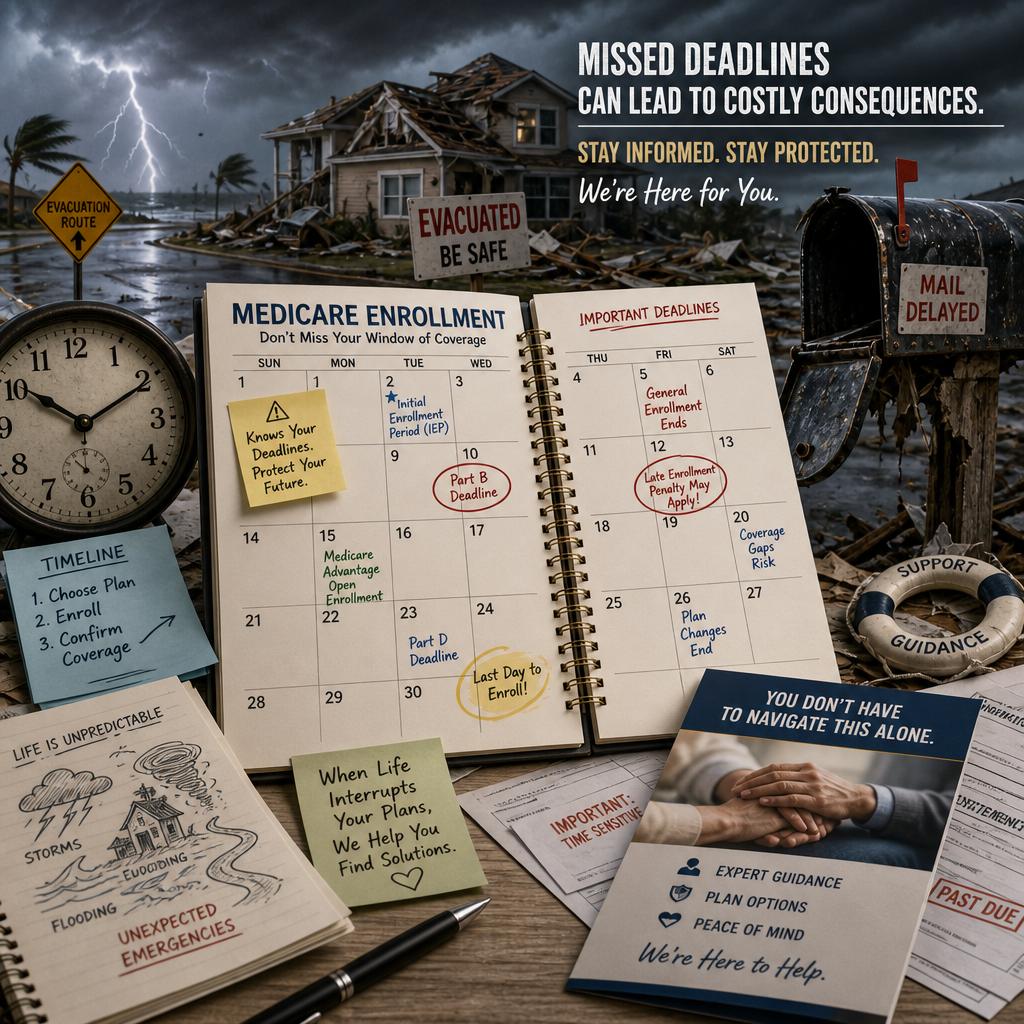
A missed Medicare deadline is usually treated as a personal mistake. In real life, it is often something more human: a spouse in the hospital, a mailbox under evacuation order, a power outage that lasts for days, or a countywide emergency that shuts down ordinary decision making. For a retiree trying to compare Medicare Advantage, Part D, or Original Medicare options for 2026, one lost week in the fall can mean the difference between a clean January start and a year of unwanted costs.
That is why one of the most important Medicare planning rules for 2026 is not a premium, deductible, or drug cap. It is the Special Enrollment Period for exceptional situations. Medicare explains that people may qualify for a Special Enrollment Period if they miss an enrollment period because of circumstances such as a natural disaster, an emergency, incarceration, employer or health plan error, losing Medicaid, or another situation outside their control that Medicare determines is exceptional . The rule sounds simple, but applying it correctly is where many families need professional help.
Why Disaster Relief Is Not The Same As A Do Over
Imagine a couple in a coastal county reviewing 2026 Medicare Advantage plans in late October. Their current plan is dropping a preferred cardiology group, and their prescriptions are moving to a less favorable tier. They intend to switch during the October 15 to December 7 Open Enrollment Period, the annual window Medicare identifies for changing Medicare health or drug coverage for the following year . Then a storm hits, the home is damaged, mail is delayed, and internet service is unreliable through early December. By the time their life is stable enough to revisit the plan documents, the window has closed.
The disaster Special Enrollment Period is designed for situations like this, but it is not a casual extension for anyone who simply forgot. The key is causation. The emergency must have interfered with the person’s ability to act during the ordinary enrollment period. A beneficiary should be prepared to explain the connection clearly: where they lived, what emergency occurred, what enrollment period was missed, and why the event prevented a timely choice.
This distinction matters because Medicare has several different enrollment periods, and each one has its own legal consequences. Annual Open Enrollment can allow a person to join, switch, or drop a Medicare Advantage plan or Medicare drug plan for the coming year. The Medicare Advantage Open Enrollment Period from January 1 to March 31 lets someone already in a Medicare Advantage plan switch to another Medicare Advantage plan or return to Original Medicare and join a separate drug plan, but it does not let a person in Original Medicare newly join a Medicare Advantage plan or switch stand-alone Part D plans during that window . A disaster-related Special Enrollment Period may help restore a missed opportunity, but the facts and timing determine what choice is actually available.
The Coverage Problem That Shows Up After The Emergency
The financial consequences of a missed deadline can be larger in 2026 because coverage design is changing quickly. Part D has a $2,100 yearly out-of-pocket cap for covered drugs in 2026, after which the beneficiary pays no copayment or coinsurance for covered Part D drugs for the rest of the calendar year . That cap is powerful, but it does not make every drug plan equal. Formularies, pharmacy networks, prior authorization rules, preferred pharmacy pricing, and premium structures can still differ sharply.
A beneficiary who misses the chance to change plans after a disaster may end up in a plan that no longer fits their medications. If a drug requires prior authorization or step therapy, the pharmacy counter can become the first place the family discovers the problem. Medicare notes that Part D plans may use prior authorization, quantity limits, step therapy, and safety checks for certain medications . In a normal year, that is frustrating. After an evacuation or home repair crisis, it can feel impossible.
Health coverage can be just as vulnerable. Original Medicare generally lets beneficiaries use any Medicare-enrolled doctor or hospital that accepts Medicare patients anywhere in the United States, but there is no yearly out-of-pocket limit unless the person has other coverage such as Medigap, Medicaid, employer coverage, retiree coverage, or union coverage . Medicare Advantage plans, by contrast, have a yearly limit on covered Part A and Part B services, but they may require network providers, referrals, and prior authorization, depending on the plan . A missed enrollment decision can therefore lock in the wrong tradeoff for a person whose doctors, prescriptions, or travel pattern changed during the emergency.
The Documentation Families Should Preserve
The most overlooked step is not calling Medicare. It is preserving the evidence while the event is still fresh. A beneficiary should keep any notice of evacuation, FEMA or state emergency information, utility outage records, temporary address documentation, mail interruption evidence, plan notices received late, and notes showing when they tried to compare or enroll. The purpose is not to overwhelm Medicare with paperwork. It is to make the story credible if the situation is reviewed.
One practical way to approach the issue is to build a short timeline. Note the start and end dates of the emergency, the enrollment period that was affected, the Medicare decision that could not be completed, and the date the beneficiary regained the ability to act. That timeline helps distinguish a true exceptional circumstance from ordinary delay. It also helps an advisor identify whether the beneficiary needs relief for a Medicare Advantage election, a Part D election, a return to Original Medicare, or a different enrollment issue altogether.
Why Plan Type Matters Before You Use The Relief
A disaster Special Enrollment Period can restore access to a decision, but it does not tell you which decision is best. This is where rushed post-emergency choices can create another problem. A person leaving a Medicare Advantage plan may assume they can add Medigap easily. Yet Medicare warns that if someone drops Medigap to join Medicare Advantage, they may not be able to get the same Medigap policy back and may have to pay more or be unable to buy a policy depending on state rules and their situation . That is not a detail to discover after the enrollment request is processed.
The same caution applies to drug coverage. If a person drops drug coverage and later goes without Medicare drug coverage or other creditable coverage for 63 or more days, a Part D late enrollment penalty may apply for as long as they have Medicare drug coverage . Disaster relief may help with a missed election, but it should not be used casually or without checking the beneficiary’s complete coverage picture.
The Vista Mutual View For 2026
The disaster enrollment relief rule exists because Medicare recognizes that beneficiaries are not spreadsheets. People live through weather events, caregiving crises, displacement, and administrative failures. But the system still requires the right request, at the right time, for the right coverage move.
For 2026, the families who fare best will not be the ones who simply know that an exception exists. They will be the ones who connect the exception to a careful review of doctors, hospitals, prescriptions, pharmacy access, travel patterns, Medigap rights, and financial exposure. That is where professional guidance can turn a stressful missed deadline into a controlled recovery plan.
If an emergency disrupted your Medicare decision, or if you are worried that a missed deadline could affect your 2026 coverage, do not guess your way through the next step. Schedule your 2026 Medicare consultation with Vista Mutual and get the peace of mind that comes from having an experienced team review the rule, the timing, and the coverage consequences before you act.