The 2026 Medicare DME Assignment Test Before You Accept Delivery
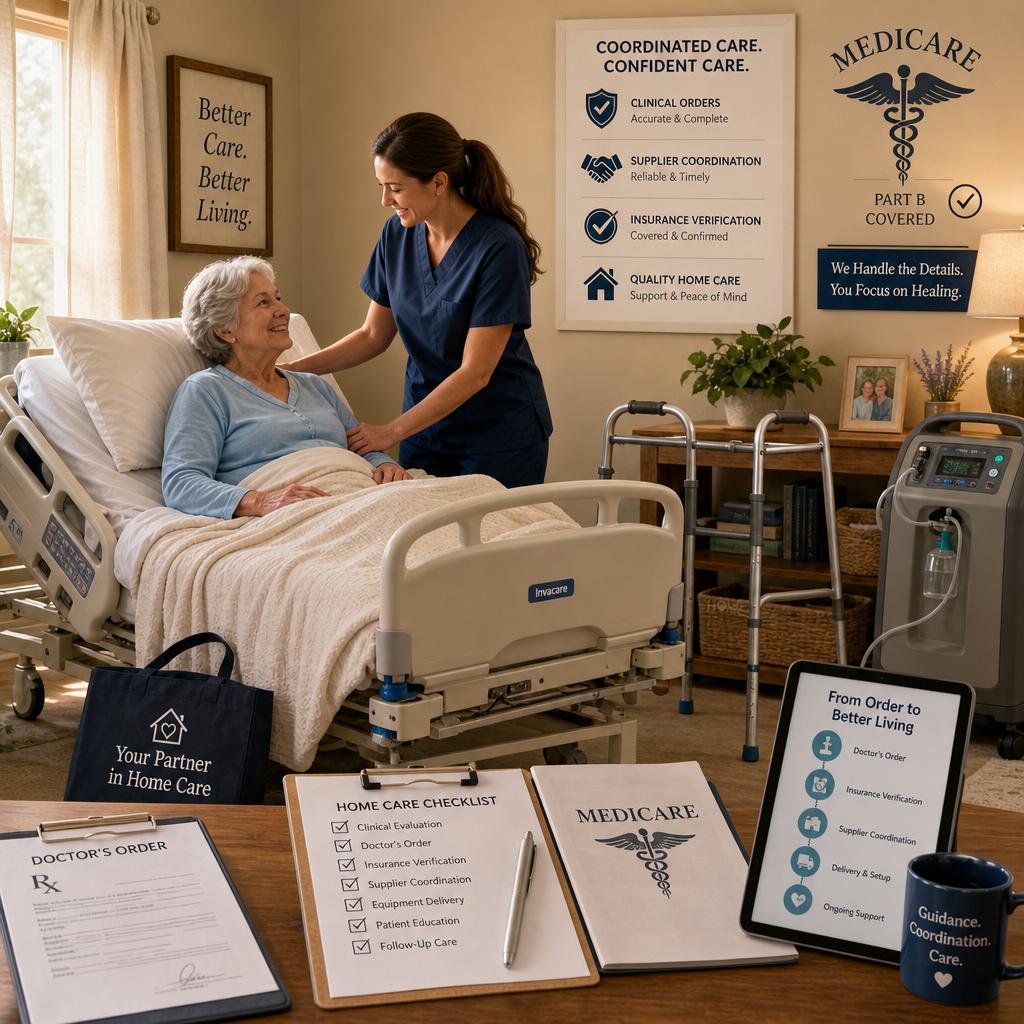
A hospital discharge planner may tell a family that Medicare covers the equipment their mother needs at home. The family hears relief in that sentence. A walker, oxygen equipment, or hospital bed can be the difference between a safe recovery and another emergency room visit. Yet in 2026, the more important question is not simply whether Medicare covers the equipment. It is whether the order, supplier, delivery, rental structure, and plan rules all line up before the equipment enters the home.
Durable medical equipment, often called DME, sits in one of Medicare’s most misunderstood categories. Medicare may cover medically necessary items such as oxygen and oxygen equipment, walkers, and hospital beds when a Medicare enrolled doctor or other qualified provider orders them for home use. But the beneficiary generally pays 20 percent of the Medicare approved amount, and the Part B deductible applies . That sentence sounds manageable until you realize how much depends on the supplier’s Medicare status and, for Medicare Advantage members, whether the plan has approved the exact supplier and item.
The Hidden Difference Between Covered And Payable
A covered item can still become a billing problem. Medicare’s DME rules are not only about medical necessity. They also rely on documentation, supplier enrollment, assignment, and in many cases rental payment timing. A physician’s order may establish the clinical need, but it does not guarantee that every supplier will bill Medicare in a way that protects the beneficiary from avoidable upfront costs.
The assignment issue is especially important under Original Medicare. Medicare explains that beneficiaries should ask whether DME suppliers participate in Medicare or will accept assignment before receiving equipment. If a supplier accepts assignment, it agrees to accept the Medicare approved amount as payment in full, leaving the beneficiary responsible only for the deductible and coinsurance. If the supplier does not accept assignment, the beneficiary may face additional charges or even have to pay the full cost upfront and wait for Medicare reimbursement after claims are submitted and processed .
Why Rental Rules Can Surprise Families
Many families assume that Medicare simply buys the equipment. In reality, Medicare requires rental for many DME items, while allowing purchase for some. More expensive equipment, including wheelchairs and hospital beds, may become the beneficiary’s property after 13 months of rental payments . That detail matters because a supplier relationship is not a one day transaction. It can become a year long billing relationship.
Consider a 2026 discharge after a hip fracture. The patient needs a hospital bed and walker at home. The family accepts delivery quickly because the hospital wants a safe discharge plan. Three months later, they learn that the supplier accepted assignment for the first claim but not for the ongoing rental months. Medicare specifically cautions beneficiaries to make sure the supplier is willing to accept assignment for all rental months, not only at the start . That is the kind of detail that rarely appears in a discharge conversation, but it can shape the household budget for months.
Original Medicare Versus Medicare Advantage Changes The Risk
With Original Medicare, the beneficiary’s key protections often revolve around Medicare enrollment, assignment, and whether a Medigap policy helps with the remaining cost sharing. Original Medicare generally allows access to any Medicare enrolled provider or supplier that accepts Medicare patients, but there is no yearly limit on what you pay out of pocket unless you have supplemental coverage such as Medigap, Medicaid, employer, retiree, or union coverage . For someone who needs multiple services in the same year, the lack of a built in Original Medicare out of pocket ceiling can be material.
Medicare Advantage works differently. Plans must cover medically necessary services that Original Medicare covers, but beneficiaries may need to use network providers and may need prior authorization for certain services or supplies . A Medicare Advantage plan also has a yearly limit on covered Part A and Part B services, but that protection does not erase the importance of network rules. If a member uses a non network supplier for non emergency or non urgent care, the plan may not cover the service, or the member’s cost may be higher .
The One Question To Ask Before Delivery
Before accepting DME in 2026, the best question is not “Does Medicare cover this?” The better question is “What exact path will this claim take from the doctor’s order to the supplier’s bill?” That path should be clear before the bed, oxygen equipment, wheelchair, or other device is delivered.
Here is the single practical checklist worth using before equipment arrives: confirm that the prescribing provider is Medicare enrolled, ask whether the supplier participates in Medicare, verify that the supplier accepts assignment for every rental month, ask whether the item is rented or purchased, and if you are in Medicare Advantage, request confirmation that the supplier and item are approved under your plan’s rules.
This is also where Part D confusion can enter. Families sometimes hear about the 2026 Medicare drug out of pocket cap and assume it applies broadly. It does not. The 2026 Part D out of pocket cap is $2,100 for covered Part D drugs . It does not cap DME costs under Part B, nor does it protect against using the wrong DME supplier. Separating drug protections from medical equipment billing is one of the subtler parts of Medicare planning.
Documentation Is A Coverage Tool Not A Formality
The doctor’s order is only the beginning. The record should show why the equipment is medically necessary for use in the home. If the item relates to mobility, respiratory function, wound care, recovery after surgery, or safe transfers, the clinical notes should tell that story. Weak documentation can delay claims, complicate prior authorization, or leave a family trying to prove after the fact what should have been established before delivery.
For Medicare Advantage members, this documentation may need to support an organization determination or prior authorization. Medicare notes that a beneficiary, representative, or doctor can ask a plan in advance whether it will cover a service, drug, or supply and how much the beneficiary will pay. That decision is called an organization determination . In practice, this can be the difference between a smooth discharge and a billing dispute.
Professional Guidance Turns A Device Into A Plan
Durable medical equipment is not glamorous, but it is often where Medicare becomes very real. A low premium plan may look attractive until the network supplier is inconvenient. Original Medicare may feel flexible until the beneficiary realizes a non assigned claim can create an upfront payment problem. A Medigap policy may reduce cost sharing, but only if the beneficiary has it in place and understands how it works with Part B covered equipment.
Vista Mutual Insurance Services helps clients look beyond the brochure version of Medicare. The goal is not only to compare premiums. It is to understand how doctors, suppliers, pharmacies, networks, deductibles, coinsurance, and plan approvals interact when care is actually needed. If you want a 2026 Medicare strategy that accounts for the quiet risks behind home medical equipment, Schedule your 2026 Medicare consultation with the Vista Mutual team and get the peace of mind that comes from expert guidance before the bill arrives.