The 2026 Medicare Extra Help Reset That Can Quietly Change Your Drug Costs
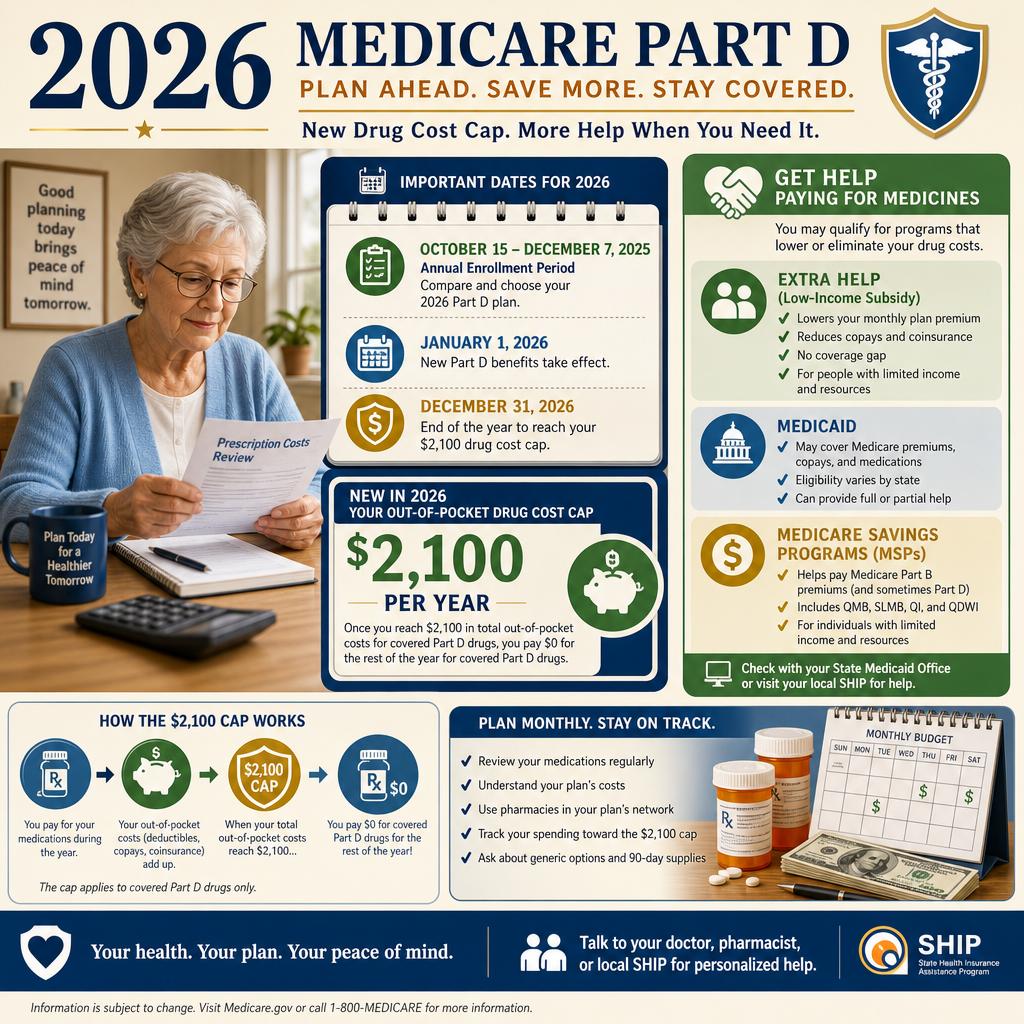
In 2026, many Medicare beneficiaries will hear one reassuring number repeated often: $2,100. That is the annual out of pocket cap for covered Part D drugs, and it is one of the most important drug cost protections Medicare has introduced. But in real households, especially for retirees with modest income, widows adjusting to a single Social Security check, or couples whose savings fluctuate just above assistance thresholds, the real question is not simply whether Part D has a cap. The more practical question is whether Extra Help, Medicaid, or a Medicare Savings Program changes the way that cap, premium, deductible, and pharmacy costs actually touch your monthly budget.
Why The 2026 Drug Cap Does Not Replace Extra Help
The 2026 Medicare handbook states that yearly out of pocket costs for covered Part D drugs are capped at $2,100. Once a beneficiary reaches that cap, they do not pay copayments or coinsurance for covered Part D drugs for the rest of the calendar year . That is meaningful, but it can also create a false sense of simplicity. A person taking expensive medication may still face significant costs before reaching the cap, and the timing of those costs can matter as much as the final annual total.
Extra Help works differently. Medicare describes Extra Help as a program for people with limited income and resources that helps pay Medicare prescription drug program costs, including premiums, deductibles, and coinsurance . That means Extra Help is not merely a year end safety net. It can affect the monthly experience of filling prescriptions, the pressure a person feels at the pharmacy counter, and the risk that they delay medication because the cost arrives before the household cash flow is ready.
The Hidden 2026 Problem Is Not Coverage It Is Timing
Consider a beneficiary named Elaine, age 72, who takes a brand name heart medication and two diabetes drugs. She hears that drug costs are capped in 2026 and assumes she no longer needs to worry about plan comparison. In January, however, she faces a deductible structure, a nonpreferred pharmacy price, and a plan premium that feels much larger than she expected. The cap may protect her from unlimited Part D exposure, but it does not guarantee that her costs arrive evenly, predictably, or at the lowest available level.
Medicare also offers the Medicare Prescription Payment Plan, which allows beneficiaries to spread out out of pocket costs for covered Part D drugs across the calendar year. The handbook is very clear that this option may help manage expenses, but it does not save money or lower drug costs . This distinction matters. A payment plan can make a difficult month easier, but Extra Help may reduce the underlying cost burden itself for people who qualify.
Medicare Savings Programs Can Change The Entire Conversation
Many people think of prescription help and medical premium help as separate issues. In practice, they often overlap. Medicare Savings Programs are state administered programs that can help eligible beneficiaries pay certain Medicare costs. The Qualified Medicare Beneficiary program can cover Part A premiums when someone does not have premium free Part A, as well as Part B premiums, and it includes strong billing protections for Medicare covered deductibles, coinsurance, and copayments .
The overlooked point for 2026 planning is that Medicare says people who qualify for a QMB, SLMB, or QI program automatically qualify for Extra Help . That creates a planning sequence that many retirees miss. A beneficiary may walk into a drug plan review asking only which Part D plan has the lowest copay, when the more valuable first question is whether they should be screened for a state assistance program that could change the entire Part D calculation.
The One Annual Review List Worth Doing
A good 2026 review is not a casual glance at the premium. It is a disciplined crosscheck of subsidy status, prescriptions, pharmacies, and plan rules. Before assuming last year’s plan still fits, beneficiaries should confirm these items:
- Whether they currently receive Extra Help, Medicaid, QMB, SLMB, or QI assistance.
- Whether their prescriptions are still on the plan formulary and placed on reasonable tiers.
- Whether their pharmacy remains preferred, standard, or out of network under the plan.
- Whether the Medicare Prescription Payment Plan would help cash flow, while remembering that it does not reduce total drug cost.
- Whether a change in income, marital status, address, or assets could affect eligibility for assistance.
That is the only checklist in this article because the broader point is not administrative. It is personal. A retiree who loses a spouse may lose income, but also may have a confusing transition year in which tax records, Social Security deposits, and bank balances do not tell the same story. A beneficiary who moves closer to an adult child may cross into a new plan service area, where the pharmacy network and Part D options change. A person newly approved for a Medicare Savings Program may not realize that Extra Help should now be part of the drug cost conversation.
Plan Design Still Matters Even With Assistance
Even with the 2026 Part D cap, plan design has not become irrelevant. Medicare notes that drug costs vary based on whether prescriptions are on the plan formulary, what tier the drug is in, the benefit phase, the pharmacy used, and whether the beneficiary receives Extra Help . Those moving parts explain why two neighbors with the same Medicare card can have very different pharmacy experiences.
This is where many do it yourself comparisons break down. A beneficiary may sort plans by premium and overlook a preferred pharmacy difference. Another may focus on the $2,100 cap but fail to notice that one drug requires an exception request or that a lower premium plan treats a long standing medication less favorably. Medicare’s structure is public, but the interaction between subsidy rules, formularies, pharmacies, and household cash flow is where professional interpretation becomes valuable.
Why A Brokerage Review Can Protect More Than Your Premium
Vista Mutual approaches 2026 Medicare planning as a risk review, not a product shortcut. For some clients, the right answer may be a Medicare Advantage plan with drug coverage and carefully verified pharmacy access. For others, Original Medicare with a Medigap policy and a separate Part D plan may provide a better balance of predictability, provider choice, and medication coverage. The answer depends on the person, not on a slogan.
The most expensive Medicare mistake is often the one that looks harmless in October. It may be staying with a plan after a formulary change, ignoring a subsidy notice, assuming the payment plan lowers cost, or failing to screen for programs that could automatically connect someone to Extra Help. In 2026, the drug cap is a powerful protection, but it is not a substitute for careful plan selection.
Peace of mind comes from knowing not only what Medicare promises, but how those promises apply to your prescriptions, income, doctors, and pharmacy habits. If you want a careful 2026 review before costs begin showing up at the counter, Schedule your 2026 Medicare consultation with Vista Mutual.