The 2026 Medicare Formulary Drift Problem That Can Change Your Drug Costs
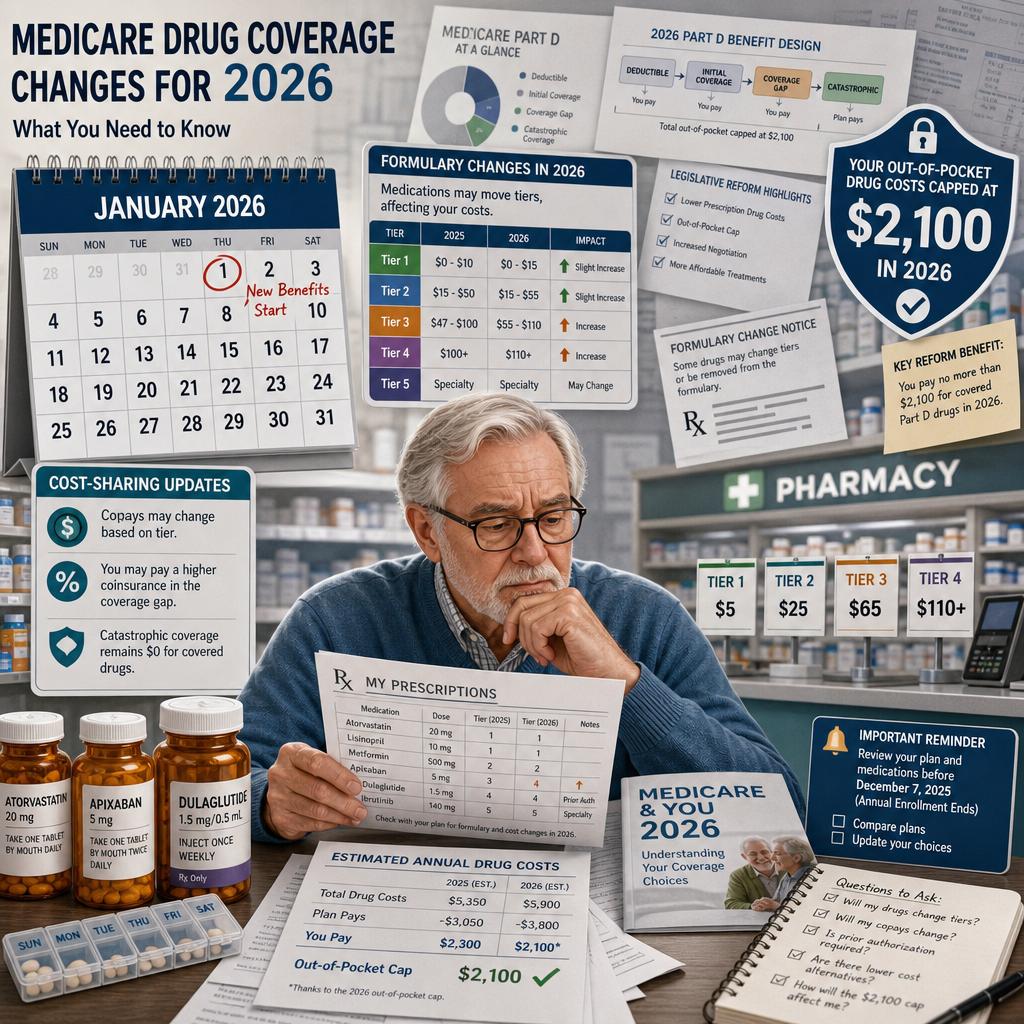
A retiree can do everything that sounds responsible in the fall of 2025. She can keep the same Medicare Advantage plan, use the same pharmacy, and refill the same prescriptions she has taken for years. Then January arrives, and one medication rings up differently at the counter, another requires a formulary exception, and a third is less expensive only if she changes pharmacies.
That is the 2026 Medicare formulary drift problem. It is not always dramatic enough to appear as a headline. It is not always described as a plan termination or a benefit cut. It often shows up as a tier change, a deductible interaction, a different preferred pharmacy arrangement, or a new cost sharing structure that technically follows Medicare rules while still changing the household budget.
The 2100 Cap Helps But It Does Not Replace Plan Analysis
The most important Part D protection for 2026 is real. Medicare states that yearly out of pocket costs for covered Part D drugs are capped at $2,100 in 2026, and once that cap is reached, the beneficiary does not pay copayments or coinsurance for covered Part D drugs for the rest of the calendar year . For people taking expensive brand name or specialty medications, that cap can be the difference between rationing treatment and staying adherent.
But the word covered does a lot of work. The cap applies to covered Part D drugs under the plan. If a medication is not on the formulary, if it is subject to utilization management, if a pharmacy is out of network, or if the prescriber must document medical necessity before the plan pays, the cap alone does not solve the access problem. A beneficiary may be protected from unlimited covered drug spending and still face a January surprise because the plan design no longer matches the prescription list.
Formulary Tiers Are Where The Quiet Changes Hide
A drug plan formulary is more than a list of covered prescriptions. Medicare defines a formulary as the list of prescription drugs covered by a prescription drug plan or another insurance plan offering drug benefits . In practice, that list is also a pricing map. The tier assigned to a medication can determine whether a refill feels routine or financially disruptive.
In 2026, beneficiaries should not assume that a familiar drug has stayed in the same economic position just because it remains covered. Medicare explains that actual drug costs vary based on whether prescriptions are on the plan formulary, what tier the drug is in, which drug benefit phase applies, and which pharmacy the beneficiary uses . That means two plans can both cover the same medication while producing very different monthly experiences at the pharmacy counter.
Consider a beneficiary taking a blood thinner, two diabetes medications, and a brand name inhaler. If the inhaler moves to a higher tier, the plan may still appear acceptable in a casual review because the drug remains listed. If a diabetes medication is covered before the deductible in one plan but not another, the first quarter of the year can look entirely different. If the blood thinner is best priced at a preferred pharmacy across town, convenience now has a measurable cost.
The Annual Notice Is Only The Start Of The Investigation
Every fall, plans provide documents that deserve more attention than many households give them. Medicare says the Evidence of Coverage explains what the plan covers and what the beneficiary pays, while the Annual Notice of Change describes changes in coverage, costs, provider networks, service area, and more for January . These documents are important, but they are not a substitute for prescription level modeling.
The reason is simple. A plan can disclose its changes accurately and still leave the beneficiary responsible for connecting those changes to a specific medication list. The Annual Notice may tell you that tiers, cost sharing, or pharmacy arrangements are changing. It may not tell you, in plain English, that your spouse’s rheumatoid arthritis medication now requires a different approval step, or that your preferred local pharmacy is no longer the lowest cost option for your exact drug mix.
Negotiated Prices Add Another Layer In 2026
The first Medicare negotiated prices for selected drugs take effect January 1, 2026. Medicare advises beneficiaries to contact their plan for details on how those negotiated prices will affect them . That sentence is easy to overlook, but it is a critical planning clue. The existence of negotiated prices does not mean every plan will produce the same patient experience.
A negotiated price may reduce cost exposure for some beneficiaries, especially when paired with the $2,100 Part D cap. Yet the plan’s formulary structure, pharmacy network, deductible, and utilization rules still matter. A high cost medication can become more manageable under the national rules while another medication in the same household becomes less favorable under the plan’s 2026 design. Medicare reform can improve the system and still require careful plan selection.
This is where many families make a subtle mistake. They hear that the law improved drug affordability and conclude that plan comparison is less important. In reality, the reform changes the math. It does not eliminate the math.
The Pharmacy Counter Is Not The Best Place To Discover A Coverage Problem
Pharmacists often help patients find lower cost options, and Medicare notes that beneficiaries may be able to lower costs by using generics instead of brand name drugs or biosimilars instead of brand name biologic drugs, while also checking with the doctor to confirm the alternative is appropriate . That advice is sensible, but it should not be the first line of defense in January.
The pharmacy counter is a stressful place to make a Medicare decision. The line is moving, the clerk may not know your full coverage picture, and the plan’s price for one medication may not reveal the annual effect of all your prescriptions. A drug that is cheaper with a coupon outside insurance may not count toward your Part D out of pocket total. A lower cost alternative may require a new prescription. A plan exception may take time. Each of these issues can be handled, but they are easier to manage before the year begins.
Here is the single disciplined review every Medicare household should complete before keeping or changing drug coverage for 2026:
- Confirm every prescription, dosage, refill frequency, pharmacy, formulary status, tier, deductible treatment, prior authorization requirement, and projected annual cost before relying on the plan for another year.
That may sound excessive until one realizes how many separate rules can attach to a single medication. Medicare drug coverage is not merely insurance against prescription expense. It is a contract built around formularies, pharmacy networks, exceptions, tiers, and calendar year cost phases.
Why Professional Guidance Matters More In A Capped Cost Era
The $2,100 out of pocket cap is a major improvement for 2026, but it can create a false sense of simplicity. A beneficiary who expects all drug problems to end at the cap may miss the more immediate question: will the plan cover the right medications, at the right pharmacy, under rules that are realistic for the prescribing physician and the patient?
Vista Mutual approaches this review the way a careful clinician reviews a chart. We look beyond the premium and the headline benefits. We evaluate whether a Medicare Advantage plan’s drug coverage fits the doctors, pharmacies, prescriptions, and risk tolerance of the person who will actually use it. For Original Medicare clients, we examine how a stand alone Part D plan interacts with Medigap strategy, pharmacy access, and expected medication changes.
The goal is not to chase the cheapest plan on paper. The goal is to avoid preventable friction when health needs are already complicated. In 2026, the best Medicare decision may be the one that protects you from the quiet changes you would never notice until a refill is denied, delayed, or priced differently than expected.
If you want a precise review of your 2026 Medicare drug coverage, Medicare Advantage options, or Supplement strategy, Schedule your 2026 Medicare consultation with Vista Mutual. The peace of mind comes from knowing that someone has read the fine print before it becomes your problem.