The 2026 Medicare General Enrollment Period Trap For Late Part B Decisions
A late Medicare enrollment problem rarely announces itself as a crisis. It usually begins with a reasonable assumption: I still have insurance, I am healthy, I can wait. Then a retiree realizes in February 2026 that the coverage they relied on was not treated by Medicare as current employer coverage, or that their spouse’s job ended months earlier, or that COBRA felt like a continuation of work coverage even though Medicare treats it differently.
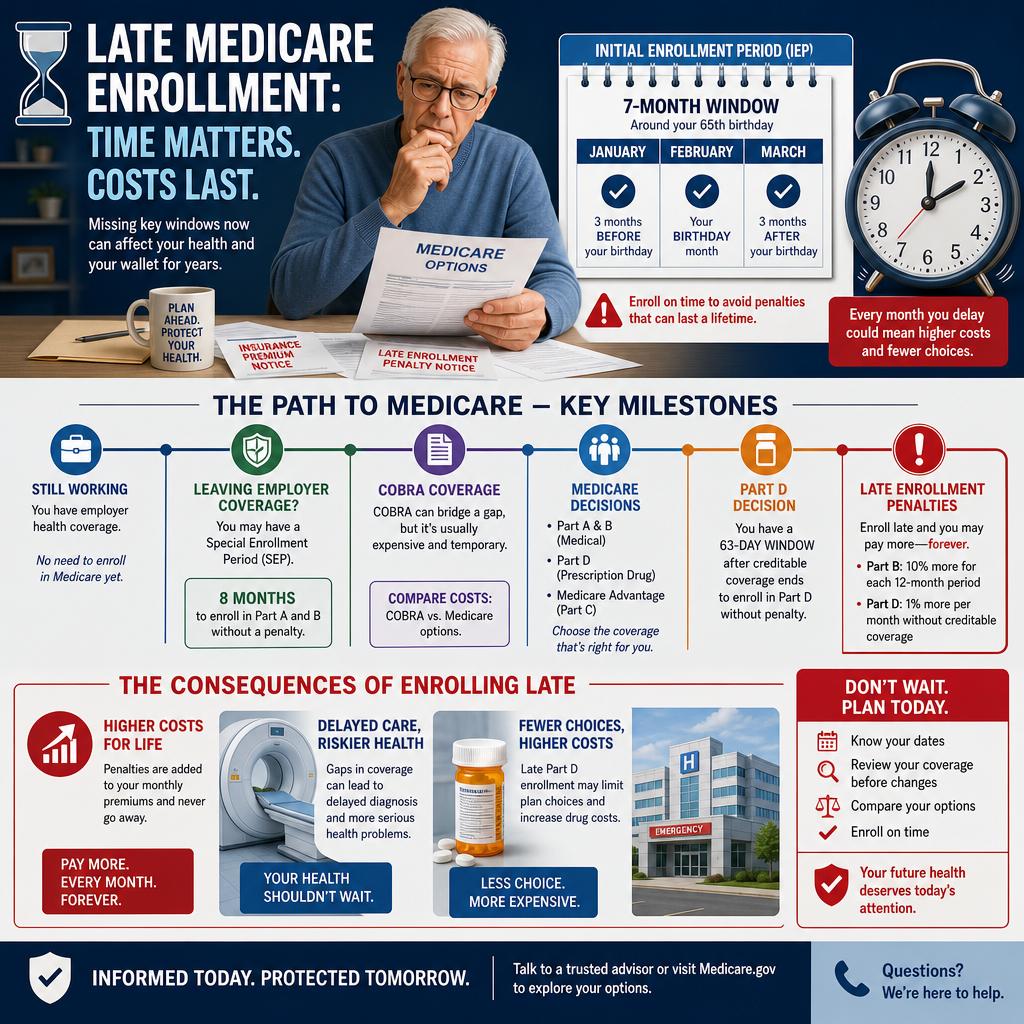
That is when the General Enrollment Period becomes important. It is not the enrollment window people plan around when everything goes smoothly. It is the window people need when the first Medicare decision was missed, misunderstood, or made with incomplete information. Medicare says you can sign up for Part B during the General Enrollment Period from January 1 through March 31 each year if you missed your Initial Enrollment Period and do not qualify for a Special Enrollment Period, and coverage starts the first day of the month after you sign up .
Why The General Enrollment Period Is Not A Simple Do Over
The phrase “General Enrollment Period” sounds forgiving, but it is not the same as rewinding the clock. A person who enrolls in Part B in January may begin coverage in February. Someone who waits until March may not begin until April. For a beneficiary who needs an MRI, outpatient surgery, chemotherapy consult, durable medical equipment, or specialist evaluation, those extra weeks can matter clinically and financially.
The deeper issue is that late Part B enrollment is not only about getting a red, white, and blue Medicare card. Medicare warns that if you do not sign up for Part B when first eligible, you may face a delay in coverage and may have a late enrollment penalty added to your monthly premium for as long as you have Part B . That is why a Vista Mutual review does not begin with plan brochures. It begins with the timeline: birthday month, employment status, employer size, last day of active work, last day of group coverage, COBRA election date, retiree coverage language, and whether Part A was already active.
The Current Employment Test That Causes The Most Damage
The safest Part B delay usually depends on group health plan coverage based on current employment. If you delayed Part B because you or your spouse were still working and covered by that employer plan, Medicare generally gives you a Special Enrollment Period. The 2026 handbook describes an 8-month period that begins the month after employment ends or the coverage ends, whichever happens first, and says coverage generally starts the first day of the month after you sign up .
The trap is that many forms of coverage feel employer related, but do not count as current employment coverage for that Special Enrollment Period. Medicare specifically distinguishes COBRA, retiree coverage, VA coverage, individual Marketplace coverage, and former employer coverage through severance or layoff from coverage based on current employment . That distinction is not academic. A person who waits until COBRA ends may discover that the Special Enrollment Period did not wait with them. Medicare even cautions that COBRA is not considered current employer coverage for the Part B Special Enrollment Period, and that after employment based coverage ends, you have 8 months to sign up for Part B without a penalty whether or not you choose COBRA .
How A Late Part B Decision Changes Plan Strategy
Once Part B is corrected, the next decision is not automatic. Some people assume that enrolling late simply places them into Original Medicare and everything else can be handled later. In reality, Part B timing can determine when a beneficiary can join a Medicare Advantage plan, whether they need a stand-alone Part D plan, and whether a Medigap application will be available on favorable terms.
For Medicare Advantage, the rule is especially precise. If you already have Part A and get Part B for the first time during the General Enrollment Period, Medicare says you can join a Medicare Advantage plan during a 2-month period after adding Part B, with coverage starting the first day of the month after you sign up . That sounds convenient, but plan selection still requires close review. Original Medicare generally allows you to use any doctor or hospital that takes Medicare anywhere in the United States, while Medicare Advantage may require network providers and prior authorization for certain services or supplies . For someone emerging from a coverage gap, choosing quickly without confirming specialists, facilities, medications, and referral rules can replace one problem with another.
The Medigap Clock May Start When You Least Expect It
Medigap planning is one of the least forgiving parts of a late Part B situation. The 6-month Medigap Open Enrollment Period begins the first month you have Part B and are 65 or older. After that period, you may not be able to buy a Medigap policy, or it may cost more, unless another guaranteed issue right applies under federal or state rules .
That means Part B enrollment can start a clock that should not be treated casually. A beneficiary who enrolls in Part B during the 2026 General Enrollment Period may be simultaneously deciding whether to keep Original Medicare with a Medigap policy and Part D plan, or choose Medicare Advantage instead. Those are fundamentally different models. Original Medicare has no yearly limit on what you pay out of pocket unless you have supplemental coverage such as Medigap, Medicaid, employer, retiree, or union coverage, while Medicare Advantage plans have a yearly limit for covered Medicare services . The right answer depends on health history, physician relationships, travel patterns, prescription exposure, underwriting risk, and comfort with managed care rules.
Part D Can Become The Quiet Second Penalty
Medical coverage is only half the story. People who miss Part B often also misunderstand drug coverage. Medicare drug coverage is optional, but the consequences of waiting can be permanent if you go 63 or more days without Medicare drug coverage or other creditable prescription drug coverage after your initial eligibility. Medicare explains that the Part D late enrollment penalty is generally added to your monthly premium for as long as you have Medicare drug coverage .
This matters more in 2026 because the drug benefit is changing in visible ways. The Medicare handbook says prices for the first 10 drugs negotiated with participating drug companies take effect on January 1, 2026, and that out-of-pocket costs for covered Part D drugs are capped at $2,100 in 2026 . But the cap only helps if the drug is covered by your plan and you are actually enrolled in appropriate drug coverage. A person who finally fixes Part B but forgets Part D may still carry a future premium penalty, even if they take no prescriptions today.
A Better Way To Repair A Late Enrollment Problem
The most important move is to stop guessing. If you are approaching the General Enrollment Period, gather the documents that show when your coverage began and ended, including employer letters, COBRA notices, retiree plan materials, Marketplace termination records, and prescription drug creditable coverage notices. Then evaluate the Medicare path in sequence: first Part A and Part B eligibility, then Special Enrollment Period rights, then Part D exposure, then the choice between Original Medicare with Medigap or Medicare Advantage. The 2026 handbook itself notes that premium amounts, drug costs, and income limits for 2026 were not available at printing and directs beneficiaries to Medicare.gov for current figures , which is another reason stale assumptions can be costly.
The peace of mind comes from having someone reconcile the rules before the deadline, not after a claim denies. Vista Mutual Insurance Services helps clients compare Medicare Advantage, Medicare Supplement, and Part D options with the enrollment timeline in view, so the plan recommendation fits both the law and the person. If your 2026 Medicare start date, employer coverage, COBRA decision, or drug coverage history is unclear, Consult with the Vista Mutual team before a small timing issue becomes a long-term coverage problem.