The 2026 Medicare Home Health Certification Gap
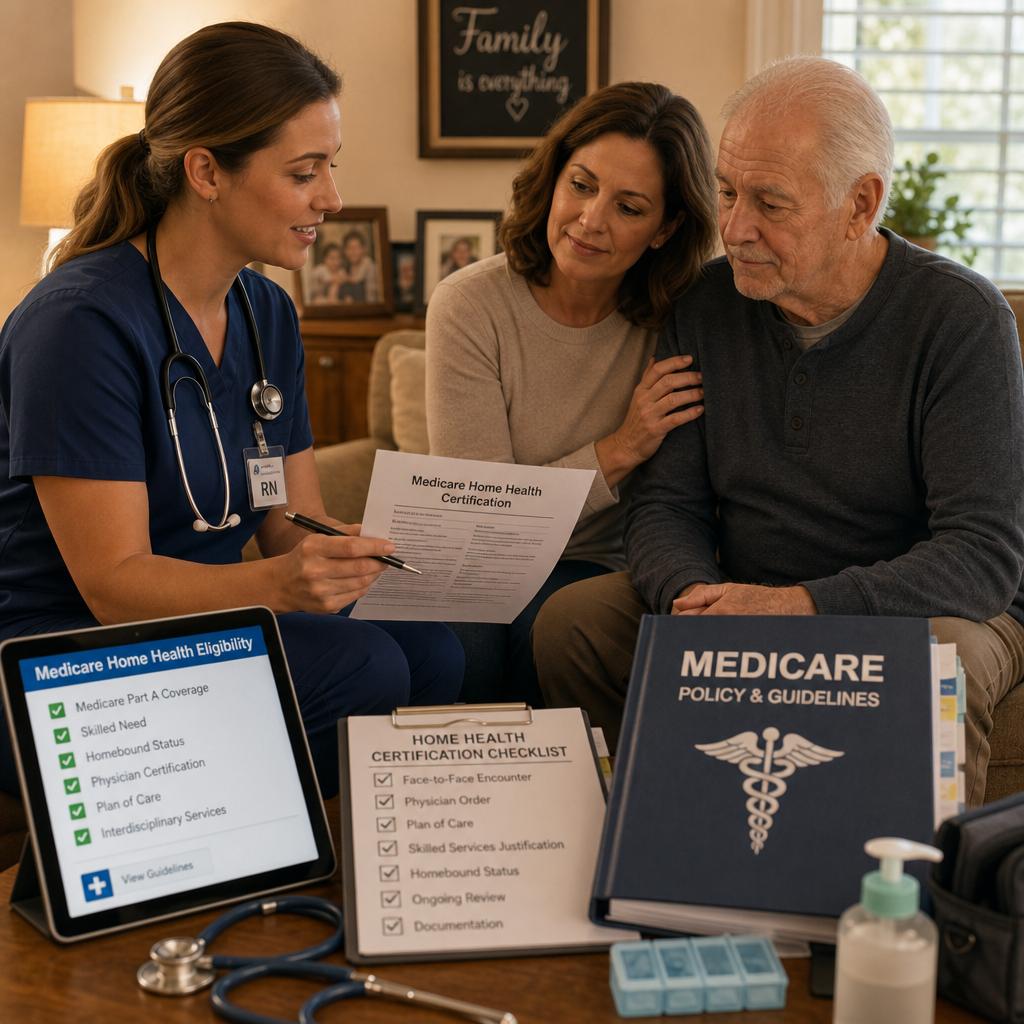
A daughter brings her father home after a winter hospitalization for pneumonia. The discharge nurse mentions home health, the family imagines a steady stream of help, and everyone feels a momentary sense of relief. Then, a week later, the agency explains that Medicare coverage depends on more than being weak, elderly, or unsafe alone. The physician must certify the need, the patient must meet Medicare’s homebound standard, and the services must be skilled and intermittent.
That is the 2026 home health certification gap. It is not a new benefit category, and it is not a flashy plan advertisement. It is the quiet paperwork and clinical eligibility layer that determines whether a recovering Medicare beneficiary receives covered nursing, therapy, medical social services, and limited aide support at home, or whether the family is left trying to patch together private care.
Why Home Health Coverage Is Not The Same As Home Care
Medicare home health is one of the most misunderstood benefits because the phrase sounds broader than it is. In Medicare terms, home health services may be covered under Part A or Part B when the care is medically necessary and tied to skilled needs, such as part-time or intermittent skilled nursing, physical therapy, speech-language pathology, or continued occupational therapy. Medicare also recognizes that a covered home health episode may involve medical social services, part-time or intermittent home health aide services, medical supplies used at home, and durable medical equipment, but those pieces are attached to the skilled-care framework, not a general household-help benefit .
This distinction matters because families often ask for the service they need emotionally, while Medicare evaluates the service that is documented clinically. A beneficiary may need bathing help, meal preparation, medication reminders, and someone nearby to prevent a fall. Those needs are real, but Medicare does not convert home health into round-the-clock custodial care. The strongest home health case is built around skilled observation, wound care, therapy progression, medication teaching after a change in condition, or another skilled service that a licensed professional must provide or supervise.
The Face To Face Requirement Families Do Not See Coming
One of the most important details in 2026 is that a doctor or other qualified health care provider, such as a nurse practitioner, must assess the beneficiary face to face before certifying the need for home health services. The care must also be ordered by a doctor or other health care provider, and the services must come through a Medicare-certified home health agency . This is where many otherwise appropriate cases become vulnerable. The patient may clearly be declining, but if the office note does not connect the condition to the skilled service and the homebound limitation, the agency may struggle to support coverage.
Consider a patient with congestive heart failure who has new shortness of breath, a medication adjustment, and difficulty walking to the bathroom without stopping. A vague order that says “home care evaluation” is weaker than a note explaining that the patient requires skilled nursing assessment for fluid status, medication education, and monitoring of symptoms, plus therapy to address reduced endurance and fall risk. Medicare coverage often turns on whether the written record tells the clinical story in Medicare’s language.
Homebound Does Not Mean Bedbound
The word homebound can sound harsher than Medicare intends. A person does not have to be permanently confined to bed to qualify. Medicare describes homebound status as having trouble leaving home without help, such as a cane, walker, wheelchair, special transportation, or another person, or when leaving home is not recommended because of the condition. It can also mean the person is normally unable to leave home because doing so requires a major effort .
This definition leaves room for ordinary life. A beneficiary may still leave home for medical appointments, religious services, or occasional short absences and still be homebound if leaving requires substantial effort because of illness or injury. The practical issue is documentation. If a plan reviewer sees that the patient drove to multiple social outings, shops independently, and needs only convenience help, the homebound case weakens. If the record shows that the patient leaves only with assistance, becomes exhausted after short distances, or has a physician-advised restriction, the coverage picture is very different.
The Intermittent Care Limit That Changes Expectations
Medicare’s home health benefit is not designed for continuous staffing. The 2026 Medicare & You guidance explains that “part-time or intermittent” skilled nursing care and home health aide services generally means less than 8 hours each day or less than 28 hours each week, with up to 35 hours weekly only in limited situations . That line is one of the most important expectation-setters in Medicare planning.
A spouse may hear “home health aide” and assume daily morning and evening care will be covered indefinitely. In reality, aide services are limited and usually tied to the skilled home health plan of care. The benefit can be extraordinarily valuable, but it is not a substitute for long-term care insurance, Medicaid home and community-based services, private-duty aides, or family caregiving. A good Medicare strategy acknowledges that gap before a discharge crisis, not after the first agency visit.
Original Medicare And Medicare Advantage Treat The Same Benefit Differently
Under Original Medicare, covered home health services cost the beneficiary nothing, but Medicare-covered durable medical equipment used at home generally carries 20 percent coinsurance, and the Part B deductible applies to that equipment . That can surprise families who hear that home health is covered at no cost, then receive cost-sharing for a walker, hospital bed, oxygen equipment, or other equipment billed under separate rules.
Medicare Advantage plans must cover medically necessary services that Original Medicare covers, but the operating experience can be different. Medicare Advantage plans may require prior authorization for certain services or supplies, may use networks, and may apply plan-specific cost sharing. Medicare’s own comparison explains that Original Medicare generally does not require prior approval for covered services or supplies, while Medicare Advantage may require approval before the plan covers certain care . For a home health episode, that can mean the same clinical need feels smoother in one coverage arrangement and more administratively managed in another.
The Agency Choice Is A Coverage Decision, Not Just A Convenience Decision
The home health agency must be Medicare-certified for Medicare coverage. That sounds simple, but in practice it intersects with geography, staffing, plan contracts, and discharge timing. A hospital discharge planner may send referrals to multiple agencies, but acceptance depends on whether the agency serves the ZIP code, has staffing, accepts the beneficiary’s coverage, and can meet the ordered needs. A Medicare Advantage member also needs to know whether the agency is in network or otherwise authorized by the plan.
Families should also understand that the first home health assessment is not a blank check. The agency evaluates whether the beneficiary meets Medicare criteria and develops a plan of care. If the patient improves, refuses visits, no longer needs skilled services, or no longer appears homebound, the episode can be reduced or ended. That is not necessarily abandonment; it may reflect Medicare’s rules. The planning mistake is assuming the benefit will last as long as the family feels overwhelmed.
How To Build A Stronger 2026 Home Health Plan
Before discharge or immediately after a new decline, the family should ask the treating clinician to document three things clearly: why the beneficiary is homebound, what skilled service is medically necessary, and why the need is intermittent rather than custodial. If the beneficiary is in a Medicare Advantage plan, the family should also ask whether prior authorization is required and whether the selected home health agency is in network. If durable medical equipment is part of the plan, cost sharing should be discussed separately because equipment is not always treated like the home health visit itself.
This is also where Medicare plan selection becomes personal. A plan with a low premium may look attractive during annual enrollment, but a beneficiary with frailty, falls, heart failure, Parkinson’s disease, post-surgical risk, or repeated hospitalizations may care more about home health network depth, authorization behavior, therapy access, and coordination after discharge. Medicare decisions are not just about today’s doctor list. They are about how care will be approved when life becomes less predictable.
The peace of mind comes from knowing which questions to ask before the crisis. Vista Mutual helps clients compare Medicare Advantage, Medicare Supplement, and Part D options through the lens of real health scenarios, including recovery at home, post-acute care, prescriptions, equipment, and the administrative rules that families rarely see until they matter. If you want a 2026 Medicare strategy that accounts for both coverage and the paperwork behind coverage, Schedule your 2026 Medicare consultation.