The 2026 Medicare Home Health Supply Split That Can Turn Recovery Into A Bill
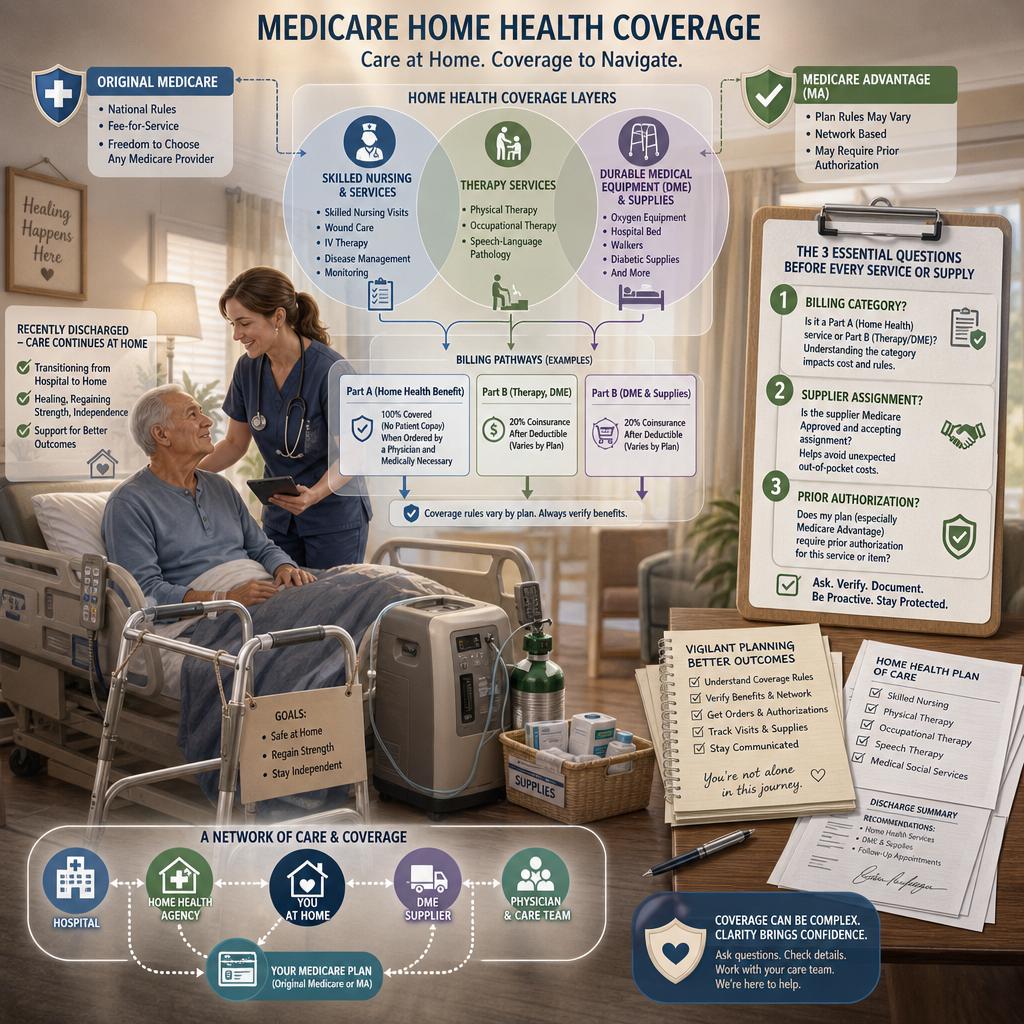
A hospital discharge planner may tell a family that Medicare will cover home health after surgery, and technically, that can be true. A nurse may come to the house, a physical therapist may help with safe movement, and a home health aide may assist on a part-time or intermittent basis when skilled care is also required. The surprise often arrives later, when the hospital bed, walker, oxygen equipment, wound supplies, or infusion-related items are billed under a different Medicare rule than the visit itself.
That distinction matters more in 2026 because many beneficiaries are comparing plans under pressure. A person leaving the hospital rarely has time to study supplier assignment, network rules, rental clocks, or whether a Medicare Advantage plan requires prior authorization for equipment. Yet those details can shape the real cost of recovery. Medicare states that covered home health services may include skilled nursing, therapy, medical social services, part-time or intermittent home health aide services, durable medical equipment, and medical supplies for use at home, but it also separates the cost treatment of those categories in ways families often do not see coming .
The No Cost Home Health Promise Has A Boundary
Under Original Medicare, covered home health services can be extremely valuable. If you qualify, Medicare covers medically necessary part-time or intermittent skilled nursing care, physical therapy, speech-language pathology services, and continued occupational therapy. To qualify, a doctor or other allowed provider must order the care, certify the need, and a Medicare-certified home health agency must provide it. The patient must also generally be homebound, meaning leaving home is not recommended, requires help, or takes a major effort .
The phrase families remember is often the most comforting one: you pay nothing for covered home health services. That is accurate, but incomplete. The same Medicare explanation immediately adds that Medicare-covered durable medical equipment used during home health is subject to 20 percent of the Medicare-approved amount, and the Part B deductible applies . In practice, a patient can have no bill for the nurse visit but still owe cost sharing for the hospital bed, walker, oxygen equipment, or other durable item ordered for use at home.
This is where Medicare becomes less like a single benefit and more like a set of intersecting payment systems. A nurse changing a dressing may be part of the home health episode. A walker delivered to prevent falls may be durable medical equipment. An infusion pump may fall under equipment rules, while the professional services related to home infusion may have their own payment treatment. The beneficiary experiences all of it as one recovery, but Medicare may process it through several different benefit categories.
Why Equipment Can Trigger A Different Cost Conversation
Durable medical equipment is not treated like an ordinary home health visit. Medicare covers medically necessary items such as oxygen and oxygen equipment, walkers, and hospital beds when a Medicare-enrolled doctor or other qualified provider orders them for use in the home. Most items must be rented, although some may be purchased. More expensive equipment, including wheelchairs and hospital beds, can become the patient’s property after 13 months of rental payments. The beneficiary generally pays 20 percent of the Medicare-approved amount, and the Part B deductible applies .
Consider a 2026 scenario. A woman recovering from a hip fracture is discharged home with home health physical therapy, a walker, and a short-term hospital bed. Her daughter hears “home health is covered” and assumes the whole package will be handled the same way. The therapy visits may be covered with no patient cost if all requirements are met, but the bed and walker can generate Part B cost sharing. If the supplier does not properly accept assignment, the family can face a much more complicated billing experience than they expected.
Assignment is not a technicality. Medicare defines assignment as an agreement by a provider or supplier to be paid directly by Medicare, accept the Medicare-approved amount as full payment, and not bill the beneficiary for more than the deductible and coinsurance . For durable medical equipment, Medicare specifically warns beneficiaries to ask whether the supplier participates in Medicare or will accept assignment before equipment is delivered. If the supplier is not participating or will not accept assignment, additional charges may apply, and for rented equipment the assignment question should be confirmed for all rental months .
The Medicare Advantage Version Adds Network And Authorization Risk
The same recovery can look different inside a Medicare Advantage plan. Medicare Advantage plans must cover medically necessary services that Original Medicare covers, but they can use different cost sharing, provider networks, supplier networks, referrals, and prior authorization rules. Medicare’s 2026 handbook makes clear that plan members may need to use network providers and may need plan approval before certain services or supplies are covered .
That means a hospital discharge can become a coordination test. The physician may order equipment, the home health agency may be ready to start care, and the family may already be preparing the bedroom. But if the Medicare Advantage plan requires a contracted supplier, prior authorization, or a specific documentation pathway, the equipment can be delayed or billed differently than expected. Medicare Advantage plans also have a yearly limit on out-of-pocket costs for covered Part A and Part B services, but the path to that protection depends on using the plan correctly and understanding how the plan applies its rules .
This is one of the reasons a low-premium plan should never be evaluated only by the monthly premium. A plan that looks attractive during annual enrollment may feel very different when a beneficiary needs post-hospital recovery support, a hospital bed, oxygen, therapy, and specialty follow-up in the same month. Original Medicare, Medigap, Medicare Advantage, and Part D each solve different parts of the risk. None should be judged in isolation.
Home Infusion Shows How Quickly The Categories Can Overlap
Home infusion therapy is a useful example because it blends equipment, supplies, drugs, services, training, and monitoring. Medicare covers equipment and supplies such as pumps, IV poles, tubing, and catheters for certain home infusion drugs. It may also cover services such as nursing visits, caregiver training, and patient monitoring. The patient pays 20 percent of the Medicare-approved amount for these services and for the equipment and supplies used at home .
A family may reasonably assume that a nurse coming to the home means the entire episode is being paid like home health. But infusion-related care can carry its own cost structure, and some drugs may fall under Part B while others belong under Part D or may not be covered in the same way. In 2026, the Part D out-of-pocket cap for covered Part D drugs is $2,100, after which the beneficiary pays no copayment or coinsurance for covered Part D drugs for the rest of the calendar year . That cap is powerful, but it does not automatically solve Part B equipment, service, or supplier cost sharing.
This is the kind of Medicare nuance that rarely appears in a casual plan comparison. The question is not simply, “Does Medicare cover it?” The better question is, “Which part of Medicare covers each piece, which supplier is allowed to provide it, what authorization is required, and what cost sharing applies before and after the deductible?”
The Three Questions To Ask Before Equipment Arrives
Before accepting equipment at the door, beneficiaries and caregivers should slow the process down long enough to confirm the coverage pathway. The most expensive mistakes often happen when a family is exhausted, the discharge is rushed, and everyone assumes the paperwork has already been handled.
Here is the one short checklist worth keeping near the discharge folder:
- Is this item being billed as durable medical equipment, a home health supply, a home infusion item, or something else?
- Does the supplier accept Medicare assignment or, under Medicare Advantage, participate in the plan’s supplier network?
- Is prior authorization, a written order, or additional medical documentation required before delivery?
Those questions do not make someone difficult. They make the claim cleaner. They also help prevent the emotionally draining situation where a patient relies on equipment for several weeks and only later learns that the wrong supplier, missing authorization, or incorrect billing pathway created an avoidable charge.
Professional Guidance Turns A Discharge Plan Into A Coverage Plan
The home health supply split is a perfect example of why Medicare planning should not be reduced to premium shopping. The brochure version says home health may be covered. The real-world version asks whether the patient is homebound, whether skilled care is required, whether the agency is Medicare-certified, whether equipment is rented or purchased, whether assignment applies, whether the Part B deductible is triggered, and whether a Medicare Advantage plan has supplier or authorization rules.
Vista Mutual helps clients think through these intersections before a crisis makes every decision feel urgent. The right Medicare strategy does more than compare premiums. It anticipates where bills are likely to appear, how plan rules behave during recovery, and which questions need to be answered before care begins. For help reviewing your 2026 Medicare options with this level of precision, Consult with the Vista Mutual team.