The 2026 Medicare Insulin Delivery Split That Can Change Your Plan Choice
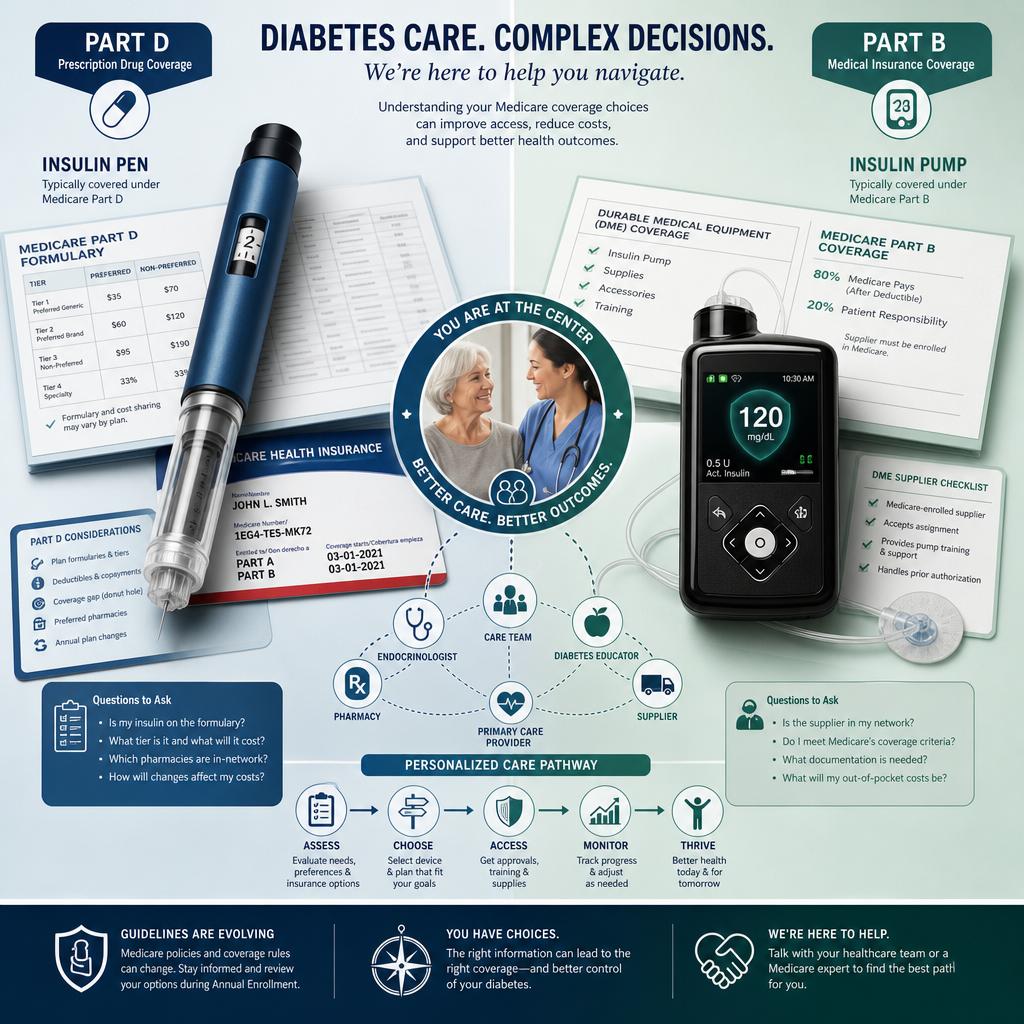
For many people with diabetes, the most important Medicare decision in 2026 will not begin with a premium. It will begin with a device. A beneficiary who uses insulin pens may believe they are shopping for ordinary prescription drug coverage, while a neighbor using insulin through a traditional pump may be living in a very different Medicare payment system. Both may hear the phrase insulin cap and assume their costs are protected in the same way. That assumption can be expensive.
Medicare has made insulin far more predictable than it once was, but predictable does not mean simple. The 2026 Medicare handbook states that Part D covers insulin, including insulin used with either a disposable or non traditional insulin pump, and certain supplies used to inject insulin, such as syringes, gauze, and alcohol swabs. It also states that plans cannot charge more than $35 for a one month supply of each Part D covered insulin, and that beneficiaries do not have to pay a deductible for insulin . That is real protection. Yet the same passage quietly points to a separate path for insulin used in Part B covered traditional pumps, where similar cost caps may apply under Part B rules rather than the Part D formulary system .
Why Insulin Delivery Matters More Than The Brand Name
Consider a retired teacher in 2026 who has used the same rapid acting insulin for years. Her doctor changes her from injections to pump therapy after repeated nighttime lows. She assumes nothing important has changed because the insulin name on the label is familiar. In Medicare terms, however, the delivery method can move the analysis from a Part D formulary review into a Part B equipment and medical benefit review. That shift affects the documents to examine, the providers involved, and the way a Medicare Advantage plan may manage access.
This is the sort of detail that rarely appears in a casual plan comparison. Part D coverage is built around formularies, pharmacy networks, drug tiers, utilization rules, and the pharmacy counter. Part B coverage, by contrast, is connected to medically necessary services, durable medical equipment, supplier rules, and the medical claims system. The 2026 handbook makes clear that Part B may cover some limited outpatient prescription drugs, including insulin used with a traditional pump . A person who is comparing plans only by monthly premium may miss the fact that their insulin delivery system is tied to an entirely different set of coverage mechanics.
The Part D Insulin Promise And Its Limits
The headline rule is strong. For Part D covered insulin in 2026, a plan cannot charge more than $35 for a one month supply of each covered insulin product, and the deductible does not apply to that insulin . For someone using vials, pens, or insulin with a disposable or non traditional pump, that can create meaningful budget stability. It also reduces the anxiety many beneficiaries once felt in January, when deductibles and formulary changes could make the first refill of the year financially painful.
But the protection still operates inside a plan. Covered insulin products are on the plan formulary, and the handbook reminds beneficiaries that formularies can change and that plans may apply coverage rules such as prior authorization, quantity limits, or step therapy to certain drugs . That means the question is not simply, Does Medicare cap insulin? A sharper question is, Is my exact insulin covered by this specific 2026 plan, at my preferred pharmacy, with rules my prescriber can satisfy before I run short?
The Traditional Pump Path Under Part B
Traditional insulin pump users deserve a separate review. When insulin is used in a Part B covered traditional pump, the analysis may move away from the pharmacy benefit and toward the medical benefit. Medicare describes traditional pump insulin as a Part B exception to the general rule that Part B does not cover most drugs . The same handbook notes that similar caps on costs apply for traditional insulin used in Part B covered insulin pumps .
That phrase, similar caps, is reassuring but not self executing. In Original Medicare, the beneficiary must still think about whether the supplier accepts Medicare assignment, whether the pump and related items are processed correctly, and whether supplemental coverage helps with the remaining medical cost sharing. In Medicare Advantage, the plan must cover Medicare covered services, but the handbook notes that Advantage plans may require network providers, referrals, and prior authorization for certain services or supplies . A pump user may therefore need to verify not only insulin coverage, but the endocrinologist, durable medical equipment supplier, device pathway, and authorization process.
The 2026 Drug Cap Does Not Replace Plan Selection
The 2026 Part D out of pocket cap is another important protection. Medicare states that yearly out of pocket costs for covered Part D drugs are capped at $2,100 in 2026, and after that point the beneficiary pays no copayment or coinsurance for covered Part D drugs for the rest of the calendar year . For people taking insulin plus other expensive prescriptions, that cap can make the total drug year more manageable than in the past.
Still, the cap does not make every plan equal. It applies to covered Part D drugs, which means formulary placement, covered alternatives, preferred pharmacies, mail order options, and plan rules remain central. The handbook explains that actual drug costs vary based on whether prescriptions are on the formulary, the tier, the benefit phase, the pharmacy used, and whether the person receives Extra Help . In practical terms, a person could be protected from unlimited Part D spending and still choose a plan that creates refill friction, pharmacy inconvenience, or avoidable administrative burden.
Medicare Advantage Adds Another Layer Of Review
Medicare Advantage can be a strong fit for some people with diabetes, especially when coordinated primary care, extra benefits, or lower predictable copays align with their care pattern. But diabetes management is often network sensitive. Endocrinologists, podiatrists, ophthalmologists, labs, pharmacies, durable medical equipment suppliers, and diabetes education providers may all matter. A plan that looks attractive in a brochure may become frustrating if the specialist or pump supplier is out of network.
The 2026 handbook is clear that Medicare Advantage plans usually bundle Part A, Part B, and often Part D, but beneficiaries may need to use doctors in the plan network and get approval for certain drugs or services . That is why insulin users should not treat a low premium as the full answer. A high value plan is the one that supports the full diabetes routine, from prescriptions and supplies to specialists and devices, without hidden interruptions.
The Questions Vista Mutual Would Ask Before Recommending A Plan
A careful 2026 Medicare review for insulin users should begin with the beneficiary's actual life, not with a carrier advertisement. The most useful questions are clinical and practical: how is the insulin delivered, which exact insulin products are used, which pharmacy fills them reliably, whether a traditional pump is involved, which endocrinologist manages the regimen, whether the pump supplier is in network, and which non insulin prescriptions could push the person toward the $2,100 Part D cap. Those details are not small print. They are the architecture of the decision.
This is also where Medicare Supplement planning can differ sharply from Medicare Advantage planning. With Original Medicare and a Medigap policy, the emphasis may be broad provider access and help with Original Medicare cost sharing. With Medicare Advantage, the emphasis may be total plan coordination, lower upfront premium, network accuracy, and authorization readiness. Neither structure is automatically superior. The right answer depends on the medications, devices, physicians, travel patterns, and risk tolerance of the individual.
The peace of mind comes from knowing that someone has traced the whole path before the plan year begins. In 2026, insulin protection is stronger, but the delivery split between Part D and Part B still makes Medicare planning highly technical. If your insulin, pump, pharmacy, or specialist network matters to your health, do not rely on a surface level comparison. Schedule your 2026 Medicare consultation with Vista Mutual and let an experienced team evaluate the coverage path before a small Medicare detail becomes a yearlong problem.