The 2026 Medicare Lawful Presence Rule Retirees Rarely Plan For
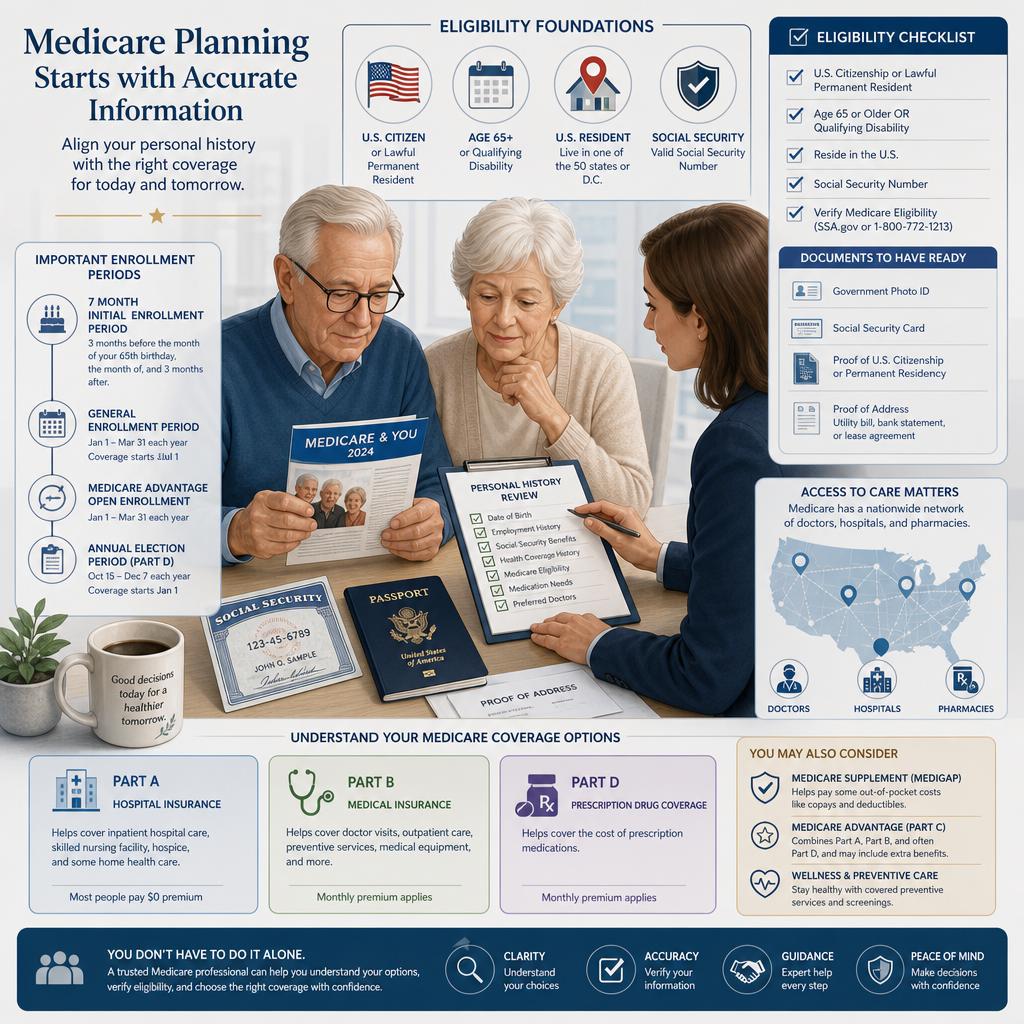
Most Medicare conversations begin with familiar questions. When do I take Part B, should I choose Medicare Advantage or a Supplement, and which Part D plan covers my prescriptions? For some retirees, especially naturalized citizens, lawful permanent residents, returning expatriates, and families helping an older parent settle coverage, there is a quieter question that belongs at the front of the file: does Medicare have the right eligibility record for this person in 2026?
That question can feel uncomfortable because it touches identity, documentation, and family history. But in Medicare planning, it is not a political question. It is a coverage question. The 2026 Medicare handbook states that a person must be lawfully present in the United States to receive Part A and Part B benefits or join a Medicare health or drug plan, a sentence that can carry enormous practical weight when a client is trying to enroll, change plans, or keep prescription coverage uninterrupted .
Lawful Presence Is A Coverage Gate Not A Footnote
Imagine a couple preparing for 2026 enrollment. One spouse has been on Medicare for years, while the other became eligible after a late career move, a name change, and a delayed Social Security record update. Their doctors are ready, their prescriptions are listed, and the plan they like appears available in their county. Yet an enrollment can still stall if Medicare, Social Security, or the plan cannot reconcile the identity and eligibility information used to confirm citizenship or lawful presence.
This is why Vista Mutual treats eligibility confirmation as part of serious Medicare planning, not as a clerical afterthought. Medicare Advantage enrollment requires more than liking the premium or the dental allowance. To join a Medicare Advantage plan, the 2026 handbook says you must have Part A and Part B, live in the plan service area, and be a U.S. citizen or lawfully present in the United States . If one of those conditions is not cleanly documented, the plan design conversation may be premature.
The Same Rule Reaches Part D Too
The lawful presence issue is just as important for prescription drug coverage. In 2026, a stand-alone Part D plan can be paired with Original Medicare, while many Medicare Advantage plans include drug coverage. The handbook explains that a separate Medicare drug plan generally requires Part A and/or Part B, while a Medicare Advantage plan with drug coverage requires both Part A and Part B. In either arrangement, the person must live in the plan service area and be lawfully present in the United States .
That matters more in 2026 because Part D is no longer a side issue for many retirees. Covered Part D drug costs are capped at $2,100 out of pocket for the year, after which the beneficiary owes no copayment or coinsurance for covered Part D drugs for the rest of the calendar year . A beneficiary who loses time correcting an enrollment problem is not merely dealing with paperwork. They may be delaying access to the very drug cost protections they were counting on.
Service Area And Status Can Collide
Lawful presence is only one of the eligibility filters. Service area is another. Medicare defines a service area as the place a person must live for a plan to accept them, and for plans with provider limits, it is generally where routine non-emergency services are available. The same definition warns that plans can, and in some cases must, disenroll a person who moves outside the service area .
Now consider a widowed parent who spends months with adult children in another state while immigration or identity documentation is being updated. The family may think the only question is where the parent physically receives care. Medicare sees a more technical picture: permanent address, service area, eligibility status, current plan rules, drug coverage, and timing. A move, even one made for family caregiving reasons, can trigger different consequences depending on whether the person has Original Medicare with a Supplement and Part D, a Medicare Advantage HMO, a PPO, or a Special Needs Plan.
Timing Still Controls The Outcome
The 2026 calendar adds another layer. Medicare says beneficiaries can start comparing 2026 options on October 1, 2025. The Annual Open Enrollment Period runs from October 15 through December 7, 2025, with new coverage effective January 1, 2026 if a change is made on time . For someone whose lawful presence or citizenship record needs correction, waiting until late November can turn a manageable verification issue into a coverage emergency.
Medicare Advantage has a second window from January 1 through March 31, 2026, but it is narrower than many people believe. It is only for people already in a Medicare Advantage plan, and it allows a one-time change to another Medicare Advantage plan or a switch back to Original Medicare with a separate drug plan. It does not let someone move from Original Medicare into Medicare Advantage, join a stand-alone drug plan from Original Medicare, or switch stand-alone drug plans if they are already in Original Medicare . That distinction is especially important when a documentation delay pushes a family past December 7.
What A Careful 2026 Review Should Confirm
A high-quality Medicare review for someone with a citizenship, immigration, address, or identity history should begin before plan brochures are compared. The advisor should confirm that Medicare shows active Part A and Part B when required, that the person is recorded as a U.S. citizen or lawfully present when plan enrollment depends on it, that the residential address matches the service area of the plan being considered, and that prescription coverage is not being interrupted while records are corrected.
This is also where plan type matters. Original Medicare generally allows use of any Medicare-enrolled doctor or hospital that accepts Medicare patients anywhere in the United States, while Medicare Advantage often relies on networks and service areas for non-emergency care . A person with an unsettled address situation may value one structure differently than a person with a stable residence, established local specialists, and predictable pharmacy use. The right answer is not ideological. It is factual, personal, and tied to the beneficiary’s real 2026 risks.
Professional Guidance Turns A Technical Rule Into Peace Of Mind
The lawful presence rule is easy to overlook because it is not advertised like a premium, copayment, dental allowance, or drug deductible. Yet it sits underneath all of those decisions. If eligibility, address, and plan requirements do not line up, the best-looking Medicare option on paper may not protect the person who needs it.
Vista Mutual helps families slow the process down enough to catch these issues before they become denials, delays, or drug coverage gaps. If your 2026 Medicare decision involves immigration history, a recent citizenship update, a name mismatch, a move, or a family member who needs help organizing coverage, professional guidance can bring order to a complicated system. Consult with the Vista Mutual team to review your Medicare Advantage, Supplement, and Part D options with the care and precision your situation deserves.