The 2026 Medicare Mail Order Pharmacy Assumption That Can Raise Drug Costs
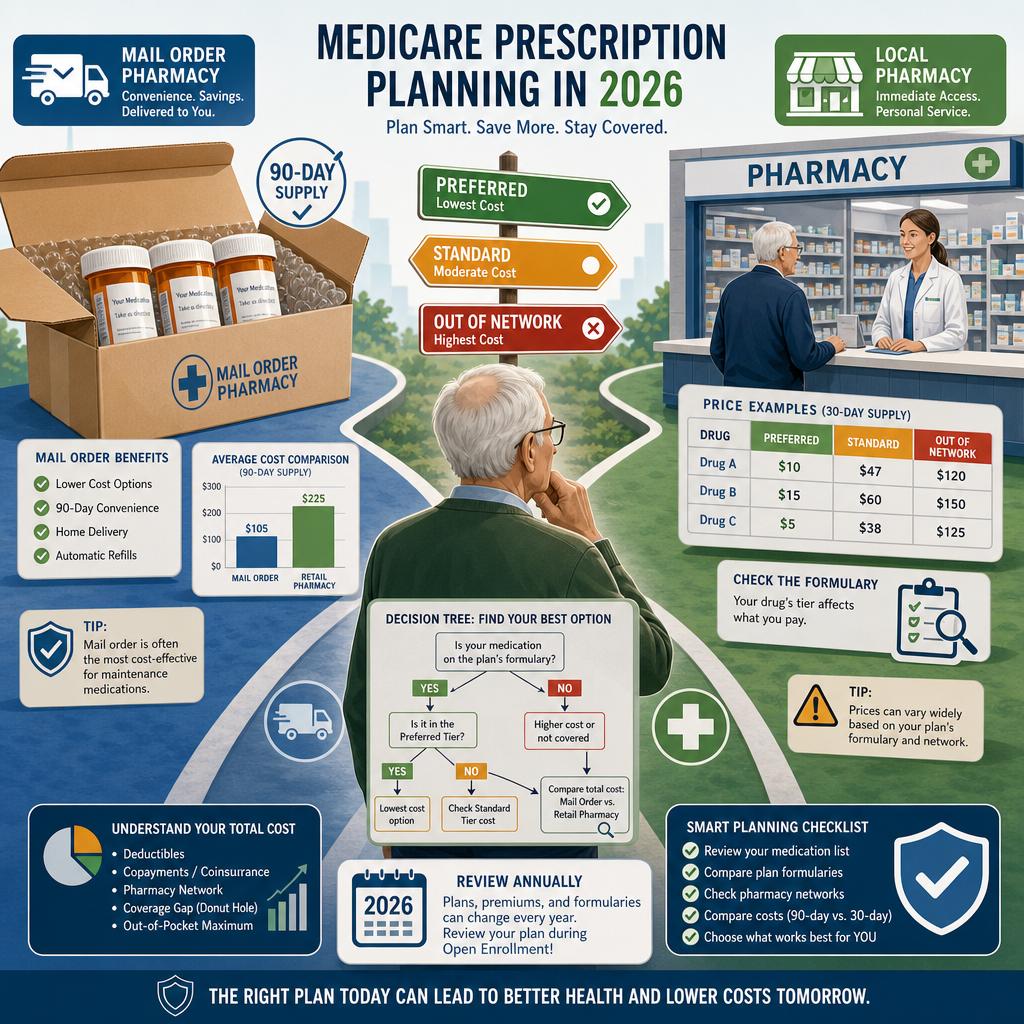
Many Medicare beneficiaries enter 2026 with a simple belief about prescriptions: mail order should save money. It is tidy, predictable, and often marketed as the mature way to manage maintenance medications. For the retiree taking blood pressure medicine, a statin, thyroid medication, and one brand name inhaler, a 90 day shipment can look like efficiency itself.
The problem is that Medicare Part D does not reward assumptions. It rewards plan-specific precision. In 2026, the official Medicare handbook confirms that drug costs still depend on the prescriptions you take, whether they appear on your plan formulary, the tier assigned to each drug, the benefit phase you are in, and the pharmacy you use, including whether that pharmacy is preferred, standard, out of network, or mail order . That means the same medication can behave very differently depending on where and how it is filled.
Mail Order Is A Channel Not A Price Guarantee
Imagine a Vista Mutual client named Robert, age 72, who has used the same mail order pharmacy for three years. In January 2026, his plan still covers his medications, so he assumes nothing meaningful has changed. By February, one refill arrives at a higher cost, another is delayed because the dosage changed, and his local pharmacy tells him it could have filled one medication for less under the plan’s preferred retail arrangement.
Robert’s mistake is not using mail order. His mistake is treating mail order as a universal discount. Medicare’s own guidance is careful here: out-of-pocket drug costs may be lower at a preferred pharmacy because that pharmacy has agreed with the plan to charge less . A mail order pharmacy may be preferred for one plan, standard for another, and strategically weak for a specific drug mix. The plan design, not the delivery method, determines the outcome.
The 2026 Part D Cap Helps But It Does Not Make Shopping Irrelevant
One of the most important 2026 changes is the $2,100 yearly out-of-pocket cap for covered Part D drugs. Once a beneficiary reaches that cap, he or she will not owe copayments or coinsurance for covered Part D drugs for the rest of the calendar year . This is meaningful protection, especially for people using expensive brand name medications or biologics.
But the cap does not make every pharmacy choice equal. First, it applies to covered Part D drugs, not every product a beneficiary might buy at the counter or every medication if it is excluded or not properly covered by the plan. Second, the path to the cap matters for cash flow. Medicare explains that Part D costs can vary by deductible, copayments, coinsurance, tier placement, and pharmacy choice . A beneficiary who reaches the cap in March may experience a very different household budget than someone whose costs are spread more evenly through the year.
The Three Price Tests Before You Commit To A 90 Day Fill
The most disciplined 2026 strategy is to test each medication before allowing convenience to dictate the pharmacy. This is especially important after an Annual Notice of Change, a formulary revision, a dosage adjustment, or a move to a different plan. A 90 day fill can be helpful, but it can also lock in an expensive choice before the beneficiary has compared alternatives.
Before committing to a long fill, ask three questions:
- Is this specific pharmacy preferred, standard, or out of network for my 2026 plan?
- Is this exact drug, strength, and quantity on the formulary, and what tier applies?
- Would a 30 day local fill, a 90 day retail fill, or mail order produce the lowest annual cost when the deductible and $2,100 cap are considered?
Those questions sound simple, but they require reading the plan like a contract rather than a brochure. Medicare notes that formularies, tiers, benefit phases, pharmacies, and Extra Help status can all affect what a beneficiary pays . A plan that looks attractive because of a low premium may still be poorly matched to a person’s actual pharmacy habits.
Why The Medicare Prescription Payment Plan Can Be Misunderstood
The Medicare Prescription Payment Plan adds another layer to the conversation. Medicare describes it as a payment option that lets people spread out-of-pocket costs for covered drugs across the calendar year, but it does not save money or lower drug costs . That distinction is crucial. It is a cash flow tool, not a discount program.
For someone using mail order, this can be especially confusing. A large 90 day shipment may create a high early-year drug obligation. The payment plan may soften the monthly impact by moving payment from the pharmacy counter to a bill from the health or drug plan. Yet if the underlying pharmacy or drug tier is unfavorable, the beneficiary is still financing a suboptimal decision rather than fixing it. In 2026, good drug planning begins before the prescription is filled, not after the bill arrives.
The Hidden Risk Of Plan Bundling In Medicare Advantage
The mail order issue becomes even more delicate inside Medicare Advantage plans that include drug coverage. Most Medicare Advantage plans include Part D, and beneficiaries generally do not buy a separate drug plan when enrolled in those plans . That bundled structure can be convenient, but it also means the pharmacy network is tied to the medical plan choice.
A beneficiary may choose a Medicare Advantage plan because the primary care doctor is in network, the dental allowance looks generous, or the premium is low. Only later does the beneficiary discover that the preferred pharmacy arrangement does not match where he or she actually fills prescriptions. Medicare emphasizes that Medicare Advantage costs can vary based on premiums, deductibles, copayments, provider networks, extra benefits, and the plan’s yearly limit for covered Part A and Part B services . Drug economics must be evaluated alongside medical access, not after it.
The Professional Review That Prevents Expensive Convenience
A high-quality 2026 Medicare review should not simply ask, “Do you want mail order?” It should model the beneficiary’s actual medication list against the plan’s formulary, pharmacy network, tier structure, deductible treatment, and refill preferences. It should also account for whether negotiated drug prices, generics, biosimilars, or pharmacy savings approaches change the picture, since Medicare specifically encourages beneficiaries to compare lower-cost alternatives with their pharmacist and doctor when appropriate .
This is where Medicare becomes too important to manage by habit. The best plan on paper may not be the best plan at the pharmacy counter. The cheapest refill this month may not be the best annual strategy. The most convenient delivery method may not be the one your 2026 plan rewards.
Vista Mutual helps clients move beyond assumptions and into evidence-based Medicare decisions. We review Medicare Advantage, Medicare Supplement, and Part D options with the practical details that determine real-world costs, including pharmacy choice, drug tiers, provider access, and cash flow. For peace of mind before a refill pattern becomes an expensive routine, Schedule your 2026 Medicare consultation.