The 2026 Medicare Opioid Treatment Program Coverage Decision Families Should Not Leave To The Pharmacy
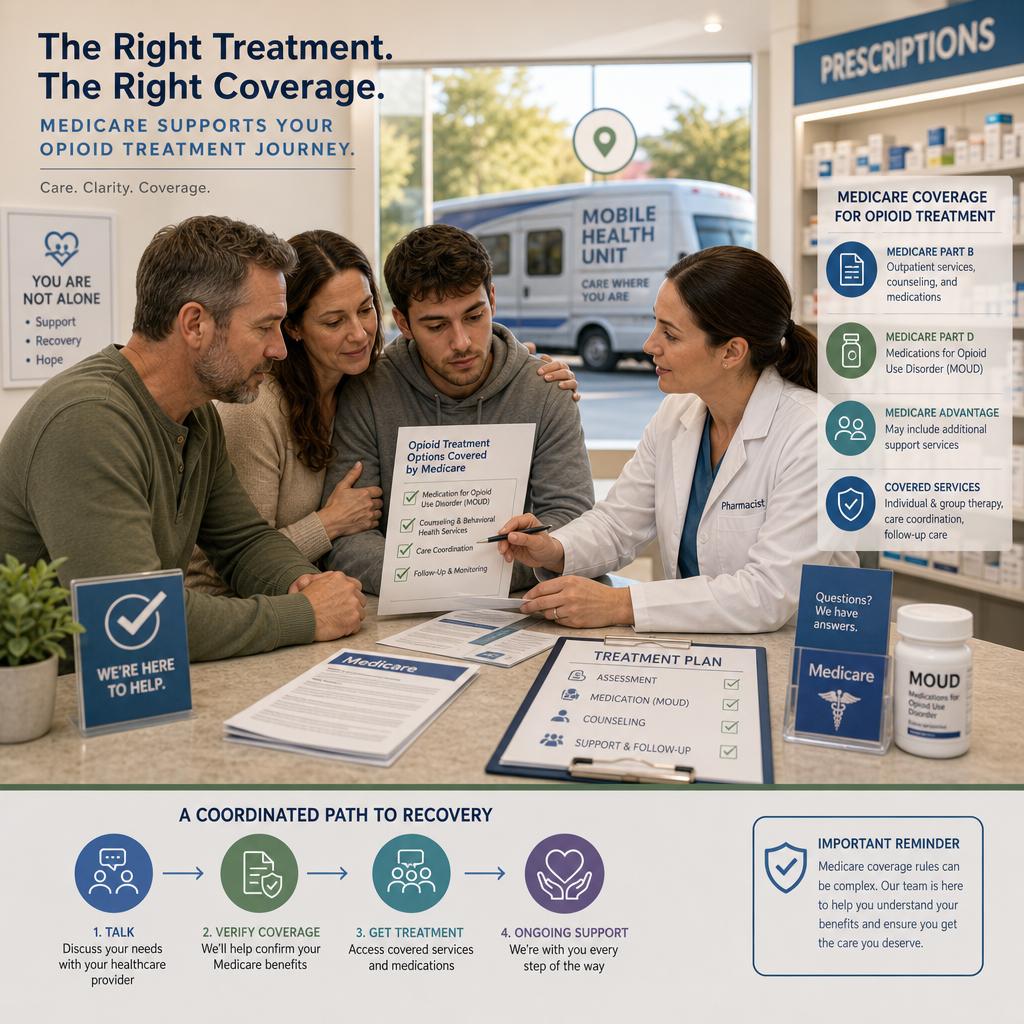
A family often learns the Medicare opioid treatment rules in the most uncomfortable place possible: at the pharmacy counter, after a discharge, when a loved one is trying to stay steady. The prescription may be legitimate. The doctor may be caring and clinically appropriate. Yet the coverage path can still be misunderstood because opioid use disorder treatment is not simply a Part D drug question in 2026.
That distinction matters. Medicare recognizes opioid use disorder treatment as a coordinated medical service, not merely a medication transaction. For beneficiaries and families, the practical question is not only whether methadone, buprenorphine, naltrexone, naloxone, or related medications are covered. It is where the care is delivered, which part of Medicare is paying, whether the provider is enrolled correctly, and whether a Medicare Advantage plan can steer the patient to a specific network program.
Why Opioid Treatment Program Coverage Is Different From A Regular Prescription
Medicare covers opioid use disorder treatment services through Opioid Treatment Programs, often called OTPs. The covered package can include medication, dispensing and administering medication, substance use counseling, drug testing, individual and group therapy, intake activities, periodic assessments, intensive outpatient services, and in certain circumstances counseling and assessments delivered virtually. Medicare also recognizes services provided through OTP mobile units, a crucial development for beneficiaries who have transportation barriers, rural access issues, or unstable recovery support at home .
The insider point is that OTP care is bundled around a treatment relationship. Under Original Medicare, beneficiaries do not pay copayments for these services when they receive them from a Medicare-enrolled Opioid Treatment Program that meets Medicare requirements, although the Part B deductible still applies . That is very different from walking into a retail pharmacy with a medication expectation and assuming every opioid use disorder medication will process like a routine Part D prescription.
The Part B And Part D Split Can Surprise Even Experienced Caregivers
One of the most common misunderstandings is the belief that all medications taken at home are automatically handled by Part D. In opioid use disorder care, that is too simple. Medicare Part B can cover certain drugs to treat substance use disorder when a provider administers them in a doctor office or outpatient hospital setting, and Medicare notes that there should be no copayment for these services when they are furnished by a Medicare-enrolled Opioid Treatment Program, while the Part B deductible applies .
Part D has its own role, but it is not a substitute for understanding OTP coverage. The 2026 Medicare handbook explains that Part D includes drugs such as buprenorphine to treat opioid use disorders. It also explains a key boundary: Part D covers methadone when it is prescribed for pain, but not when it is used to treat opioid use disorder . That single distinction can change where a beneficiary must go, what documentation is needed, and whether a pharmacy rejection is truly a denial or simply the wrong coverage pathway.
Medicare Advantage Adds A Network Layer To A Clinical Crisis
For people in Medicare Advantage, the benefit must still exist. Medicare Advantage Plans must cover Opioid Treatment Program services. But Medicare also makes clear that a plan may require the beneficiary to use an in-network Opioid Treatment Program, and Medicare Advantage Plans can apply copayments to OTP services, so the beneficiary should check the plan for exact cost sharing .
This is where a plan that looks excellent during a healthy October review can become complicated during a January crisis. A low premium, a familiar primary care doctor, and attractive dental benefits do not tell you whether the plan has practical OTP access near home. If the nearest in-network program is across county lines, has intake delays, or offers limited mobile unit availability, the plan design can become a recovery barrier even while technically covering the service.
The 2026 Mobile Unit Detail Is More Than A Convenience
Mobile OTP units deserve special attention because they can close the distance between coverage on paper and care in real life. A beneficiary may be newly discharged from a hospital, living with mobility limitations, caring for a spouse, or dependent on a family member for transportation. In those situations, a mobile unit can mean the difference between consistent treatment and missed care.
But a mobile unit does not erase the need to verify Medicare participation and plan rules. Under Original Medicare, the key question is whether the OTP provider is enrolled in Medicare and meets program requirements. Under Medicare Advantage, the question expands: is the mobile unit tied to an in-network OTP, does the plan require prior coordination, and how will copayments apply? Families should not assume that because the care is medically urgent, the administrative pathway will be automatic.
The Pharmacy Safety Rules Are A Separate Issue
Another source of confusion is the overlap between opioid treatment, opioid pain medication, and drug plan safety checks. Medicare drug plans can use opioid safety reviews at the pharmacy, quantity limits, step therapy, prior authorization, and Drug Management Programs to monitor potentially unsafe opioid or benzodiazepine use. Plans may contact prescribers, limit coverage to one prescriber or pharmacy, and send advance letters explaining restrictions and appeal rights .
Those pharmacy safety systems are important, but they are not the same as OTP treatment coverage. A beneficiary receiving medication assisted treatment for opioid use disorder may also have chronic pain, anxiety, cancer history, or recent surgery. The claims trail can look complicated, and a family may misread a safety edit as a rejection of treatment. Medicare also notes that opioid safety reviews and Drug Management Programs generally do not apply in certain situations, including cancer, sickle cell disease, palliative or end-of-life care, hospice, or long-term care facility residence .
What Families Should Confirm Before Care Is Interrupted
The safest approach is to verify the treatment channel before there is a missed dose, a transportation failure, or a weekend access problem. A family should identify whether the patient is in Original Medicare or Medicare Advantage, confirm whether the OTP is Medicare-enrolled or in network, ask how mobile unit services are handled, clarify whether any medications are being billed under Part B or Part D, and document who at the plan or provider office gave the answer.
That is the only list worth keeping because the stakes are immediate. Recovery care is not a benefit to research casually after a claim denial. It is a tightly regulated clinical pathway with medical, pharmacy, network, and cost-sharing consequences. In 2026, the broader Medicare drug environment also includes a $2,100 annual out-of-pocket cap for covered Part D drugs, but that cap does not eliminate the need to distinguish Part D pharmacy drugs from OTP services paid another way .
The compassionate answer is also the technical one: do not make a treatment decision based on a brochure headline. Medicare can support opioid use disorder treatment, but the right plan structure and provider pathway must be in place before the family is under pressure. Vista Mutual helps clients look beyond premiums and advertisements to the access rules that matter when care becomes urgent.
If your family is comparing 2026 Medicare Advantage, Supplement, or Part D choices and opioid treatment access could be part of the picture, professional review can provide real peace of mind. Consult with the Vista Mutual team before a coverage assumption becomes a barrier to care.