The 2026 Medicare Part D Irmaa Payment Mistake That Can Cancel Drug Coverage
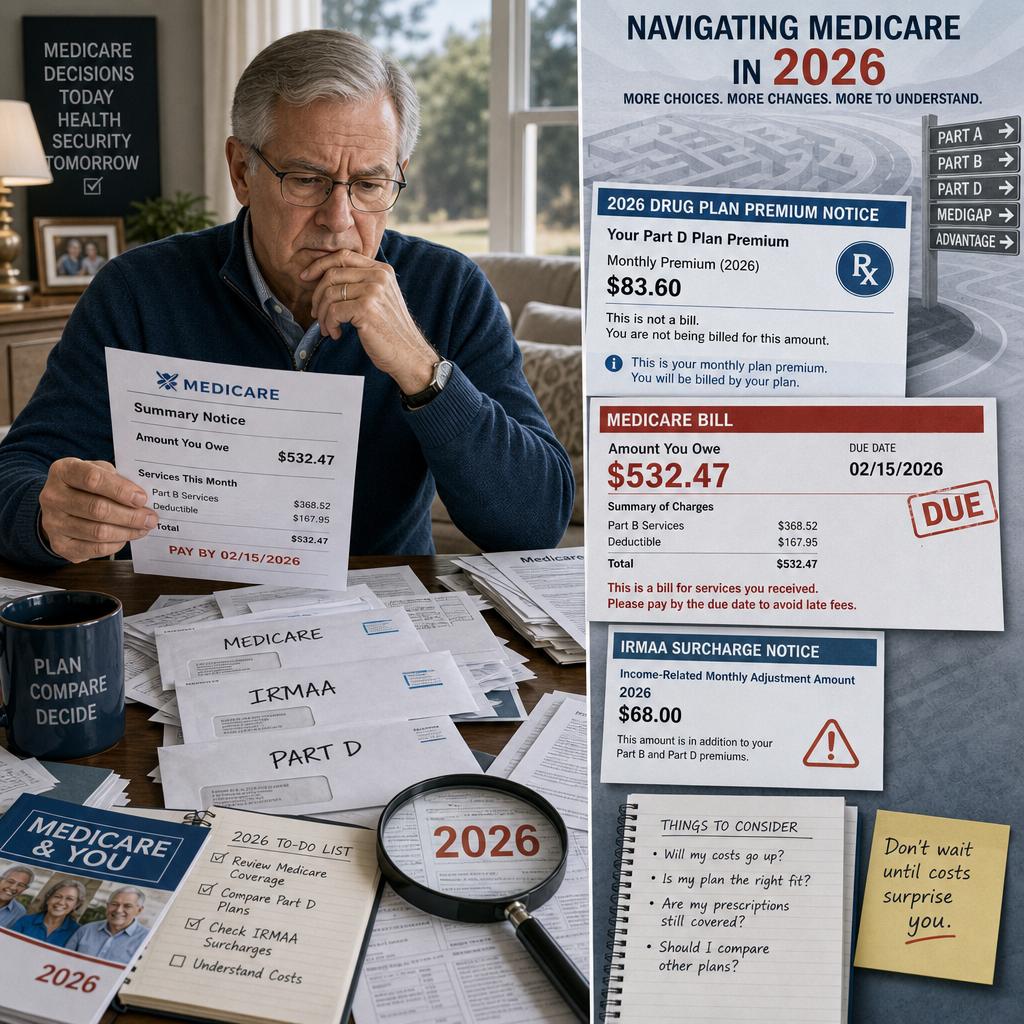
A retired executive opens her January 2026 mail expecting the usual stack of Medicare notices. She has already reviewed her prescriptions, confirmed that her preferred pharmacy is still preferred, and felt some relief knowing that covered Part D drug costs are capped at $2,100 for the year once qualifying out-of-pocket spending reaches that threshold . Then a separate bill appears, not from her Medicare Advantage plan or stand-alone drug plan, but tied to Medicare itself. She assumes it is a duplicate premium notice and sets it aside.
That is the kind of small administrative misunderstanding that can create a disproportionately large Medicare problem. For higher income beneficiaries, Part D IRMAA, the income-related monthly adjustment amount for prescription drug coverage, is not merely a surcharge. It is a separate obligation with its own payment pathway, and failing to handle it correctly can threaten the very drug coverage a retiree thought was securely in place.
The Separate Bill Behind A Familiar Drug Plan
Most people think of Part D as a plan premium. They compare plan premiums, deductibles, formularies, pharmacy networks, and copays. That is appropriate, but it is incomplete. Medicare explains that most drug plans charge a monthly premium that varies by plan, and if you have Part B, that premium is paid in addition to the Part B premium . In a Medicare Advantage plan with drug coverage, the drug premium may be folded into the overall plan premium, which can make the real structure even less visible.
Part D IRMAA sits outside that ordinary plan-premium logic. If your income is above the applicable threshold, Medicare may assess an extra amount in addition to your plan premium, and that extra amount can apply even when your Medicare Advantage plan includes drug coverage . The handbook notes that the 2026 premium amounts and income limits were not available at the time of printing, so the prudent move is not to rely on last year’s numbers or a casual estimate, but to verify current Medicare and Social Security determinations before making assumptions .
Why Paying The Plan May Not Solve The Problem
The critical detail is where the money goes. If Medicare or the Railroad Retirement Board bills you for the extra Part D IRMAA amount instead of deducting it from your Social Security or RRB payment, you must pay that extra amount to Medicare or the RRB, not to your drug plan . This is where even financially sophisticated retirees can stumble. They may see that their plan premium is current and believe all drug coverage obligations have been satisfied.
The risk is not theoretical. Medicare states that if you do not pay the Part D IRMAA amount, you could lose your Medicare drug coverage. Worse, you may not be able to join another plan right away, and you may have to pay a late enrollment penalty that is added to your monthly premium for as long as you have drug coverage . In practice, that means a missed administrative payment can become a coverage access problem, a pharmacy counter problem, and a long-term premium problem.
The 2100 Cap Does Not Protect Against Administrative Loss
The new 2026 Part D out-of-pocket cap is valuable, but it is often misunderstood. Medicare says yearly out-of-pocket costs for drugs covered by your plan are capped at $2,100 in 2026, and once that cap is reached, you pay no copayment or coinsurance for covered Part D drugs for the rest of the calendar year . That cap helps with covered drug cost sharing. It does not erase premiums, it does not eliminate IRMAA, and it does not make plan rules irrelevant.
This distinction matters most for people with expensive medications. A beneficiary using an oncology drug, a specialty inhaler, or a high-cost autoimmune medication may correctly focus on whether the drug is on the formulary and how quickly they will reach the $2,100 cap. But the plan can only help if the beneficiary remains enrolled. The cap is a cost-sharing protection inside Part D coverage. It is not a safety net for unpaid IRMAA, missed notices, or confusion between the plan bill and a Medicare bill.
A 2026 Scenario That Shows The Trap
Consider Robert, age 72, who has a Medicare Advantage plan with drug coverage. His plan advertises a low premium, his medications look manageable under the 2026 cap, and his pharmacy remains in network. Robert sold a rental property in a prior tax year, which increased his reported income. He receives a notice that he owes an income-related amount for Part D, but because his plan premium is already being handled through automatic payment, he assumes the notice is informational.
By spring, Robert’s drug plan premium may be current, yet his IRMAA obligation may not be. If he ignores the separate billing pathway, the eventual consequence can be more severe than a late fee. Medicare specifically warns that failure to pay the extra amount can lead to loss of Part D coverage and may interfere with immediate re-enrollment . For a retiree taking several medications, the harm is not abstract. It can show up as a rejected claim, an unexpected cash price, or a rushed scramble during a period when enrollment options are limited.
The Review That Should Happen Before January
The most useful Medicare review for 2026 is not just a premium comparison. It is a coordination audit. A skilled broker looks at how the plan premium is paid, whether Social Security deductions are active, whether a Part D IRMAA notice has been issued, whether an employer or retirement system is paying any part of the plan premium, and whether the beneficiary understands which bill belongs to which entity. Medicare also notes that Part D IRMAA is paid separately even if an employer or another third party pays plan premiums .
A practical 2026 IRMAA safety review should include:
- Confirm whether your Part D coverage is stand-alone or included inside a Medicare Advantage plan.
- Verify whether any Part D IRMAA amount is being deducted from Social Security or billed separately.
- Treat any bill from Medicare or the Railroad Retirement Board as distinct from your plan premium.
- If income has dropped because of a qualifying life-changing event, review whether an IRMAA reduction request may be appropriate.
That last point deserves care. Medicare indicates that beneficiaries who disagree with IRMAA because of certain life-changing events that lower income can seek information through Social Security . But an appeal or reduction request should not be confused with nonpayment. Until the adjustment is resolved, beneficiaries need a clear strategy to keep coverage intact while contesting an amount they believe is wrong.
Professional Guidance Turns A Billing Detail Into A Coverage Strategy
The value of professional Medicare guidance is often clearest in issues that look too small to matter. A premium is easy to compare. A deductible is easy to quote. But a separate IRMAA obligation, a delayed deduction, a third-party retiree payment arrangement, and a Medicare Advantage drug benefit inside a single plan can create a chain of assumptions that no brochure fully resolves.
Vista Mutual Insurance Services helps clients look beyond the surface price of a 2026 plan and examine how the coverage will actually function in daily life. That includes drug formularies, pharmacy access, Medicare Advantage and Supplement tradeoffs, Part D cost exposure, and the administrative details that protect enrollment. If you want confidence that your 2026 Medicare coverage is not vulnerable to a preventable payment mistake, Schedule your 2026 Medicare consultation.