The 2026 Medicare Pharmacy Counter Decision
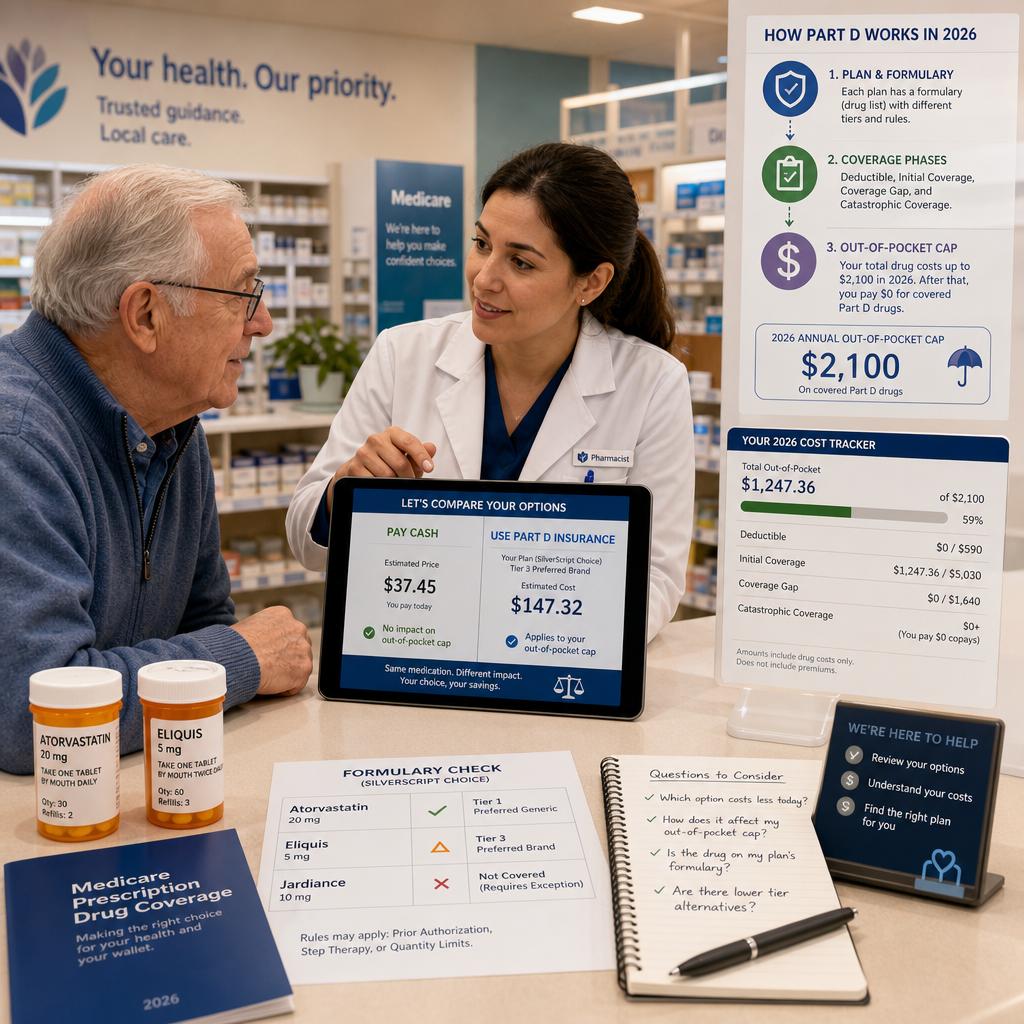
A Medicare beneficiary standing at the pharmacy counter in 2026 may face a deceptively simple question: do you want to run this through insurance, or pay the lower cash price? It sounds like a retail decision, but in Medicare it can become a coverage decision, a recordkeeping decision, and in some cases a yearlong cost strategy.
This is one of the quiet places where Medicare has become more consumer-friendly and more technically demanding at the same time. The 2026 Part D out-of-pocket cap is a major protection, with yearly out-of-pocket costs for covered Part D drugs capped at $2,100, after which the beneficiary pays no copayment or coinsurance for covered Part D drugs for the rest of the calendar year . Yet that protection only works cleanly when the drug, pharmacy, claim, and plan rules all line up.
The Lower Price Is Not Always The Better Medicare Decision
Consider a retiree named Elaine, who takes four maintenance medications and one brand-name inhaler. In January, her pharmacist tells her that one medication is cheaper through a pharmacy savings program than through her Part D plan. The immediate savings may be real, and Medicare itself recognizes that beneficiaries may sometimes pay for a drug without insurance, including through pharmacy savings programs or manufacturer discounts, while also advising them to ask the pharmacist about lower-cost options and confirm substitutions with the prescriber .
The complication is that a cash transaction can sit outside the normal Part D claim pathway. If the medication is not processed as a covered Part D claim, it may not help Elaine move toward the $2,100 annual out-of-pocket cap. For someone with only low-cost generics, that may not matter. For someone who expects expensive therapy later in the year, it can matter a great deal, because the cap is tied to out-of-pocket costs for drugs covered by the plan and certain payments made on the beneficiary’s behalf .
Why The 2026 Cap Changes The Conversation
The 2026 cap can create a false sense of simplicity. Many people hear “$2,100 maximum” and assume every prescription purchase is automatically counted. In practice, the plan’s formulary, the pharmacy used, the claim submission, and the drug’s coverage status all shape whether a cost is part of the Part D accounting system.
This is why the lowest price in February can be the wrong answer by August. A beneficiary using several high-cost drugs may be better served by allowing covered Part D spending to accumulate toward the cap, even when an isolated cash price is slightly lower at the counter. Conversely, a beneficiary taking inexpensive medications with no realistic chance of reaching the cap may rationally choose the lower lawful cash option when the pharmacist and prescriber agree it is appropriate. The point is not that one method is always superior. The point is that the answer depends on the full year, not the single receipt.
The Formulary Is Where The Real Fine Print Lives
Part D plans do not simply cover or deny drugs in a vacuum. Each plan uses a formulary, or list of covered drugs, and a beneficiary’s actual cost depends on whether each prescription is on that formulary, which tier the drug occupies, which benefit phase applies, which pharmacy is used, and whether Extra Help applies . In 2026, that means two neighbors with the same Medicare card can have very different pharmacy economics because they chose different plans.
The formulary also moves. Medicare notes that plans can change their formularies and that beneficiaries should review the Explanation of Benefits sent each month, checking for mistakes and contacting the plan with questions . That monthly notice is not junk mail. It is the paper trail that shows how the plan is treating the drug, what the beneficiary paid, and whether something appears inconsistent with the expected coverage path.
When The Plan Says Not Yet
A prescription can be on a plan’s formulary and still be difficult to fill. Prior authorization may require the prescriber to show that the medication is medically necessary and that the beneficiary meets the plan’s requirements. Quantity limits may restrict how much can be dispensed at once. Step therapy may require trying one or more lower-cost drugs before the plan covers the prescribed medication .
This is where many beneficiaries lose time. They interpret a pharmacy delay as a simple denial, when it may actually be a documentation problem, a sequencing problem, or an exception request waiting to happen. A skilled Medicare review looks at the drug name, dosage, diagnosis, prescriber notes, pharmacy network, formulary tier, and plan restriction together. The goal is not merely to find a plan with the drug listed. The goal is to find the plan whose rules match the clinical reality of the person taking it.
The One Pharmacy Question To Ask Before You Pay
Before accepting a cash price or switching pharmacies, a beneficiary should pause long enough to ask one practical question:
Is this prescription being processed through my Part D plan as a covered claim, and if not, how could that affect my annual out-of-pocket tracking toward the 2026 cap?
That single question can prevent months of confusion. It also opens the door to better follow-up questions, including whether a preferred pharmacy would lower the Part D cost, whether a generic or biosimilar is clinically appropriate, whether the prescriber can support a formulary exception, and whether the beneficiary’s expected annual medication pattern makes the cap relevant. Medicare specifically notes that out-of-pocket drug costs may be lower at a preferred pharmacy because that pharmacy has agreed with the plan to charge less .
The Medicare Prescription Payment Plan Is A Budget Tool Not A Discount
Another 2026 issue at the pharmacy counter is cash flow. The Medicare Prescription Payment Plan allows beneficiaries to spread out-of-pocket costs for covered drugs across the calendar year instead of paying the pharmacy at pickup. Medicare is clear, however, that this option helps manage expenses but does not save money or lower drug costs .
That distinction is essential. For someone who expects high drug costs early in the year, smoothing payments may protect the household budget. For someone with modest drug costs, it may add unnecessary billing complexity. For someone eligible for Extra Help, Medicare notes that the payment option may not be the best choice . The right decision depends on income assistance, medication timing, plan design, and tolerance for monthly bills from the plan instead of point-of-sale pharmacy payments.
A Professional Review Turns Receipts Into A Strategy
The 2026 Medicare pharmacy decision is no longer just about finding a plan that covers your prescriptions today. It is about anticipating how your prescriptions behave over twelve months, how the plan counts your costs, how your pharmacy contract affects your copays, and how utilization rules may interrupt access when you least expect it.
Vista Mutual Insurance Services helps clients look beyond the premium and examine the working mechanics of Medicare Advantage, Medicare Supplement, and Part D coverage. If you want the peace of mind that comes from having your prescriptions, doctors, plan documents, and annual cost exposure reviewed together, Schedule your 2026 Medicare consultation with the Vista Mutual team.