The 2026 Medicare Therapeutic Shoe Rule For Diabetes Foot Protection
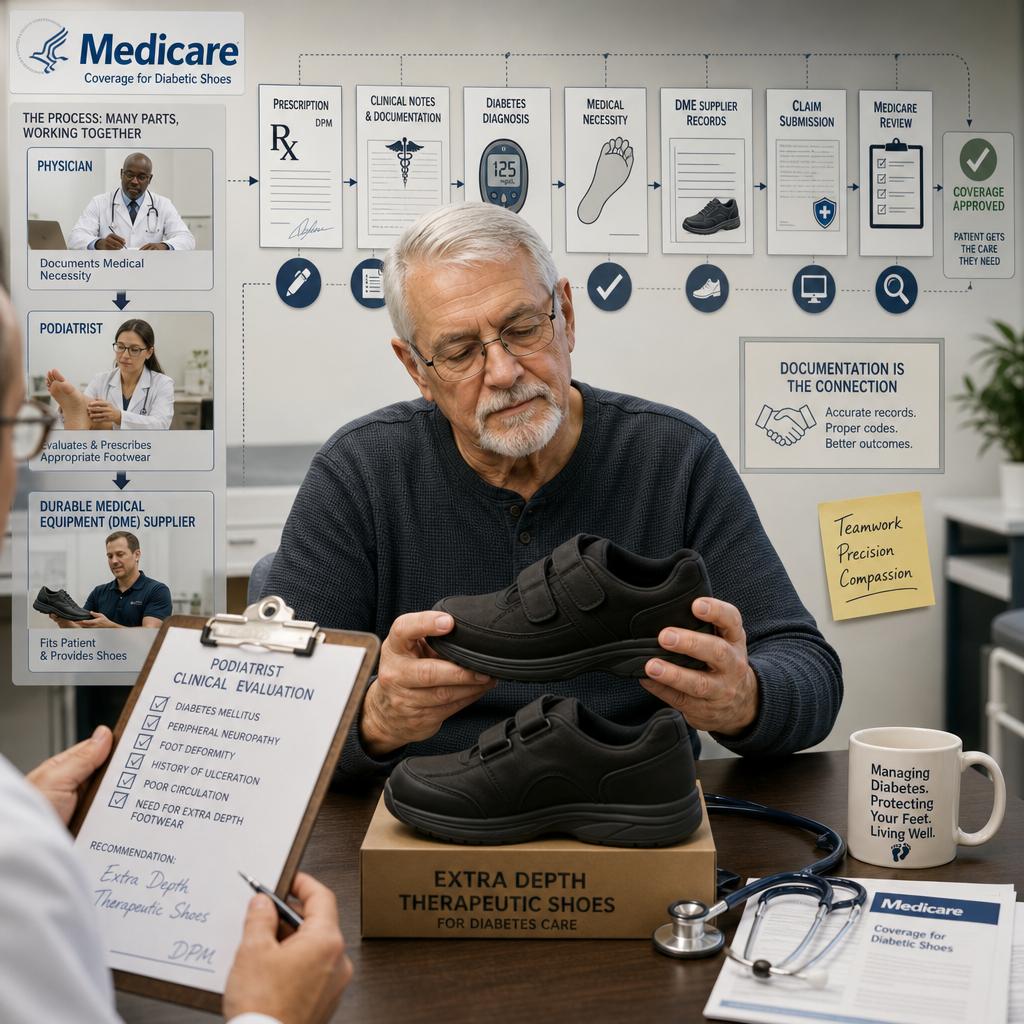
A retiree with diabetes can do everything right and still discover, at the shoe counter, that Medicare coverage is not automatic. The doctor may have mentioned foot protection during a routine visit. A podiatrist may have recommended extra depth shoes. A supplier may say the shoes are covered. Yet the claim can still stumble if the documentation, supplier status, or plan rules are not aligned before the fitting happens.
That is why therapeutic shoes deserve their own 2026 Medicare conversation. This is not merely a comfort benefit. For someone with neuropathy, deformity, prior ulcers, poor circulation, or other diabetes related foot problems, the right shoe can be part of preventing wounds that lead to infections, hospital care, and loss of mobility. Medicare recognizes that risk, but the coverage pathway is more exacting than most beneficiaries expect.
Why Therapeutic Shoes Are Different From Ordinary Footwear
Original Medicare does not pay for ordinary shoes because they are useful, supportive, or recommended for aging feet. The benefit exists because diabetes can change the structure, sensation, and healing capacity of the foot. In the 2026 Medicare and You handbook, Medicare states that it covers one pair of extra depth or custom molded shoes per year, along with inserts and shoe modifications, for people with specific diabetes related foot problems .
That phrase, specific diabetes related foot problems, is doing a great deal of work. It means the claim is not supported by diabetes alone. A beneficiary may have excellent reasons to want better shoes, including balance problems, arthritis, hammertoes, or general foot pain. But Medicare coverage requires the diabetes connection to be medically documented. The clinical record must support why therapeutic footwear is being used as a medical intervention, not simply as a retail purchase.
The Cost Rule Is Simple But The Billing Path Is Not
Under Original Medicare, the cost structure for covered therapeutic shoes is familiar but still easy to misread. If the supplier accepts assignment, the beneficiary pays 20 percent of the Medicare approved amount, and the Part B deductible applies . That sounds straightforward until a person learns that the supplier’s Medicare enrollment and assignment position can determine whether the expected 20 percent share remains predictable.
Assignment matters because it is the supplier’s agreement to accept the Medicare approved amount as payment in full and not bill beyond the Medicare deductible and coinsurance . If the supplier is not properly enrolled, or will not accept assignment for the claim, the beneficiary can face upfront costs, extra charges, or a reimbursement process that feels far removed from what the doctor described. The 2026 handbook warns beneficiaries to make sure suppliers participate in Medicare and accept assignment before obtaining covered equipment, because otherwise they may be charged additional amounts or have to pay upfront while waiting for Medicare processing .
The Documentation Chain Families Often Miss
The quiet failure point is not usually the shoe itself. It is the chain of proof behind the shoe. A real 2026 scenario might look like this: a beneficiary with diabetes sees a primary care doctor in February, a podiatrist in March, and a shoe supplier in April. Each office assumes the other has the necessary information. The supplier asks for paperwork. The doctor’s note mentions diabetes, but not the qualifying foot condition. The podiatrist’s note describes the deformity, but the certification is incomplete. By the time the missing pieces are identified, the beneficiary has either delayed the fitting or paid cash out of frustration.
Before accepting delivery, beneficiaries should slow the process down long enough to confirm one coherent record. The prescribing and certifying documentation should connect the diabetes diagnosis, the qualifying foot condition, the medical need for extra depth or custom molded shoes, and the specific inserts or modifications being provided. This is especially important when care is split among an endocrinologist, primary care physician, podiatrist, vascular specialist, and orthotics supplier. Medicare may cover medically necessary services and supplies more often when needed to diagnose or treat a condition, but the claim still has to show that the item fits within the covered benefit .
Medicare Advantage Adds A Second Layer Of Risk
For beneficiaries in a Medicare Advantage plan, the question is not only whether Medicare covers therapeutic shoes in general. Medicare Advantage plans must cover medically necessary services that Original Medicare covers, but plans may use networks, prior authorization, and plan specific cost sharing rules . That means the same shoe order can produce very different outcomes depending on whether the supplier is in network, whether prior authorization is required, and whether the plan treats certain inserts or modifications differently in its evidence of coverage.
This is where many people overvalue a low premium and undervalue administrative fit. A plan may look attractive because it includes extra dental, vision, hearing, or an over the counter allowance, but a person with diabetes related foot complications should ask a more practical question: will the plan’s network and authorization process support the suppliers and clinicians actually managing my feet? Medicare Advantage costs depend on plan premiums, deductibles, copayments, network status, assignment rules for certain plan types, and the plan’s yearly limit on out of pocket costs for Part A and Part B services .
The Diabetes Coverage Split Can Affect The Bigger Plan Decision
Therapeutic shoes also sit inside a larger diabetes coverage puzzle. The same 2026 handbook section that discusses therapeutic shoes also explains that Medicare covers insulin pumps, glucose monitors, and related supplies under Part B in certain circumstances. It also notes that Part D may cover self injected insulin, supplies used to inject insulin, disposable pumps, and some oral diabetes drugs, with a one month supply of each covered insulin product capped at $35 .
That split matters because a person choosing coverage for 2026 is rarely choosing around one item. Someone may need diabetic shoes under Part B, insulin under Part D, a continuous glucose monitor, podiatry visits, vascular care, and lab monitoring. The Part D side has its own major 2026 protection: covered Part D drug out of pocket costs are capped at $2,100 for the year . But that cap does not magically solve Part B supplier access, Medicare Advantage prior authorization, or the question of whether a preferred pharmacy helps with insulin while a preferred DME supplier is inconvenient or unavailable.
The Vista Mutual View Of A Better 2026 Review
A thoughtful Medicare review for a person with diabetes should not begin with premiums. It should begin with the care map. Who manages the diabetes? Who examines the feet? Which supplier fits the shoes? Which pharmacy fills the insulin? Which plan rules apply before the beneficiary is standing at the counter being asked to pay?
This is the insider value of professional Medicare guidance. Vista Mutual looks at how Medicare Advantage, Medicare Supplement, and Part D choices behave in real life, not just how they appear in a brochure. For therapeutic shoes, that means examining provider access, supplier assignment, prior authorization exposure, Part D insulin costs, and whether Original Medicare with a supplement may offer a cleaner path than a narrow network plan for a beneficiary with complex diabetes care.
Medicare is powerful, but it is not self executing. Coverage often depends on timing, wording, networks, and paperwork that beneficiaries only learn about after something goes wrong. If you or a family member has diabetes related foot risk and wants a calmer, more precise 2026 plan review, Schedule your 2026 Medicare consultation with Vista Mutual. The goal is not simply to find a plan. It is to build the confidence that when care is needed, the coverage path has already been tested.