The 2026 Medigap Plan F Eligibility Line Retirees Misread
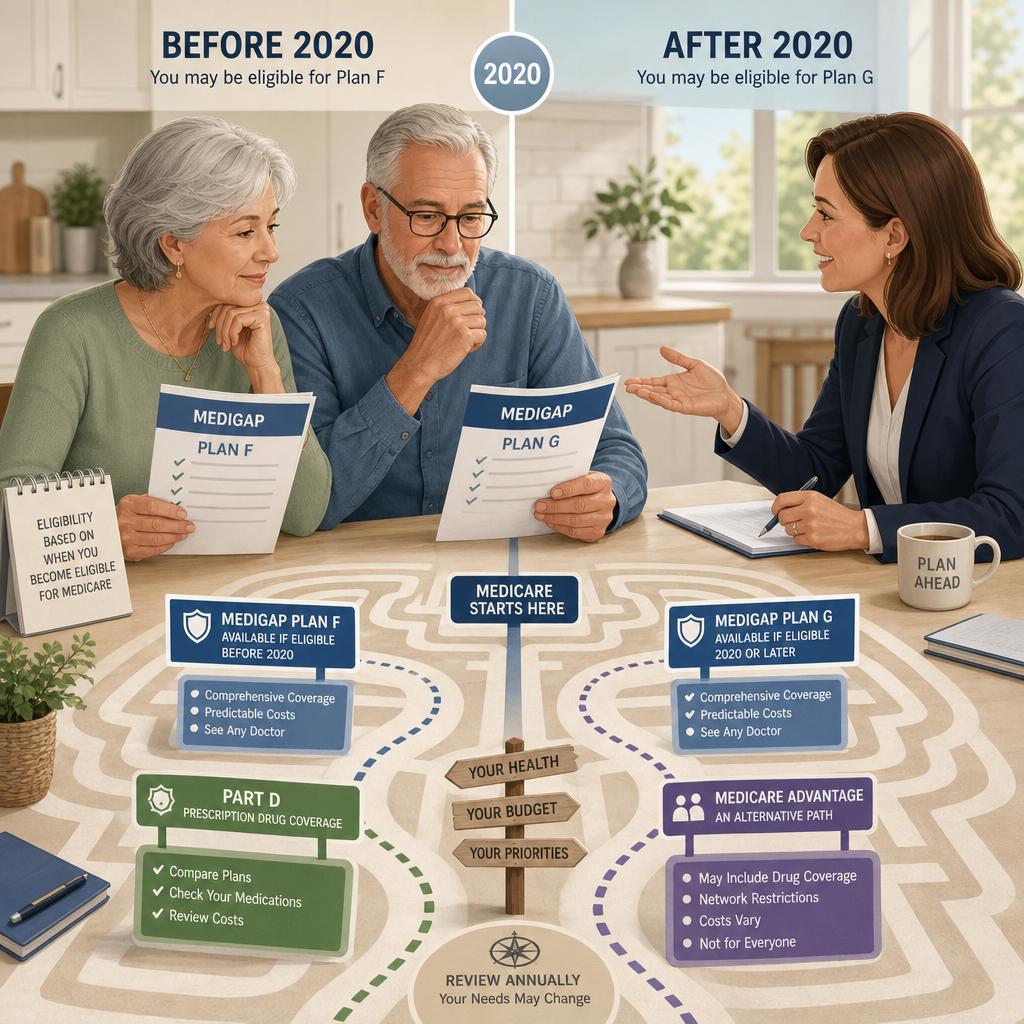
A retired couple can sit at the same kitchen table in 2026, compare the same Medigap brochure, and have two completely different rights. One spouse may be eligible to shop for Plan F because they were Medicare eligible before January 1, 2020. The other may be permanently barred from buying it because they became newly eligible later. That single eligibility line is one of the most commonly misunderstood Medigap rules, and it can lead retirees to compare plans they cannot legally purchase.
The confusion is understandable. Plan F became famous because it was designed to cover more Original Medicare cost sharing than many other standardized Medigap options. But Medicare rules changed for people newly eligible on or after January 1, 2020. The 2026 Medicare handbook explains that Medigap policies sold to people new to Medicare on or after that date cannot cover the Part B deductible, which is why Plans C and F are no longer available to that group. For those beneficiaries, Plans D and G may provide similar benefits, except they do not cover the Part B deductible .
Why Plan F Is Not A Normal Shopping Choice In 2026
The first mistake is treating Plan F like a plan on a shelf that every Medicare beneficiary can pick up during enrollment season. Medigap does not work like Part D or Medicare Advantage. You do not get an annual open shopping window where every supplement is guaranteed to be available to you at the same health rating. Your strongest federal Medigap buying protection generally begins the first month you have Part B and are 65 or older, and it lasts six months. After that period, you may not be able to buy a Medigap policy, or it may cost more, unless you have a separate guaranteed issue right or a stronger state rule .
This matters because the Plan F question often appears years after retirement. A beneficiary may have spent several years in a Medicare Advantage plan, grown tired of prior authorization, or wanted broader access to specialists under Original Medicare. At that point, the person may ask whether Plan F is available. The answer depends on two gates, not one. First, were they Medicare eligible before January 1, 2020. Second, do they have the right to buy a Medigap policy now without medical underwriting. Many people pass the first test and fail the second.
The Hidden Difference Between Eligible And Insurable
Eligibility means an insurer is legally allowed to sell you that standardized plan type. Insurability means the company is willing to accept you, at an acceptable premium, under the rules that apply in your state and situation. Those are not the same thing. A 72 year old who first became Medicare eligible in 2018 may be Plan F eligible, but if they are outside their protected Medigap window, an application can still become a health underwriting event unless a guaranteed issue right applies.
That is where professional review becomes essential. A beneficiary may be comparing Plan F, Plan G, and a Medicare Advantage PPO as if the decision is purely mathematical. In reality, the decision may involve state Medigap rules, current diagnoses, recent procedures, medication history, household discounts, and whether the person is leaving another form of coverage with any protected right to return. Medicare also warns that if you drop a Medigap policy to join a Medicare Advantage plan, you may not be able to get the same Medigap policy back, or in some cases any Medigap policy, unless you are within a trial right period .
The Medicare Advantage Detour Can Change The Outcome
The Plan F conversation becomes even more delicate when someone already has Medicare Advantage. Medicare Advantage plans bundle Part A and Part B, usually include Part D, and often have provider networks, referral rules, and prior authorization requirements. The 2026 handbook contrasts that with Original Medicare, where beneficiaries can generally use any doctor or hospital that takes Medicare anywhere in the United States, although they usually pay 20 percent of the Medicare approved amount after any deductible unless they have supplemental coverage .
A retiree may want to leave Medicare Advantage because a specialist is out of network or a prior authorization created a delay. But moving back to Original Medicare does not automatically recreate the Medigap rights that existed at age 65. Medicare is clear that Medigap cannot be used to pay Medicare Advantage copayments, deductibles, or premiums, and it is illegal for anyone to sell you a Medigap policy while you are in Medicare Advantage unless you are switching back to Original Medicare . The timing, effective dates, and underwriting rules must be sequenced correctly.
Plan F Does Not Solve The Drug Coverage Decision
Another quiet trap is assuming a high value supplement eliminates the need to analyze prescriptions. Modern Medigap policies do not include outpatient drug coverage. A beneficiary using Original Medicare with a supplement usually needs a separate Part D plan unless they have other creditable drug coverage. That separate drug plan has its own formulary, pharmacy network, tiering, prior authorization, and cost structure.
For 2026, the prescription side of the decision is especially important because Medicare drug coverage has a $2,100 annual out of pocket cap for covered Part D drugs. Once that cap is reached, beneficiaries do not pay copayments or coinsurance for covered Part D drugs for the rest of the calendar year . That cap can be meaningful, but it does not make every plan equal. The handbook notes that actual drug costs still vary based on whether prescriptions are on the formulary, what tier they occupy, which pharmacy is used, whether Extra Help applies, and which benefit phase the beneficiary is in .
The Questions Vista Mutual Asks Before Recommending A Supplement
A strong Medigap recommendation in 2026 is not simply, “Plan F is richer” or “Plan G is cheaper.” It begins with a sequence of eligibility and risk questions that most brochures do not force you to answer.
- Were you eligible for Medicare before January 1, 2020, are you currently in Original Medicare or switching back to it, are you within a protected Medigap buying period, do your doctors accept Medicare assignment, and have your prescriptions been tested against real 2026 Part D formularies and pharmacy pricing?
That single sentence contains more protection than a glossy rate sheet. If the answer to any part is uncertain, the wrong enrollment move can create consequences that are difficult to unwind. A person can overpay for a familiar plan name, lose a supplement they cannot easily regain, or build an Original Medicare strategy that overlooks a costly drug plan mismatch.
The Peace Of Mind Comes From Sequencing The Decision Correctly
Plan F can still be the right answer for certain beneficiaries in 2026, but it is never the universal answer. It belongs in a larger analysis that includes eligibility date, Medigap underwriting, Medicare Advantage exit rules, provider access, Part D exposure, and the realistic probability that health needs will change. The best decision is not the one that looks strongest on a chart. It is the one that holds up when a diagnosis, procedure, pharmacy change, or specialist referral arrives unexpectedly.
Vista Mutual helps retirees slow the decision down before an application, cancellation, or plan switch creates a problem. If you want a 2026 Medicare review that evaluates Medicare Advantage, Medigap, and Part D together rather than in isolation, Schedule your 2026 Medicare consultation.