The 2026 Retiree Drug Coverage Comparison After The Part D Cap
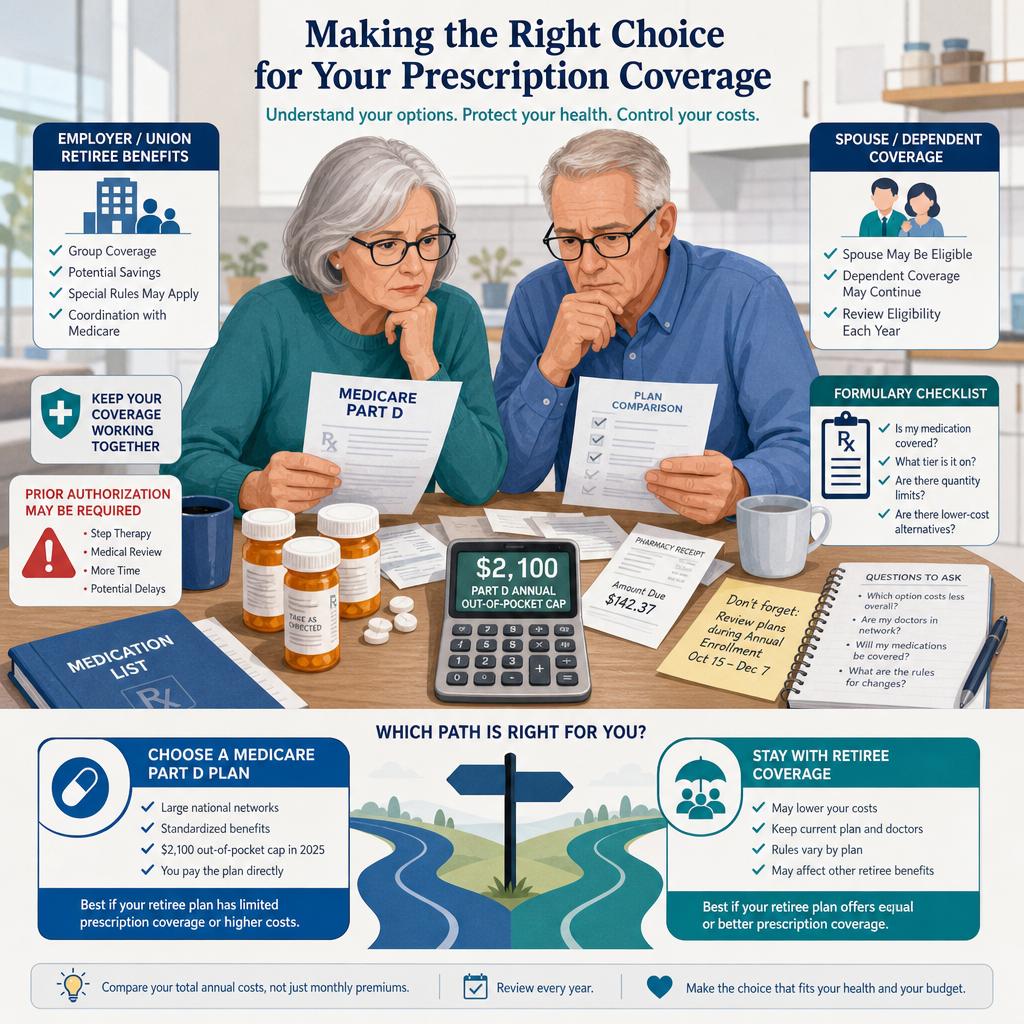
In 2026, many retirees will hear the same tempting phrase: Medicare drug costs are capped. That statement is true, but it is not the whole decision. Medicare drug coverage has a $2,100 yearly out of pocket cap for covered Part D drugs in 2026, after which you pay no copayment or coinsurance for covered Part D medications for the rest of the calendar year . For someone taking expensive prescriptions, that number may feel like the end of the analysis. For a retiree with employer or union drug benefits, it should be the beginning.
Consider a retired teacher, utility worker, or municipal employee whose former employer still offers a retiree health package. The plan may include prescription coverage that has worked reasonably well for years. Then a neighbor mentions the 2026 Part D cap, or a pharmacy clerk suggests comparing Medicare drug plans. The retiree starts to wonder whether adding a Part D plan would be safer. That question sounds simple, but Medicare treats retiree coverage, Part D enrollment, Extra Help, and plan coordination as separate moving parts. A wrong assumption can disrupt benefits that were never easy to replace.
The Cap Helps Only If The Drug Is Covered By The Part D Plan
The $2,100 cap is powerful, but it applies to yearly out of pocket costs for drugs covered by your Medicare drug plan. Medicare also makes clear that actual drug costs still vary by the prescriptions you take, whether those drugs are on the plan formulary, the tier assigned to each drug, the pharmacy you use, and whether you receive Extra Help . That means the cap does not turn every Part D plan into the same plan. It limits exposure after covered spending reaches the threshold, but it does not guarantee that every medication will be covered smoothly, cheaply at the counter in January, or at your preferred pharmacy.
This is where retiree coverage can be misunderstood. Some employer or union drug benefits operate outside ordinary retail Part D logic. They may have their own formulary, mail order pricing, specialty pharmacy rules, or coordination arrangement. Others may be structured as creditable coverage, meaning the coverage is expected to pay, on average, at least as much as standard Medicare drug coverage. Medicare defines creditable prescription drug coverage broadly, including coverage from a current or former employer or union, TRICARE, Indian Health Service, VA, or individual health insurance coverage . The word creditable does not mean best, cheapest, or easiest. It means the coverage meets a Medicare standard that can protect you from a late enrollment penalty if you join Part D later.
The Enrollment Mistake That Can Affect More Than Your Own Prescriptions
The most dangerous 2026 mistake is assuming that you can add a Medicare drug plan as a harmless backup. Medicare warns that if you have employer or union coverage and enroll in Medicare drug coverage, you may lose your employer or union coverage for yourself and your dependents, even if you qualify for Extra Help . That is not fine print. It is a household level risk.
Imagine a retired firefighter whose spouse is not yet Medicare eligible and is covered under the retiree plan. If he enrolls in a standalone Part D plan without first confirming the retiree plan rules, the result might not be a tidy second payer arrangement. It could trigger a loss of broader retiree benefits, a change in pharmacy access, or an administrative problem that takes weeks to unwind. Some retiree plans coordinate beautifully with Medicare. Others require you to use the employer sponsored drug option if you want to keep the medical package. The only safe answer is plan specific.
Why 2026 Makes The Comparison More Complicated Than Prior Years
The 2026 cap changes the emotional side of the decision because it puts a visible ceiling on covered Part D drug spending. Medicare also notes that negotiated prices for the first 10 selected drugs take effect January 1, 2026, and beneficiaries should contact their plans for details on how those negotiated prices affect them . For retirees taking high cost medications, these changes can make a Part D plan look more attractive than a legacy retiree drug program. Still, the comparison must be done medication by medication, pharmacy by pharmacy, and rule by rule.
There is another subtle point: drug plans can have coverage rules. Medicare drug plans may use prior authorization, quantity limits, step therapy, opioid safety checks, and drug management programs . A retiree plan may have similar tools, but not always in the same places. One plan may cover a drug but require prior authorization. Another may place it on a higher tier. A third may prefer mail order. In a high cost year, the $2,100 cap may still make Part D appealing, but a January delay caused by step therapy or prior authorization can feel very different from a spreadsheet projection.
Extra Help Can Change The Answer, But Not Eliminate The Coordination Risk
For retirees with limited income and resources, Extra Help can materially change prescription costs. In 2026, Medicare says drug costs for people who qualify will generally be no more than $5.10 for each generic drug and $12.65 for each brand name drug at a participating pharmacy . That can be life changing for someone choosing between medication adherence and household bills.
Yet even Extra Help does not erase the employer or union coverage issue. Medicare specifically cautions that enrolling in Part D can affect employer or union benefits even if the person qualifies for Extra Help . This is why a beneficiary should not treat Extra Help approval as automatic permission to change coverage. It may make Part D financially attractive, but the retiree benefit administrator still needs to confirm what happens to the broader package. In some households, the spouse, dependent, dental benefit, medical supplement, or group Medicare Advantage arrangement may be connected to the drug decision.
The Professional Review Is Not Just A Premium Comparison
A careful 2026 review should start with the retiree plan documents and the Medicare drug plan evidence, not with the premium alone. Many drug plans charge a monthly premium, and if you have Part B, that premium is in addition to the Part B premium unless it is built into another plan arrangement . But the premium is only the visible price. The deeper question is whether the retiree plan is creditable, whether joining Part D terminates any employer or union benefit, whether all current medications are covered, whether the pharmacy is preferred or standard, and whether a high cost medication is subject to prior authorization or step therapy.
That review also needs to be practical. A retiree who spends winters in another state may need national pharmacy access. A beneficiary using specialty medications may need to confirm distribution channels. A couple may need separate analyses because Medicare coverage choices are individual, while retiree benefits are often household based. A person who rarely uses prescriptions today still needs to know whether keeping creditable coverage preserves the right to join Part D later without penalty. These are not brochure questions. They are coordination questions.
A Calmer Way To Make The 2026 Decision
The 2026 Part D cap is a major protection, but it does not make every existing drug arrangement obsolete. For some retirees, moving into a Medicare drug plan will be the right financial decision. For others, staying with employer or union coverage will preserve benefits, pharmacy routines, and family protections that are worth more than a lower projected drug bill. The hard part is that both outcomes can be true for people who look similar on paper.
Vista Mutual Insurance Services helps retirees slow the decision down and compare the moving parts before anything is canceled, triggered, or misunderstood. If you want a professional review of your 2026 Medicare Advantage, Supplement, retiree coverage, and Part D options, Schedule your 2026 Medicare consultation. The peace of mind comes from knowing not only what Medicare covers, but what your next decision might accidentally change.