The Free Medicare Preventive Visit That Can Still Create A Bill In 2026
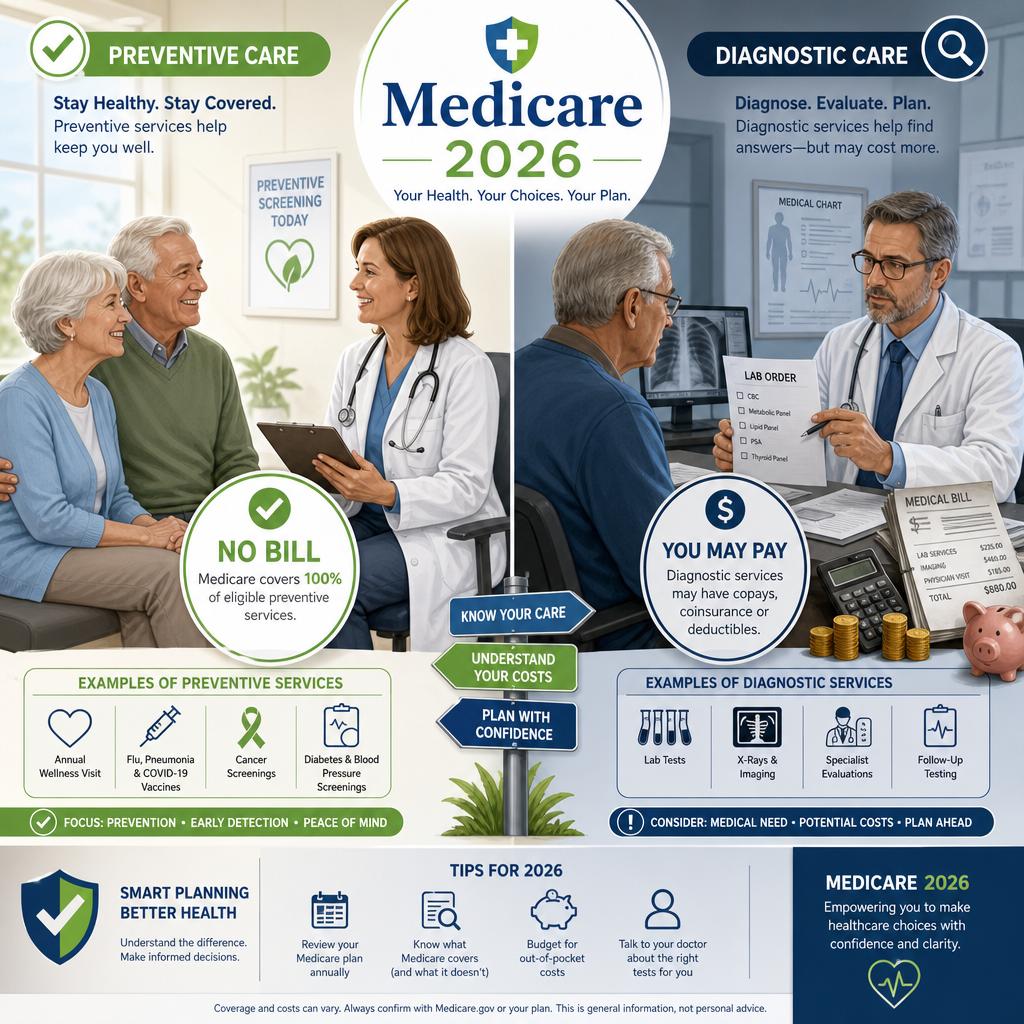
A retired couple walks into the same clinic on the same morning in 2026. One spouse gets a covered preventive screening and leaves with no bill. The other mentions fatigue, asks about a new symptom, receives a lab order, and later sees a charge appear. From the patient’s point of view, both appointments felt routine. From Medicare’s point of view, they may have been very different services.
That distinction is one of the most misunderstood parts of Medicare. Medicare can cover many preventive services at no cost when the rules are met, but the moment an appointment shifts from screening to diagnosis, monitoring, or treatment, the cost structure can change. The 2026 Medicare handbook makes this point directly: you generally pay nothing for most covered preventive services when the provider accepts assignment, but deductible, coinsurance, or both may apply when a preventive service happens during the same visit as a non-preventive service .
The Hidden Difference Between Screening And Diagnosis
Preventive care is designed to look for risk before a known problem is being treated. A screening colon cancer test, a cardiovascular risk discussion, or a vaccine may be preventive when it is provided under Medicare’s preventive rules. Diagnostic care begins when the purpose of the visit is to evaluate a symptom, follow up on an abnormal result, manage an existing condition, or decide on treatment.
This is why two beneficiaries can receive the same type of test and have different bills. A person getting a routine screening may owe nothing if the provider accepts assignment and all coverage rules are met. A person getting a test because of bleeding, pain, weight loss, or an abnormal prior result may be receiving diagnostic care. The test may still be medically necessary and covered, but it may not be free.
Why The Same Appointment Can Split Into Two Claims
The most frustrating bills often come from blended visits. A beneficiary schedules an annual wellness visit, then asks about dizziness, knee pain, memory changes, urinary symptoms, or medication side effects. A good clinician should not ignore those concerns. But when the provider evaluates and documents a separate medical problem, the practice may bill an additional office visit along with the preventive service.
That does not automatically mean the bill is wrong. It means the visit had two purposes. Medicare’s own explanation warns that costs can apply when preventive and non-preventive services occur in the same encounter . The beneficiary may remember one appointment, one exam room, and one conversation, while the claim system sees a preventive service plus a problem-oriented evaluation.
Why Original Medicare And Medicare Advantage Feel Different Here
Under Original Medicare, the financial risk depends heavily on whether the service is preventive, whether the provider accepts assignment, whether the Part B deductible applies, and whether the beneficiary has supplemental protection. Original Medicare generally leaves beneficiaries responsible for coinsurance after Medicare pays its share, and there is no annual out-of-pocket limit unless the person has other coverage such as Medigap, Medicaid, employer, retiree, or union coverage .
Medicare Advantage plans operate differently. They must cover medically necessary services that Original Medicare covers, but they can use networks, referrals, prior authorization, plan-specific copays, and an annual limit on covered Part A and Part B services . That annual limit can be valuable, but the tradeoff is that the beneficiary needs to understand the plan’s rules before assuming a service will be simple or free.
The 2026 Planning Problem Most People Miss
The planning issue is not whether preventive care is worthwhile. It is. The issue is that Medicare beneficiaries often choose a plan based on premium, dental allowances, or a familiar logo, then discover later that their real exposure is tied to how care is coded, where it is delivered, and whether follow-up services are treated as preventive, diagnostic, or ongoing disease management.
Consider a beneficiary who chooses a Medicare Advantage plan because the primary doctor has a low copay. That may be sensible. But if a screening leads to a specialist referral, imaging, outpatient surgery consult, or diagnostic lab sequence, the next steps may involve network rules and separate cost sharing. Another beneficiary with Original Medicare and a Medigap policy may pay a higher monthly premium but have a more predictable experience when the same screening turns into diagnostic follow-up.
What To Ask Before A Routine Visit Becomes A Billing Surprise
A sophisticated Medicare review should not stop at whether a benefit exists. It should ask how that benefit behaves after the first abnormal result. This is where many brochure-level explanations fail. They say a screening is covered, but they do not explain what happens if the physician finds something, orders another test, or changes the appointment into active medical management.
Before a 2026 preventive appointment, beneficiaries should ask a few plain questions:
- Is this visit being scheduled as a covered preventive service, a diagnostic visit, or both?
- Does the provider accept Medicare assignment, or is the service being handled under a Medicare Advantage network contract?
- If something abnormal is found, will follow-up testing be billed as diagnostic care?
- If I am in a Medicare Advantage plan, do I need a referral or prior authorization before the next step?
Those questions may feel administrative, but they are really financial planning questions. They can clarify whether the beneficiary is facing no cost, a copay, coinsurance, a deductible, a network restriction, or a prior authorization requirement.
The Drug Coverage Connection After A Preventive Visit
Preventive visits often lead to prescriptions. A cholesterol screening may lead to a statin. A bone health discussion may lead to osteoporosis medication. A vaccine conversation may involve pharmacy coverage. In 2026, the Medicare Part D landscape remains especially important because covered Part D drug out-of-pocket costs are capped at $2,100 for the year .
That cap is meaningful, but it does not make every plan equal. Formularies, tiers, preferred pharmacies, and whether a drug is covered under Part B or Part D can still change the beneficiary’s real cost and access. Medicare notes that drug costs vary by the prescriptions used, whether they are on the plan formulary, the assigned tier, the benefit phase, the pharmacy selected, and whether the person receives Extra Help . A preventive visit may be free, but the medication pathway that follows can become one of the most important parts of the plan decision.
The Real Value Is Not Just Avoiding A Bill
The point of understanding preventive billing is not to discourage care. It is to help beneficiaries get care with fewer surprises. A colon cancer screening, vaccine, wellness visit, cardiovascular risk assessment, or diabetes-related conversation can be clinically important. The financial question is whether the beneficiary knows when the visit has crossed from prevention into diagnosis or treatment.
That is where professional Medicare guidance earns its value. Vista Mutual reviews Medicare Advantage, Medicare Supplement, and Part D options through the lens of real medical behavior, not just premium tables. The right fit depends on doctors, prescriptions, travel habits, risk tolerance, chronic conditions, and how much predictability a person wants when routine care becomes something more complex.
In 2026, the smartest Medicare decision is not simply choosing the plan with the lowest advertised cost. It is choosing coverage that can withstand the way health care actually unfolds. For peace of mind before the claim happens, Schedule your 2026 Medicare consultation with the Vista Mutual team.