The Preferred Pharmacy Trap In 2026 Medicare Drug Coverage
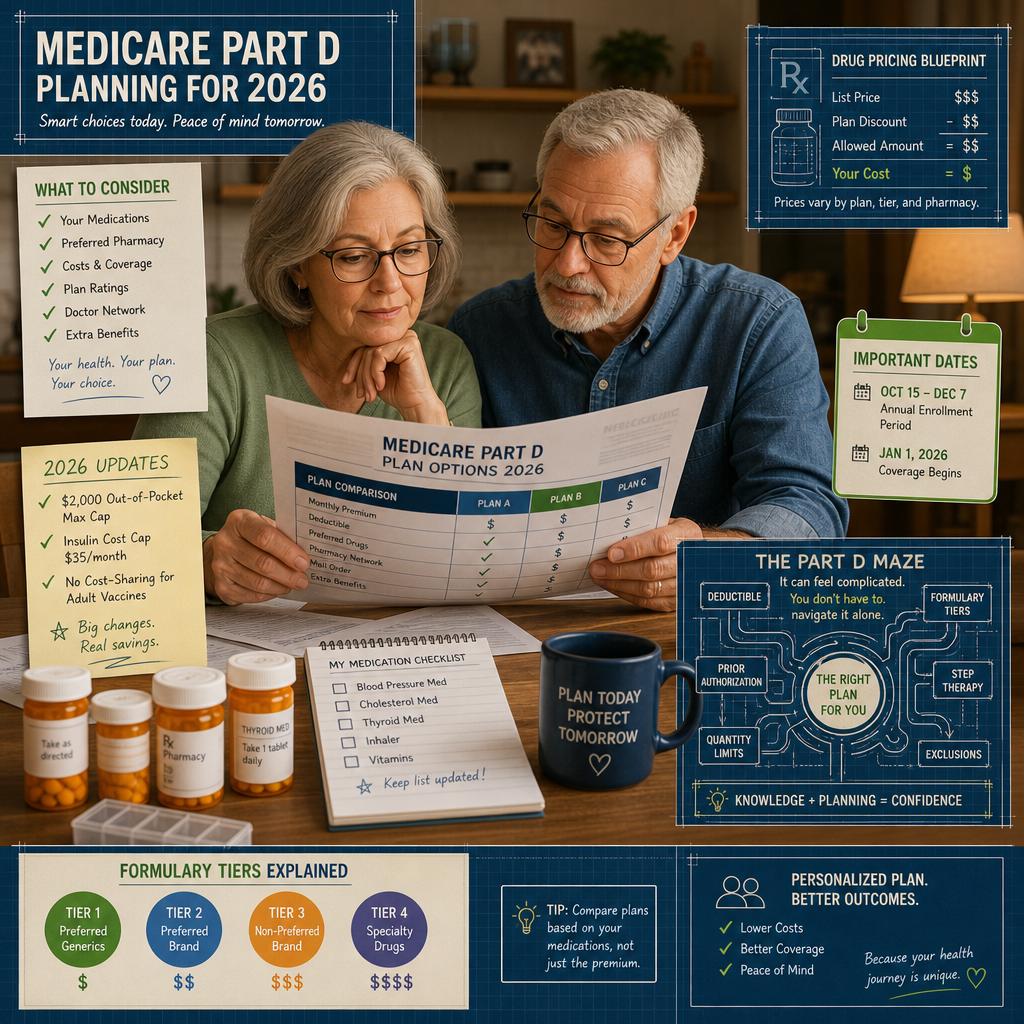
A retired couple can do everything right and still overpay for prescriptions. Imagine Linda, age 72, who keeps the same Medicare Advantage plan for 2026 because her premium looks familiar and her cardiologist remains in network. Her husband notices that Medicare now caps yearly out of pocket costs for covered Part D drugs at $2,100 in 2026, so they assume the drug side of the decision is largely settled. That assumption is understandable, but it is not safe.
The new cap is real and valuable. Once a beneficiary reaches the 2026 Part D out of pocket limit for covered drugs, Medicare says the person will not owe copayments or coinsurance for covered Part D drugs for the rest of that calendar year . Yet the cap does not tell you which drugs are covered, which pharmacy gives you the lowest cost, whether a deductible applies to your medication tier, or whether a plan will require prior authorization before the prescription can be filled. In 2026, the smartest Medicare drug planning is less about reading the headline and more about understanding the mechanics underneath it.
Why The 2026 Cap Does Not Make Pharmacy Choice Simple
The $2,100 cap can create a false sense of simplicity. It limits annual out of pocket exposure for covered Part D drugs, but it does not erase the path you take to get there. A beneficiary taking a high cost medication may reach the cap early in the year, while another person taking three moderately priced medications may never reach it. The second person may feel every pharmacy pricing difference all year long.
Medicare itself emphasizes that actual drug costs vary by the prescriptions you take, whether those drugs are on the plan formulary, the tier assigned to each drug, the benefit phase you are in, the pharmacy you use, and whether you receive Extra Help . That is the insider point many people miss. The plan with the lowest premium can still be the wrong plan if your pharmacy is not preferred, your medication sits on a higher tier, or the plan treats mail order differently than the neighborhood pharmacy you have used for years.
Preferred Does Not Always Mean Convenient
In Part D, a preferred pharmacy is not simply a pharmacy you prefer. It is a pharmacy that has agreed with the plan to offer lower cost sharing for certain prescriptions. Medicare notes that out of pocket costs may be less at a preferred pharmacy because that pharmacy has agreed with the plan to charge less . The practical problem is that beneficiaries often choose a plan based on the pharmacy they recognize, not the pharmacy contract embedded inside the plan.
Consider a beneficiary who fills medications at an independent pharmacy that knows her by name. Her plan may still cover that pharmacy, but at standard cost sharing rather than preferred cost sharing. A $4 generic may not matter much, but a branded inhaler, anticoagulant, or diabetes medication can reveal the difference quickly. The plan card works, the claim processes, and no one at the counter says the plan is bad. The beneficiary simply pays more than she would have paid two miles away.
The Formulary Is The Real Contract
The formulary is where the promise of drug coverage becomes specific. Medicare defines a formulary as the plan list of covered prescription drugs, and that list is not merely administrative language . It determines whether the plan covers your medication, what tier it occupies, and whether the plan places management rules around it.
This matters because a drug can move from a comfortable cost position to a more expensive one without the beneficiary changing a single medication. Medicare advises beneficiaries to review the Evidence of Coverage and Annual Notice of Change because these documents explain changes in coverage, costs, provider networks, service area, and other plan details effective in January . A careful review is not clerical. It is risk control.
If there is one checklist worth using before choosing 2026 drug coverage, it is this:
- Confirm every prescription by exact drug name, dosage, quantity, and refill frequency.
- Compare each medication across retail, preferred retail, standard retail, and mail order options.
- Check whether each drug is subject to prior authorization, quantity limits, or step therapy.
- Look at the total annual cost, not only the monthly premium.
- Ask whether the Medicare Prescription Payment Plan helps cash flow or simply spreads the same cost over time.
The Payment Plan Helps Budgeting But Not Pricing
The Medicare Prescription Payment Plan deserves careful explanation because it sounds more powerful than it is. In 2026, all Part D plans offer this voluntary payment option. It allows a beneficiary to spread out of pocket costs for covered drugs across the calendar year, but Medicare is explicit that it does not save money or lower drug costs .
That distinction is essential. The payment plan can help someone who would otherwise face a large pharmacy bill in January. It may be especially useful for a person who takes an expensive covered medication and wants steadier monthly budgeting. But it does not fix a poor formulary match, an unfavorable pharmacy arrangement, or a drug that is not covered by the plan. It changes timing, not the underlying price.
There is another planning wrinkle. Medicare notes that participation may automatically renew for 2026 if the beneficiary stays in the same Part D plan, and it may not be the best choice for someone who gets or qualifies for Extra Help . That means an arrangement that helped one year should still be reviewed, not left on autopilot.
Prior Authorization At The Pharmacy Counter
Many beneficiaries think prior authorization is mainly a medical services issue. In drug coverage, it can be just as disruptive. Medicare explains that plans may require prior authorization before certain prescriptions can be filled, and the prescriber may need to show that the drug is medically necessary and that plan requirements are met .
The difficulty is not only denial. It is timing. A prescription written after a hospital discharge, a specialist visit, or a medication change may arrive at the pharmacy before the paperwork is complete. The beneficiary sees a delay, the physician sees a plan requirement, and the pharmacist sees a claim that cannot yet be paid. A skilled Medicare review tries to identify those friction points before January, especially for drugs with common utilization rules.
Quantity limits and step therapy add further complexity. A plan may cover the medication, but not the amount your physician prescribes without additional justification. Or it may require a lower cost alternative first. These rules are not always unreasonable, but they can be clinically inconvenient if the plan is mismatched to a beneficiary who has already stabilized on a specific medication.
Why Plan Comparison Must Be Personal In 2026
Medicare drug planning has always been personal, but 2026 raises the stakes. The new cap protects against the most extreme covered drug spending, while negotiated drug pricing and changing plan designs make the details more important. Medicare states that drug costs can vary by plan and that beneficiaries may owe premiums, deductibles, copayments, or coinsurance throughout the year . That means the right answer for one spouse may be wrong for the other, even at the same address.
The better process begins with a medication inventory and ends with a plan strategy. For some beneficiaries, a standalone Part D plan paired with Original Medicare and a Medicare Supplement may provide the cleanest structure. For others, a Medicare Advantage plan with built in drug coverage may offer a strong overall value, provided the doctors, hospitals, pharmacy network, and formulary all align. The key is not choosing the most popular plan. It is choosing the plan that behaves correctly when your prescriptions are actually filled.
This is where professional guidance becomes more than convenience. A broker who understands Medicare Advantage, Medicare Supplements, and Part D can evaluate tradeoffs that a basic brochure cannot show clearly. The goal is not merely to find coverage. It is to avoid the quiet mistakes that appear one refill, one authorization request, or one pharmacy receipt at a time.
For 2026, peace of mind comes from knowing your drug plan has been tested against your real prescriptions, your preferred pharmacy habits, and your broader Medicare coverage. If you want a careful, plan specific review before committing to coverage, Schedule your 2026 Medicare consultation with the Vista Mutual team.